
Aria Daisy 阿莉娅_黛西
584 Posts

Aria Daisy 阿莉娅_黛西
Aria Daisy 🌸 | Crypto Trader & Binance Expert Sharing market insights, trading ideas & Web3 opportunities Trade smart • Stay updated • Keep growing | DYOR
Open Trade
High-Frequency Trader
1.6 Years
376 Following
13.1K+ Followers
7.0K+ Liked
Posts
Portfolio
All
Quotes
PINNED

PINNED


慢就是快Mike
·
--
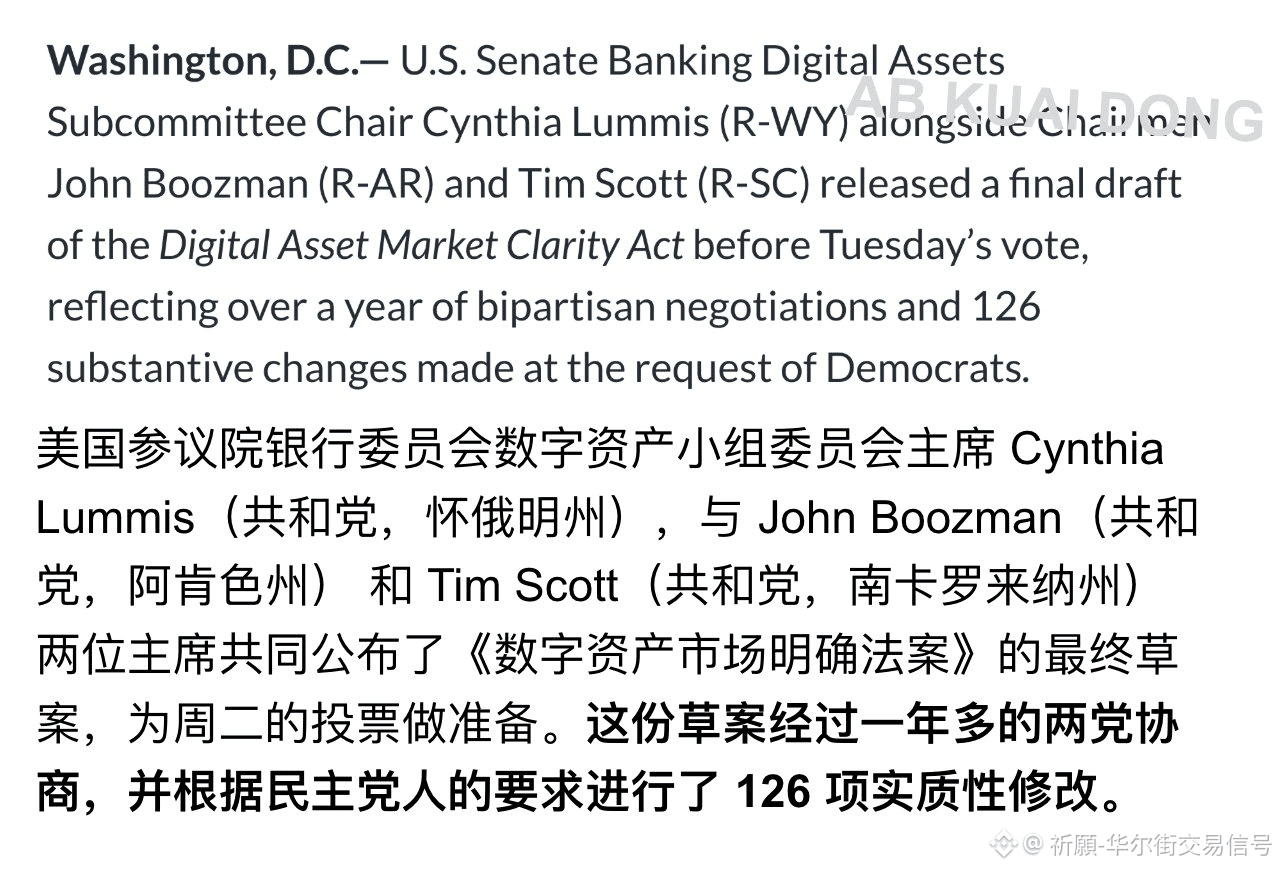
$BTC Long-awaited clear bill vote is officially scheduled for tomorrow
If passed → Bitcoin will surge
If vetoed → Bitcoin will surge
No matter what, the bull market will come!
If passed → Bitcoin will surge
If vetoed → Bitcoin will surge
No matter what, the bull market will come!

币圈淘金小旋风
·
--
Like 👍👍👍🧧🧧🧧Follow for updates and share again, 🧧🧧🧧🧧🧧🧧based on luck, 🧧🧧🧧🧧you get rewards 🧧🧧🧧🌹🤪🤪🤪🤪🤪🤪🧧🧧🧧🧧🧧🧧


Mr Max
·
--
🎁 Claim your Gift 🎁
🧧🧧🧧🧧🧧
🧧🧧🧧🧧🧧
Join chat Group for daliy 🧧......
Hint { 786 }...............
$BTC $NVDAB $SNDK
#SNDKUSDT #NVDAB #BTC☀ #BitcoinThirdSingleBlockReorgInFourWeeks #BrazilCentralBankRaisesVASPCapitalRequirements
🧧🧧🧧🧧🧧
🧧🧧🧧🧧🧧
Join chat Group for daliy 🧧......
Hint { 786 }...............
$BTC $NVDAB $SNDK
#SNDKUSDT #NVDAB #BTC☀ #BitcoinThirdSingleBlockReorgInFourWeeks #BrazilCentralBankRaisesVASPCapitalRequirements



苏菲亚 Sophia
·
--
Today’s Bitcoin (BTC) price action is relatively strong. The price has moved above $79,000, with about a 2% gain over the past 24 hours. The intraday low was around $76,375, and a clear rebound has emerged.
$BTC $ETH $GOOGL.US #比特币守稳77000美元上方 #美联储加息概率升至89%
$BTC $ETH $GOOGL.US #比特币守稳77000美元上方 #美联储加息概率升至89%


橙子Joyce
·
--
BullishWill the Federal Reserve raise rates as expected this week? Wall Street is debating: will it end the U.S. stock bull market?
After an unexpectedly strong U.S. CPI report came out last Friday, traders generally expect the Federal Reserve to begin raising rates at this week’s policy meeting—marking the first rate hike in more than three years.
Historically, previous rounds of rate hikes have offered a reference point for today’s market. Based on past experience (though history of course can’t guarantee the future), U.S. stocks may first weaken, then rebound.
Among the six tightening cycles since 1994, during the first four months after the rate-hike cycle began, the S&P 500’s average return was negative.
This suggests that once the “rate-hike shoe” drops, U.S. stocks may look lackluster through the beginning of next year.
As of the close last Friday, the benchmark U.S. equity index, the S&P 500, is up nearly 12% year to date. Strong corporate earnings and a fairly resilient economy have provided solid support for bulls in the stock market.
If you extend the time horizon, the S&P 500’s performance tends to improve gradually: in the 12 months after the start of a rate-hiking cycle, the index’s average return is close to 7%, with a median return of about 11%. (Using median-based statistics helps remove distortions from extreme outliers—for example, the index surged more than 40% after hikes began in March 1997.)
If the Federal Reserve implements a rate hike this Wednesday, it will be the first hike since July 2023—when the Fed raised rates to a range of 5.25% to 5.50%.
Currently, the federal funds rate in the U.S. is at 3.50% to 3.75%. According to the CME Group’s FedWatch tool, futures traders currently assign an 86% probability to a 25-basis-point hike this week.
One positive factor for the market is that mega-scale cloud service providers are still driving growth in excess returns through large-scale AI spending. The S&P 500 component stocks’ forecast for earnings growth in 2027 is expected to reach double digits. If the outlook for AI spending remains unchanged, it may be enough to offset any cooling in optimistic sentiment caused by the rate hikes.
Another bright spot for equities is that although inflation remains sticky, it appears to be slowing. The inflation rate has fallen from a May peak of 4.2%. This should allow the Federal Reserve to take a more gradual approach, and the data shows that the pace of rate hikes is crucial for stock performance—slower pacing gives investors more time to absorb policy changes!
$BZ
$CL
Energy
After an unexpectedly strong U.S. CPI report came out last Friday, traders generally expect the Federal Reserve to begin raising rates at this week’s policy meeting—marking the first rate hike in more than three years.
Historically, previous rounds of rate hikes have offered a reference point for today’s market. Based on past experience (though history of course can’t guarantee the future), U.S. stocks may first weaken, then rebound.
Among the six tightening cycles since 1994, during the first four months after the rate-hike cycle began, the S&P 500’s average return was negative.
This suggests that once the “rate-hike shoe” drops, U.S. stocks may look lackluster through the beginning of next year.
As of the close last Friday, the benchmark U.S. equity index, the S&P 500, is up nearly 12% year to date. Strong corporate earnings and a fairly resilient economy have provided solid support for bulls in the stock market.
If you extend the time horizon, the S&P 500’s performance tends to improve gradually: in the 12 months after the start of a rate-hiking cycle, the index’s average return is close to 7%, with a median return of about 11%. (Using median-based statistics helps remove distortions from extreme outliers—for example, the index surged more than 40% after hikes began in March 1997.)
If the Federal Reserve implements a rate hike this Wednesday, it will be the first hike since July 2023—when the Fed raised rates to a range of 5.25% to 5.50%.
Currently, the federal funds rate in the U.S. is at 3.50% to 3.75%. According to the CME Group’s FedWatch tool, futures traders currently assign an 86% probability to a 25-basis-point hike this week.
One positive factor for the market is that mega-scale cloud service providers are still driving growth in excess returns through large-scale AI spending. The S&P 500 component stocks’ forecast for earnings growth in 2027 is expected to reach double digits. If the outlook for AI spending remains unchanged, it may be enough to offset any cooling in optimistic sentiment caused by the rate hikes.
Another bright spot for equities is that although inflation remains sticky, it appears to be slowing. The inflation rate has fallen from a May peak of 4.2%. This should allow the Federal Reserve to take a more gradual approach, and the data shows that the pace of rate hikes is crucial for stock performance—slower pacing gives investors more time to absorb policy changes!
$BZ
$CL
Energy

NAJAF_加密 143
·
--
‼️$ZEC Reward is here ‼️
I’m sharing $ZEC rewards with the community as a Bigger thank-you.
✨ Just claim your reward and enjoy! ✨
Claim it. Get rewarded
$ZEC @ZEC是加密的比特币 #zec
I’m sharing $ZEC rewards with the community as a Bigger thank-you.
✨ Just claim your reward and enjoy! ✨
Claim it. Get rewarded
$ZEC @ZEC是加密的比特币 #zec


白鲨观点马来西亚
·
--
$38 billion flows into ETFs over three weeks, Strategy buys the dip at $80,000—what are institutions betting on?
Two sets of data put together are especially interesting:
On one side, retail investors are panicking:
Nonfarm payrolls beat expectations → interest rate hike odds at 60% → “Is the bull market gone?”
On the other side, institutions are buying:
BTC ETF net inflows of $3.8 billion over three weeks—its strongest consecutive inflow streak of the year;
After pausing for two months, Strategy re-enters the market—buying at an average price of $80,000 for 4,603 BTC.
It’s like two neighbors:
One worries whether it’ll rain tomorrow, while the other has already stockpiled food.
In fact, the institutions’ logic is pretty straightforward:
Short-term noise doesn’t change the long-term trend—whether rates are raised is a monthly variable, while BTC institutionalization is a year-scale variable. $80,000 is a build-the-position zone, not a top-chasing exit zone. Compared with the ATH of $126,000, we’re still about halfway up the mountain. ETF flows are “dumb money”—once it comes in, it usually doesn’t leave easily. This is long-term core positioning.
But let me remind you of one thing:
Institutional buying ≠ the bull run starts immediately. Institutional accumulation is a process—it may take weeks or even months to play out.
Retail investors are most likely to die during the “institutions are buying, so why isn’t it going up?” impatience phase.
It’s like planting crops—you can’t dig them up every day just to see whether they’ve sprouted.
I compiled an “Institutional Holdings Watchlist,” including daily ETF inflows, Strategy holdings, and changes in whale addresses.
Send two characters—“机构” (institutions)—in my chat room to get it. Updated weekly.
Do you think this round of institutional buying is really smart, or are they just catching the bag? Let’s discuss in the comments.
#BinanceSquare #bitcoin #BTCETF #institutional holdings
Two sets of data put together are especially interesting:
On one side, retail investors are panicking:
Nonfarm payrolls beat expectations → interest rate hike odds at 60% → “Is the bull market gone?”
On the other side, institutions are buying:
BTC ETF net inflows of $3.8 billion over three weeks—its strongest consecutive inflow streak of the year;
After pausing for two months, Strategy re-enters the market—buying at an average price of $80,000 for 4,603 BTC.
It’s like two neighbors:
One worries whether it’ll rain tomorrow, while the other has already stockpiled food.
In fact, the institutions’ logic is pretty straightforward:
Short-term noise doesn’t change the long-term trend—whether rates are raised is a monthly variable, while BTC institutionalization is a year-scale variable. $80,000 is a build-the-position zone, not a top-chasing exit zone. Compared with the ATH of $126,000, we’re still about halfway up the mountain. ETF flows are “dumb money”—once it comes in, it usually doesn’t leave easily. This is long-term core positioning.
But let me remind you of one thing:
Institutional buying ≠ the bull run starts immediately. Institutional accumulation is a process—it may take weeks or even months to play out.
Retail investors are most likely to die during the “institutions are buying, so why isn’t it going up?” impatience phase.
It’s like planting crops—you can’t dig them up every day just to see whether they’ve sprouted.
I compiled an “Institutional Holdings Watchlist,” including daily ETF inflows, Strategy holdings, and changes in whale addresses.
Send two characters—“机构” (institutions)—in my chat room to get it. Updated weekly.
Do you think this round of institutional buying is really smart, or are they just catching the bag? Let’s discuss in the comments.
#BinanceSquare #bitcoin #BTCETF #institutional holdings


Maraishh
·
--
The best coin of Magic Sound, LUCY can heal all your regrets and inferiority complexes & give ordinary people the opportunities to turn their lives around. 🐉


逐浪字母哥
·
--
🛫🎉🪅🦁🧧🎁
Share + comment $ETH
Just share and you’ll receive a gift—good luck starts now $BTC
Share + comment $ETH
Just share and you’ll receive a gift—good luck starts now $BTC


NaiPi-奶啤
·
--
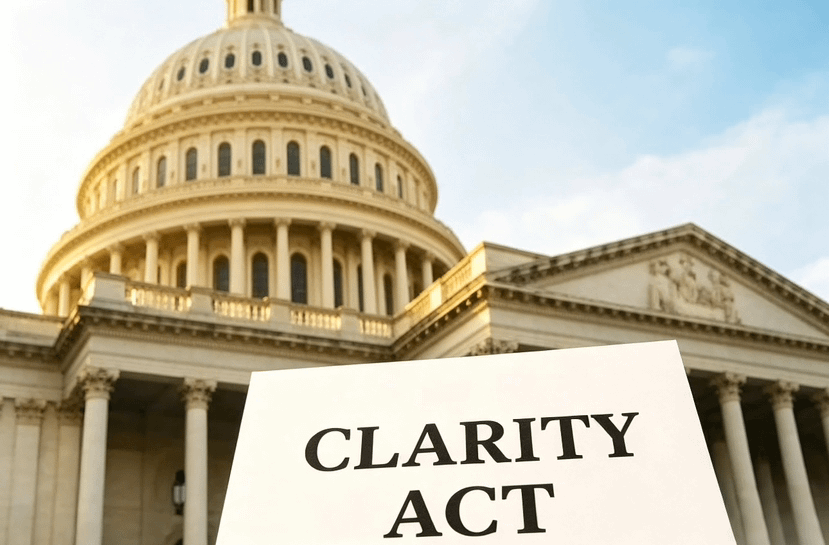
Trump pushes the CLARITY Act to achieve a “historic ethical compromise”: the Republican Party adopts 95% of the Democrats’ core demands, and U.S. crypto regulation finally finds a breakthrough
On the eve of bipartisan consensus: a regulatory standoff lasting 14 months reaches a key turning point
The U.S. deadlock on digital-asset regulatory legislation saw a landmark breakthrough in the third quarter of 2026.
In a direct move to advance the more than year-long “Digital Asset Market Clarity Act” (Digital Asset Market CLARITY Act, or the CLARITY Act), President Trump led Republicans in making a major concession on core ethical regulatory provisions. According to multiple insiders from the Senate, the latest Republican compromise proposal has covered roughly 95% of the Democrats’ core regulatory demands, with only 5% remaining as technical details to be negotiated.
Industry insiders widely view this as the most milestone-worthy bipartisan compromise in the federal U.S. digital-asset regulatory legislative process. It also means that the unified regulatory framework for the world’s largest crypto market is accelerating from “paper concept” toward implementation. #BTC #crypto
On the eve of bipartisan consensus: a regulatory standoff lasting 14 months reaches a key turning point
The U.S. deadlock on digital-asset regulatory legislation saw a landmark breakthrough in the third quarter of 2026.
In a direct move to advance the more than year-long “Digital Asset Market Clarity Act” (Digital Asset Market CLARITY Act, or the CLARITY Act), President Trump led Republicans in making a major concession on core ethical regulatory provisions. According to multiple insiders from the Senate, the latest Republican compromise proposal has covered roughly 95% of the Democrats’ core regulatory demands, with only 5% remaining as technical details to be negotiated.
Industry insiders widely view this as the most milestone-worthy bipartisan compromise in the federal U.S. digital-asset regulatory legislative process. It also means that the unified regulatory framework for the world’s largest crypto market is accelerating from “paper concept” toward implementation. #BTC #crypto

Flora Firdos
·
--
💰 WHO’S READY FOR FREE $USDT ? 🎉
A little giveaway for the crypto community! 🎁🔥
To participate:
💬 Drop 999 in the comments
❤️ Hit Like
🔄 Repost & share
➕ Follow the account
That’s it! Get involved and don’t miss your chance. 🚀👀
Good luck, everyone! 💸🤞
#USDT #CryptoGiveaway #AirdropAlert #USDTfree
A little giveaway for the crypto community! 🎁🔥
To participate:
💬 Drop 999 in the comments
❤️ Hit Like
🔄 Repost & share
➕ Follow the account
That’s it! Get involved and don’t miss your chance. 🚀👀
Good luck, everyone! 💸🤞
#USDT #CryptoGiveaway #AirdropAlert #USDTfree


Evie埃维利里什
·
--
Wishing you good health, good luck, and plenty of green candles!
RED PACKET DROP!
Follow
Like
Comment
$LSK
RED PACKET DROP!
Follow
Like
Comment
$LSK


光明社区-阿波罗
·
--
Rushing to mountains and seas, collecting every inch of light, letting beauty happen naturally in the scenery.
Chase mountains and shores, capture every ray, let beauty unfold naturally.
Chase mountains and shores, capture every ray, let beauty unfold naturally.


Bitroot铄鸿
·
--
Cold stars reflect on water, no empty fame to seek; faint and shallow their glow, purging river’s tranquil peak!





Log in to explore more content