


For many people who are just getting into trading, the question they care about most is usually:
What should I buy?
When should I buy?
When should I sell?
But after you trade for a while, you’ll find an issue that’s easy to overlook:
Trading costs.
When many people review their trades, they only count how much they made or lost, and rarely look at:
How much fee did I end up paying this year?
Actually, for people who trade frequently, transaction fees are also a part of long-term capital management.
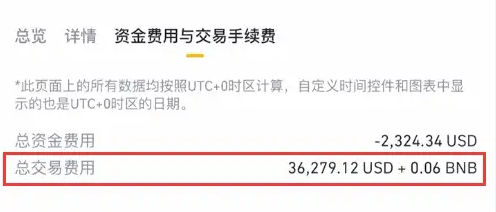
Single-transaction fees may seem small, but over the long term the gap becomes quite obvious.
When many people trade for the first time, they think:
“Fees are only a little—surely it won’t matter much.”
That’s true—if you only trade once, you may not feel the fees clearly.
But trading isn’t a one-time thing.
Suppose a user:
It generates a trading volume of 500,000 U every month.
Ends up with 6 million U over the course of a year.
If you calculate fees based on a certain proportion, over time the total cost could be several thousand U.
This is also why many long-term traders pay attention to their fee structure.
Because market opportunities aren’t available every day, but trading costs are generated with every operation.
Why do some users care about invitation codes when registering?
Many people mistakenly think that invitation codes are just a simple piece of registration information.
In fact, on some platforms, invitation codes mainly serve one of their functions as building the invitation relationship between accounts.
For users, the greatest value usually comes from:
In subsequent trades, you can receive the corresponding fee discounts.
When your trading volume is still relatively small at the beginning, you may not feel any clear difference.
But if in the future the number of trades increases and the trading scale expands, the fee gap will gradually become apparent.
Let’s take a simple example:
That is, a user trades hundreds of thousands of U every month.
The fee difference per trade might be only a few U.
But over a year, it can add up to several hundred—or even more.
So many people with long-term trading habits consider trading-fee costs in advance during the registration stage.
Because once the account starts being used, further adjustments may be limited by the rules.
Why is it worth planning trading fees in advance?
Trading is actually similar to operating: it’s all about how you manage day-to-day decisions.
Many people focus only on income while ignoring costs.
For example, doing business:
Lower procurement costs can increase profit potential.
Trading is similar too:
Reducing unnecessary trading costs can improve capital utilization efficiency.
Of course, fee optimization doesn’t necessarily mean you’ll definitely make money.
The trading outcome still depends on:
Market judgment;
Risk control;
Position management;
Trading discipline.
Fees are one of those details.
But very often, what truly widens the gap is precisely these small details that are easy to overlook.
The longer your trading goes on, the more you should pay attention to the details.
When you first start trading, many people like to study all kinds of indicators.
Moving averages, candlesticks, market trends…
These of course are important.
But after you reach a certain stage in trading, you’ll find that:
What truly determines long-term results isn’t just one or two decisions.
There are also many other details:
Do you control your trading frequency?
Is there any way to reduce invalid operations?
Is there a way to reduce unnecessary costs?
Fees are one of them.
There is no always-correct judgment in the market, but you can make your trading more efficient by managing the details.
After entering the market, many people focus on:
“How can I make more?”
But the longer you trade, the more you’ll realize:
“How can I lose less?”
With the same number of trades and the same market environment, if someone can plan costs in advance, differences will gradually form over the long run.
So whether you’re a new user or someone who has been trading for a while, you can build a habit:
Check your trading records regularly to understand your fee spending and optimize your trading costs reasonably.
Making money depends on ability; controlling costs depends on habits.
In long-term trading, every detail is worth paying attention to.