

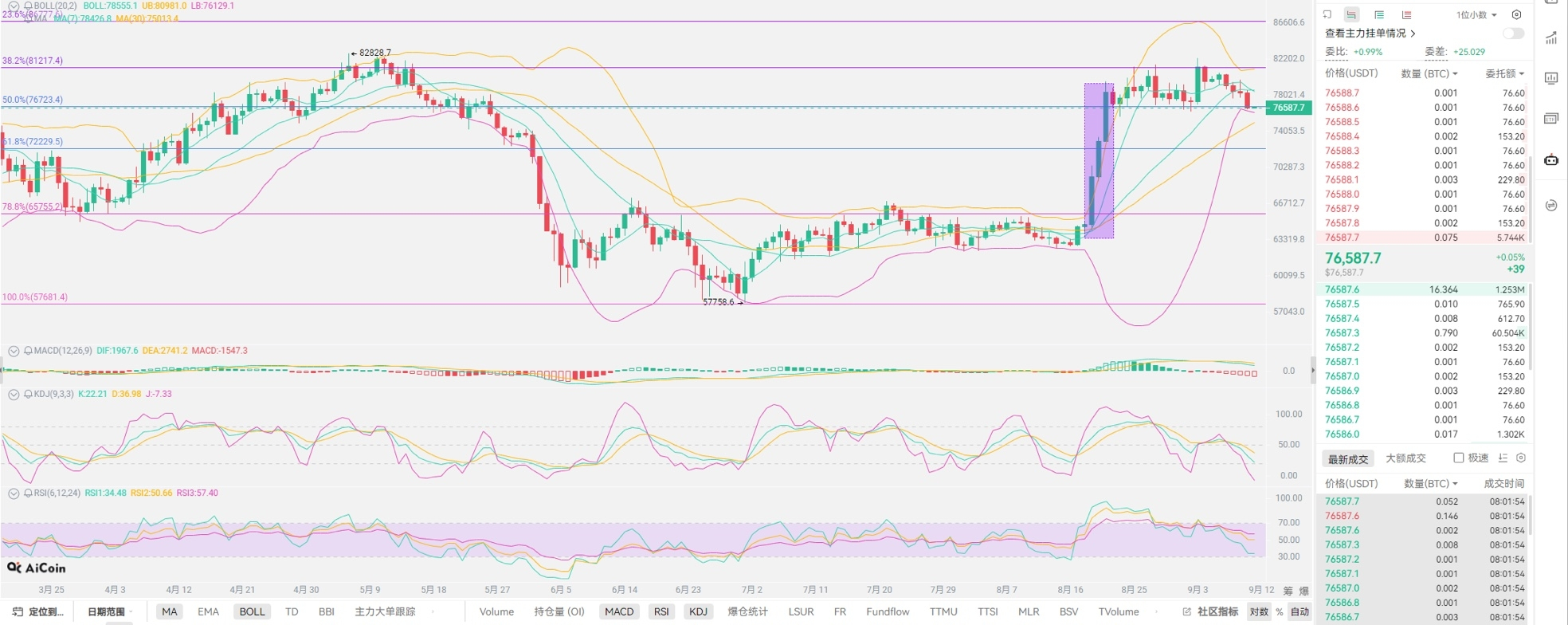

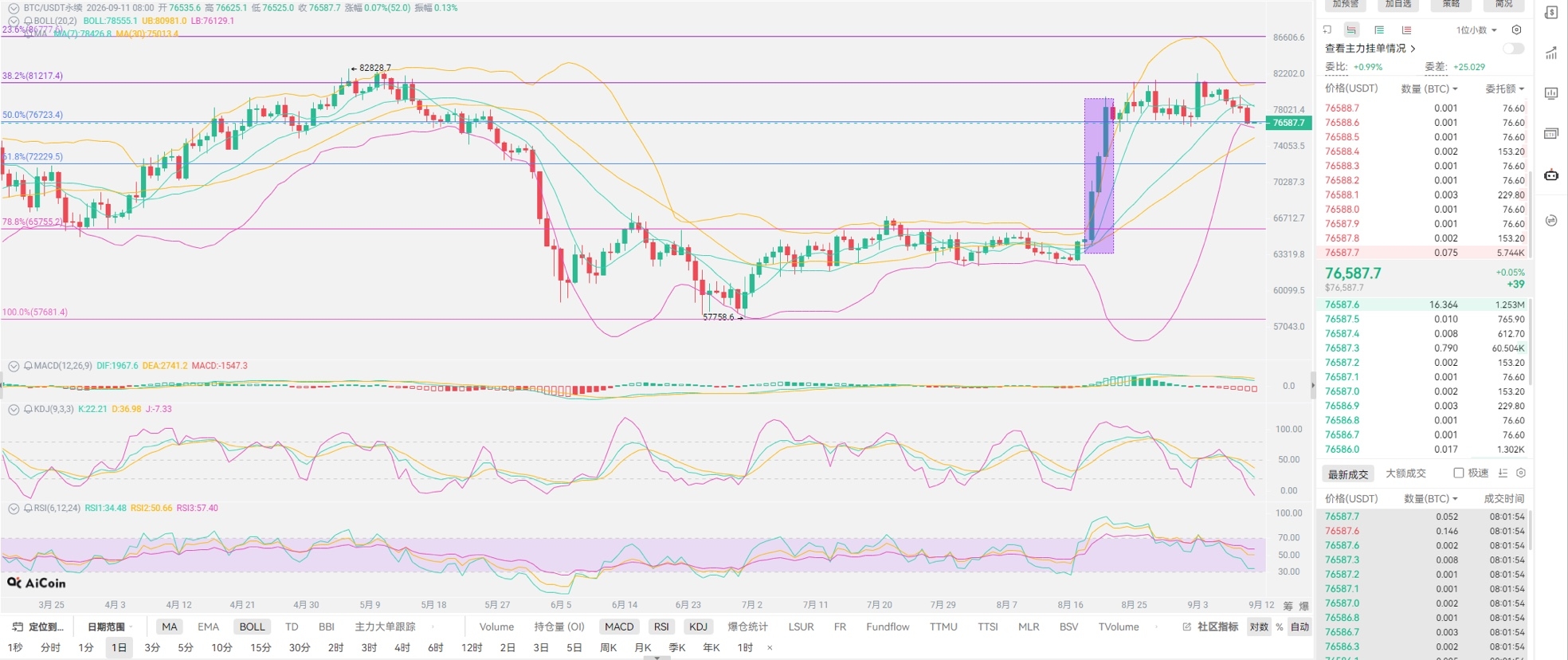
Data release of PPI: directly pushed the rate-hike probability to 70%. Finally, things have quieted down a bit. Does anyone still hold a different view? This has directly caused Bitcoin to fall below the 77,000 level, hitting a recent low—it's still in decline right now! Lao Cui can understand why those who expect rate cuts hold such hopes. Most people, however, ignore the issue of yields on old U.S. Treasuries and are betting that the old U.S. will have more weight in the stock market. This also reminds Lao Cui of the domestic Guan Shanxiang incident. In Lao Cui’s personal view, it’s hard to stop the trend of events. If you can understand the problem with old U.S. Treasuries, then you can understand the development of stablecoins in the crypto world. Most companies that are optimistic about stablecoins don’t necessarily believe in the future market. Here’s the conclusion for everyone: old U.S. Treasuries will not collapse. In the short-term Treasury market, there are more people willing to take the tickets. Among them are stablecoin issuers in the crypto space. They buy short-term U.S. Treasuries and then issue stablecoins. The yield from these Treasuries does not need to be redeemed and paid out to everyone, and the short-term Treasuries can also be liquidated at any time!
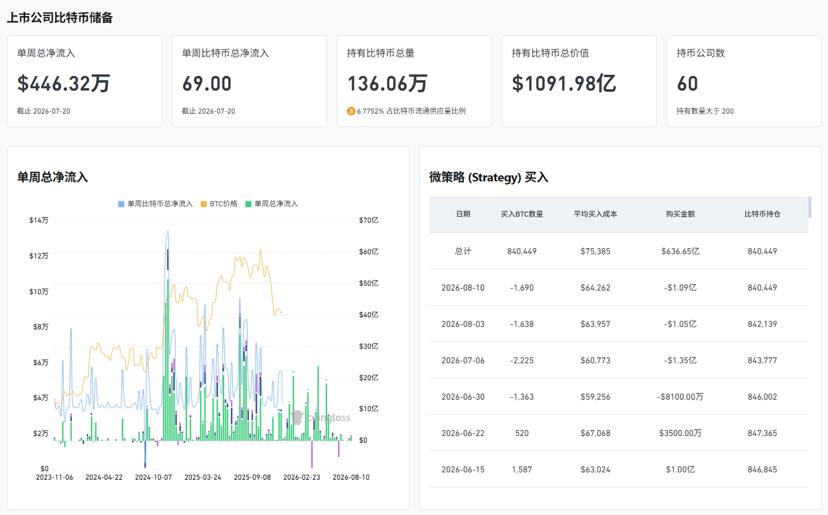
It definitely has data support. In the crypto space, stablecoin issuers have already purchased between 220 billion and 250 billion in short-term U.S. Treasuries, increasing year by year. The only limit to pay attention to is the 10-year Treasury maturity. In financial markets, it’s defined as the “risk-free interest rate” pricing cornerstone. Once the yield on the 10-year Treasury reaches 5% and holds there, it will trigger a chain reaction: large amounts of retirement funds will directly buy it, and the funding costs for listed companies will immediately come to 5%-7%. The real economy and the financial system will feel an extremely obvious “squeezing” effect. This kind of pressure often forces policy to pivot in the opposite direction: either there is a local “blow-up” in the financial system (for example, a bank run or the bankruptcy of a large institution), or the stock market experiences a sharp pullback—thereby pressuring the Federal Reserve to loosen monetary policy (cut rates), or pressuring the U.S. Treasury to reduce the scale of long-term Treasury issuance to cap yields.
Let me give an example: a few years ago you bought a 10-year U.S. Treasury with a face value of $100 and an annual yield of only 1.5%. Now, after the Fed raises rates, newly issued Treasuries in the market yield 5%. At that point, if you want to sell your old 1.5% bond, nobody wants it—unless you sell it at a steep discount (for example, sell it for $70), so that the buyer can effectively still get a 5% return when they account for the discount. The consequence is that the Fed’s aggressive rate hikes directly cause the prices of the large amount of “low-interest Treasuries” accumulated in the market to crash. The banks holding these old Treasuries (like Silicon Valley Bank) and overseas central banks suffer massive unrealized losses. The core purpose is to have the people who bought Treasuries before take in those losses, completing the “redemption” of the older U.S. Treasuries. So Lao Cui’s final view is: there won’t be an ongoing rate-hike cycle. Once the purpose of this rate hike is achieved, it will still enter a rate-cut cycle. This is what Lao Cui said yesterday as well: the best time for crypto is next year, when the clear legislative bill passes and we enter a rate-cut cycle—then crypto will directly step into a bull-market cycle.
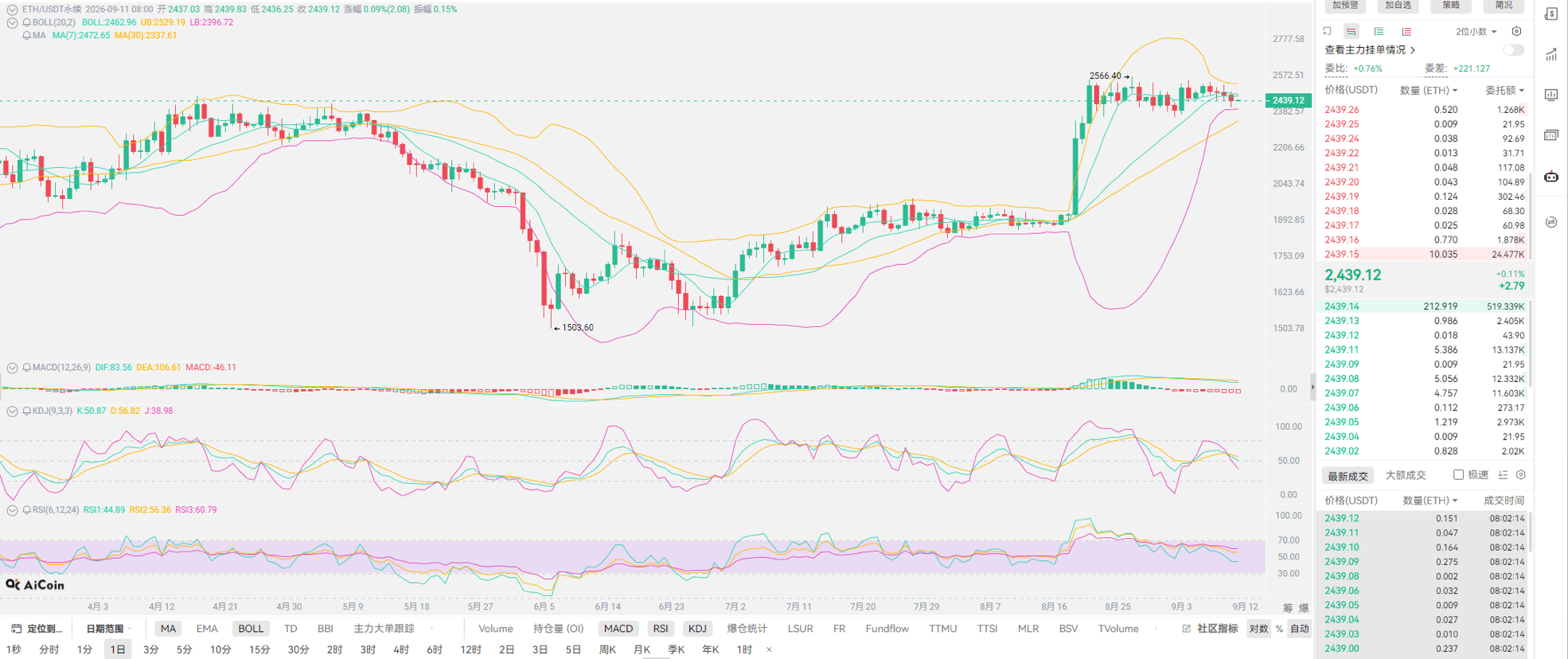
Lao Cui’s summary: This recent upcycle has basically come to an end. For this year, the crypto world has been a losing year. The remaining time is for everyone to prepare to buy the dip. At least after this rate hike, you can choose your entry points. Lao Cui’s estimate is that as long as there isn’t another rate-hike cycle, the downside won’t be too deep. The growth in stablecoin market cap and the potential upside from a clear legislative bill are still there. Plus, with recent moves from the UK: the UK House of Lords voted to pass an amendment requiring the government to formulate a digital asset strategy. Europe has already started taking action following the same thinking as the US. It’s just that these good-news developments can’t be realized in the short term, but they do have some influence on how deep the downside can go. When the market is getting dumped, it’s impossible not to consider the strength of the upside catalyst that follows. People buying the dip are waiting for the chance of more downside—when to act depends on everyone’s ability to play the trade. Lao Cui’s view is still to buy around 60,000. Even if there are deeper levels, he would still choose that area. If you look deeper, you can’t buy deeper; otherwise, when the market starts moving, it might not have much impact on everyone. Lao Cui’s goal is to be on the inside when the next bull market begins. There isn’t much to discuss about contracts—shorting blindly is the move. Japan, Europe, and the US all choose rate hikes. Shorting is the direction! Even any position can work!