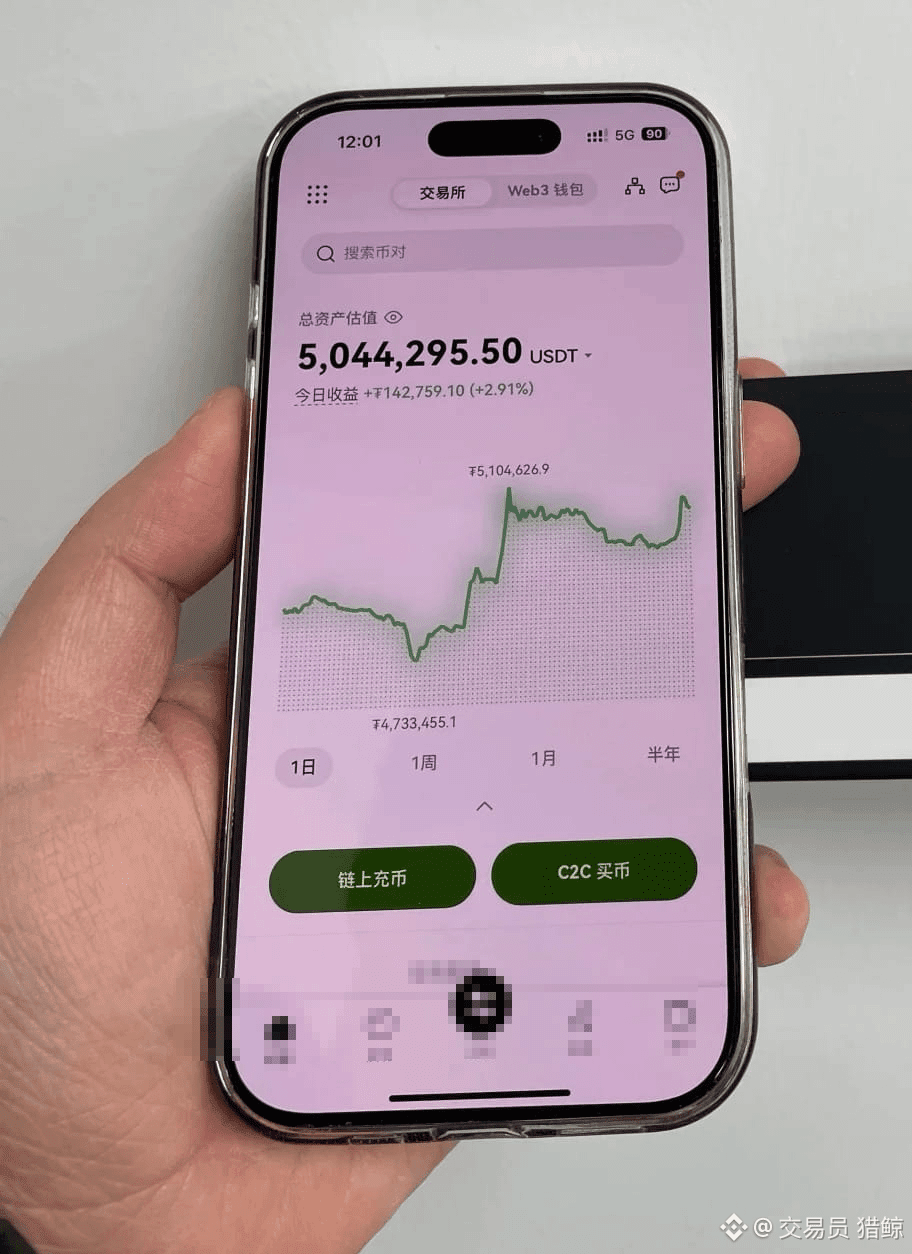
From ordinary everyday life to the time my account climbed to an 8-figure number, what I truly understood isn’t predicting the market—it’s three numbers: 2, 5, 3#合约养家
Many people who trade BTC love asking me: bro, is this really the bottom now?
I basically don’t argue with them about that point.
Because true professional entry (building a position) is never about betting on the absolute lowest point. It’s about thinking through every step in advance.
Step one: allocate 20% for a trial position
Suppose you’re preparing a capital pool of 100,000. Start by taking 20,000 to test. The position is light, so even if your judgment isn’t right for now, it won’t push you into a dead-end corner immediately.
Step two: add in 50% in batches
The remaining 50,000 isn’t put in all at once. Instead, you add tier by tier based on pullbacks and structure. The core isn’t “buy more the lower it goes.” The core is that every single order must have a plan, leaving room for you to adjust.
Step three: wait for confirmation with the last 30%
Only after a real breakout of the key level—and the pullback still holds—do you enter with the final 30,000. The add at this stage isn’t driven by emotion; it’s positioning based on trend confirmation.
253 may look simple, but its biggest value is that it keeps you from having to guess the bottom every day, and also prevents you from locking yourself in forever just because your first buy was wrong.
Over the years, I’ve become more and more certain: building a position isn’t about who buys the most accurately—it’s about who, from the very first trade, leaves themselves proper backup plans.
Real professional entry isn’t about guessing the lowest point; it’s about making sure every step has an exit.
What I can guide you with isn’t only where to buy, but also how to split, how to wait, and when to add. If you want to learn 253 properly, come find me #币圈投资策略
Many people who trade BTC love asking me: bro, is this really the bottom now?
I basically don’t argue with them about that point.
Because true professional entry (building a position) is never about betting on the absolute lowest point. It’s about thinking through every step in advance.
Step one: allocate 20% for a trial position
Suppose you’re preparing a capital pool of 100,000. Start by taking 20,000 to test. The position is light, so even if your judgment isn’t right for now, it won’t push you into a dead-end corner immediately.
Step two: add in 50% in batches
The remaining 50,000 isn’t put in all at once. Instead, you add tier by tier based on pullbacks and structure. The core isn’t “buy more the lower it goes.” The core is that every single order must have a plan, leaving room for you to adjust.
Step three: wait for confirmation with the last 30%
Only after a real breakout of the key level—and the pullback still holds—do you enter with the final 30,000. The add at this stage isn’t driven by emotion; it’s positioning based on trend confirmation.
253 may look simple, but its biggest value is that it keeps you from having to guess the bottom every day, and also prevents you from locking yourself in forever just because your first buy was wrong.
Over the years, I’ve become more and more certain: building a position isn’t about who buys the most accurately—it’s about who, from the very first trade, leaves themselves proper backup plans.
Real professional entry isn’t about guessing the lowest point; it’s about making sure every step has an exit.
What I can guide you with isn’t only where to buy, but also how to split, how to wait, and when to add. If you want to learn 253 properly, come find me #币圈投资策略