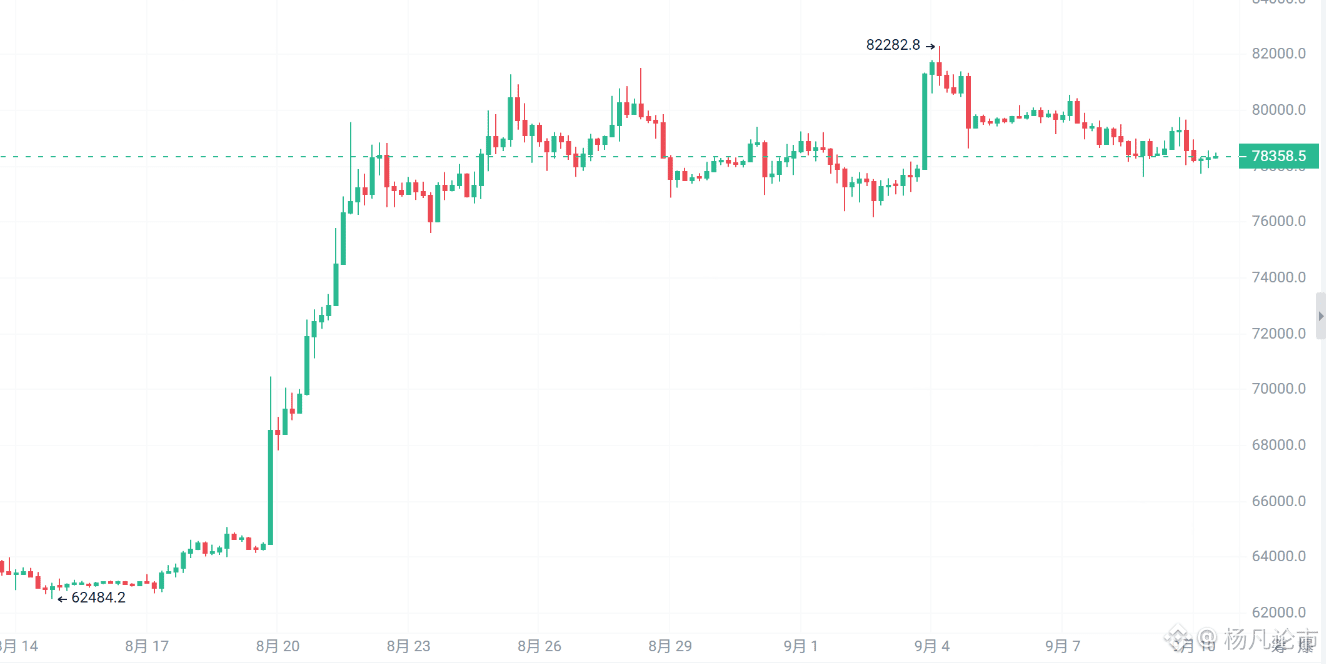
A sustained stretch of large net inflows in the early period, and the market is abuzz with talk of institutions moving in. But then the funds quickly reversed direction and turned into net outflows. This “turning from positive to negative” is a crucial signal in the current BTC market.
Underlying reasons for funds turning from positive to negative
1. Taking profits and tactical rebalancing
A wave of continuous inflows drives a rebound in the price. After short-term institutions and hedge funds capture unrealized gains, they choose to take profit and redeem ETFs at resistance levels.
This isn’t a total bearish view on Bitcoin—it's simply short-term profit-taking, an asset rebalancing operation.
2. Macro expectations change
Inflation data comes in above expectations, rate-hike expectations reemerge, and U.S. Treasury yields rise. Risk assets face collective pressure; institutions voluntarily reduce exposure to high-volatility assets, pulling funds out of BTC ETFs and rotating back into fixed income and the AI stock sector.
3. Good news is priced in early—buy the expectation, sell the fact
During a continuous phase of large inflows, the market has already fully priced in the narrative of institutional entry.
After subsequent inflows slow down or even turn negative, even if the outflow size isn’t explosive, bullish sentiment can retreat rapidly—making it easy to see a situation where “when the money comes in it doesn’t rise, and when it leaves it drops.”
4. Noise from quarter-end/month-end fund pullbacks
Some single-day turns negative may be due to fund quarterly rebalancing or accounting settlement. This is short-term disturbance and doesn’t necessarily mean the medium- to long-term trend has fully reversed.
$BTC $ETH #苹果发布首款折叠屏手机
Underlying reasons for funds turning from positive to negative
1. Taking profits and tactical rebalancing
A wave of continuous inflows drives a rebound in the price. After short-term institutions and hedge funds capture unrealized gains, they choose to take profit and redeem ETFs at resistance levels.
This isn’t a total bearish view on Bitcoin—it's simply short-term profit-taking, an asset rebalancing operation.
2. Macro expectations change
Inflation data comes in above expectations, rate-hike expectations reemerge, and U.S. Treasury yields rise. Risk assets face collective pressure; institutions voluntarily reduce exposure to high-volatility assets, pulling funds out of BTC ETFs and rotating back into fixed income and the AI stock sector.
3. Good news is priced in early—buy the expectation, sell the fact
During a continuous phase of large inflows, the market has already fully priced in the narrative of institutional entry.
After subsequent inflows slow down or even turn negative, even if the outflow size isn’t explosive, bullish sentiment can retreat rapidly—making it easy to see a situation where “when the money comes in it doesn’t rise, and when it leaves it drops.”
4. Noise from quarter-end/month-end fund pullbacks
Some single-day turns negative may be due to fund quarterly rebalancing or accounting settlement. This is short-term disturbance and doesn’t necessarily mean the medium- to long-term trend has fully reversed.
$BTC $ETH #苹果发布首款折叠屏手机