Today let’s talk about a topic:
“Are US Treasury repos failing + inflation accelerating?”
On August 19, the Ministry of Finance will increase the scale of long-term Treasury repo operations “at least twofold” to $4 billion. BTC surged on the news.
On September 10 today, it was increased again to $6 billion.
#美财政部拟回购最多60亿美元国债
But oddly, after each additional round, the yield on the 10-year Treasury doesn’t fall—it rises instead. It has already broken above 4.85%.
#美国10年期美债收益率创2023年11月新高
This is the bond market, using real money, to question the sustainability of US Treasuries—on top of the US’s existing budget deficit of over $2 trillion, annual interest expense of over $1.2 trillion, and the foundation of more than 2% inflation sustained for 60 consecutive months. Fiscal space is being squeezed.
At the same time, the Iran war has lasted 193 days. Oil prices have broken above $100, and energy costs are quickly being transmitted into the CPI.
#布伦特原油突破100美元
If this Friday’s CPI data comes in high, the Fed will have a hard time finding another reason to pause rate hikes.
The pressure has already shown up in capital flows.
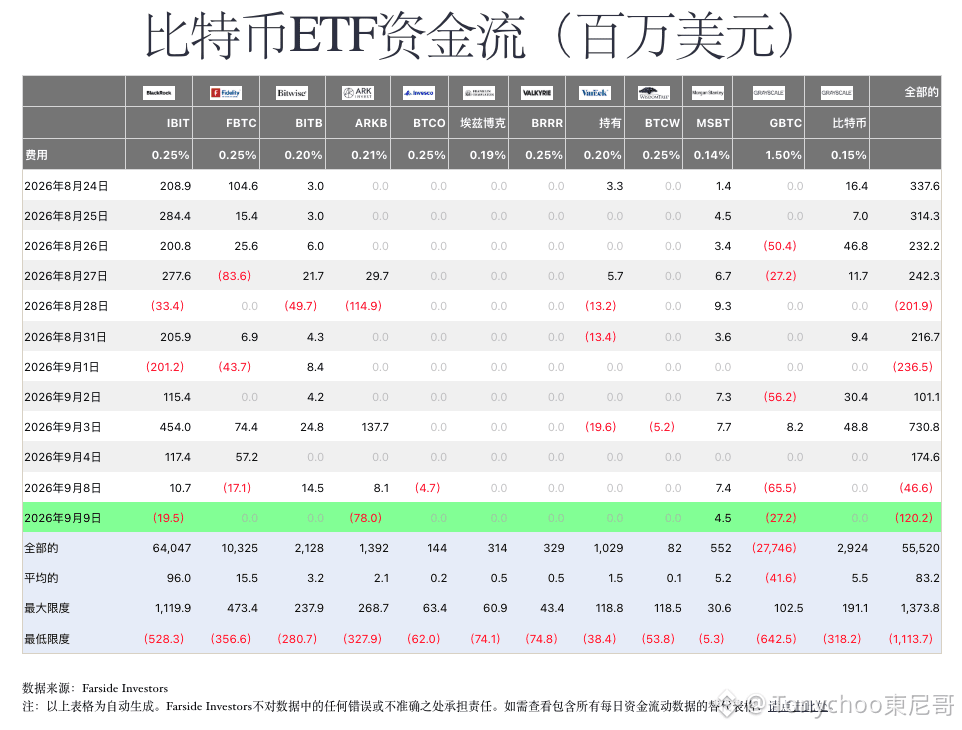
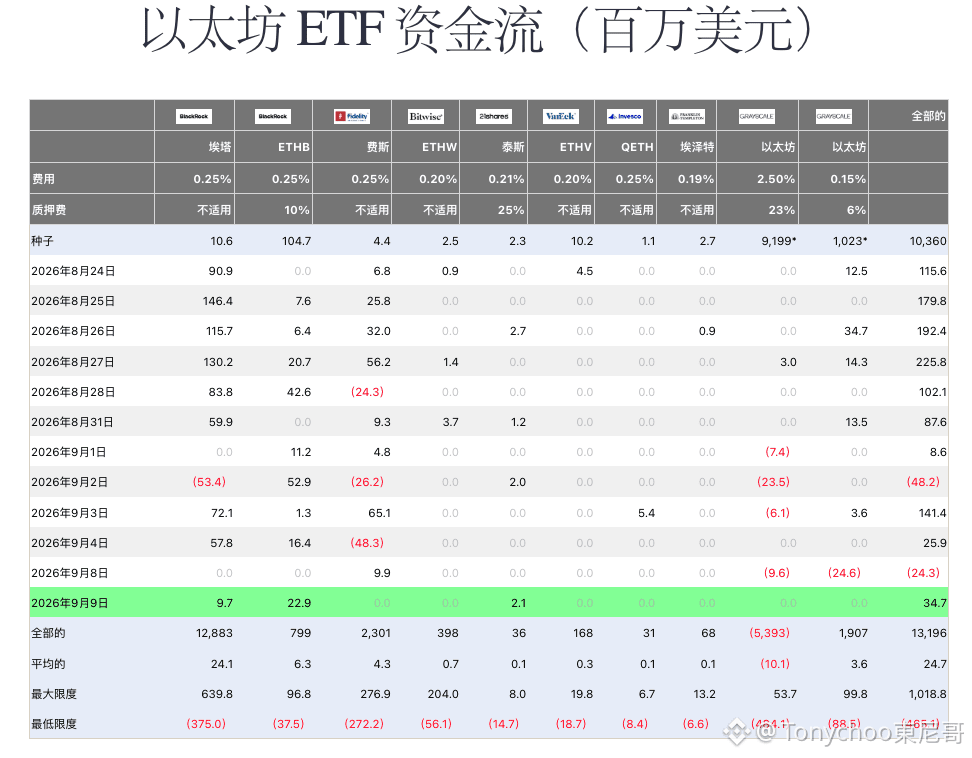
The BTC ETF ended its period of continuous net inflows and flipped to two consecutive days of net outflows from September 8–9. The ETH ETF also turned from positive to negative and then stalled (Figures 1 and 2).
Tony Ge’s view:
This is a direct reflection of the surge in Treasury yields—bearish for non-yielding assets—showing that institutions are shrinking their risk exposure in the short term.
But don’t rush to go short.
The more the US uses Treasury repos, the less effective they become. In essence, what is exposed is structural pressure under fiscal dominance.
Historically, the endgame in such predicaments often comes in the form of forced easing or debt monetization.
That is precisely the core argument of BTC’s long-term narrative.
Short-term pressure, long-term case building continues—not being refuted.
“Are US Treasury repos failing + inflation accelerating?”
On August 19, the Ministry of Finance will increase the scale of long-term Treasury repo operations “at least twofold” to $4 billion. BTC surged on the news.
On September 10 today, it was increased again to $6 billion.
#美财政部拟回购最多60亿美元国债
But oddly, after each additional round, the yield on the 10-year Treasury doesn’t fall—it rises instead. It has already broken above 4.85%.
#美国10年期美债收益率创2023年11月新高
This is the bond market, using real money, to question the sustainability of US Treasuries—on top of the US’s existing budget deficit of over $2 trillion, annual interest expense of over $1.2 trillion, and the foundation of more than 2% inflation sustained for 60 consecutive months. Fiscal space is being squeezed.
At the same time, the Iran war has lasted 193 days. Oil prices have broken above $100, and energy costs are quickly being transmitted into the CPI.
#布伦特原油突破100美元
If this Friday’s CPI data comes in high, the Fed will have a hard time finding another reason to pause rate hikes.
The pressure has already shown up in capital flows.
The BTC ETF ended its period of continuous net inflows and flipped to two consecutive days of net outflows from September 8–9. The ETH ETF also turned from positive to negative and then stalled (Figures 1 and 2).
Tony Ge’s view:
This is a direct reflection of the surge in Treasury yields—bearish for non-yielding assets—showing that institutions are shrinking their risk exposure in the short term.
But don’t rush to go short.
The more the US uses Treasury repos, the less effective they become. In essence, what is exposed is structural pressure under fiscal dominance.
Historically, the endgame in such predicaments often comes in the form of forced easing or debt monetization.
That is precisely the core argument of BTC’s long-term narrative.
Short-term pressure, long-term case building continues—not being refuted.