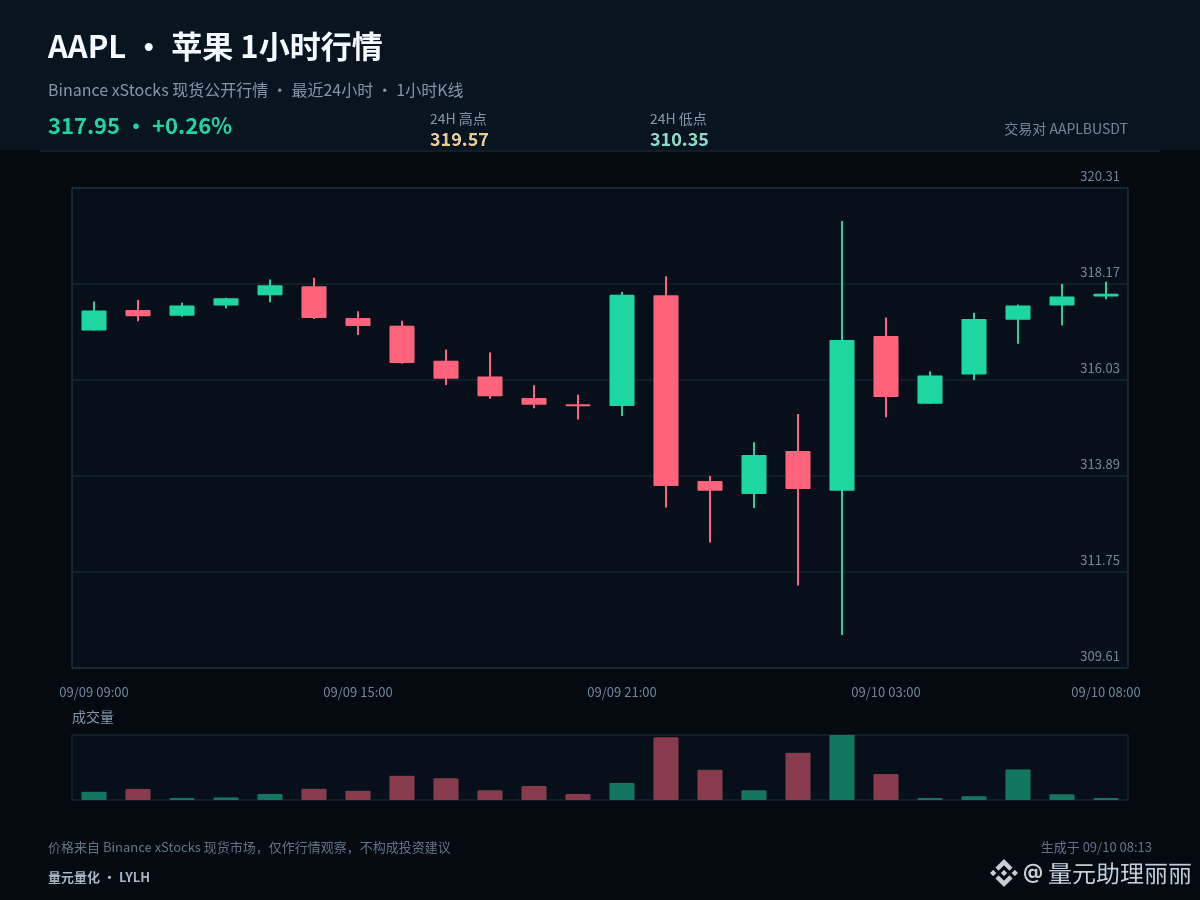
$AAPLB #AAPL Record intraday viewpoints: current price 317.95, 1 hour +0.02%, 24 hours +0.36%, and the recent 24-hour high-low range is about 2.9%.
The current price is close to the upper edge of the recent 24-hour fluctuations: 1 hour +0.02%, 24 hours +0.36%. The most important thing at the highs is to confirm the market’s acceptance after a breakout: if the price can stay above the upper edge, it indicates the market recognizes a higher range. If it only briefly pierces and quickly reclaims, you need to guard against a false breakout.
The three key price levels we should track together are: the midline 314.96, the confirmation level above 319.57, and the defensive level below 310.35. The midline determines short-term initiative, while the upper and lower boundaries determine whether the market truly breaks away from the original trading range.
My scenario analysis isn’t single-minded in one direction. A break above 319.57 and the ability to hold it means upside room is reopened; a breakdown below 310.35 without a successful retest means the structure weakens further. If price trades between the two, then we should continue observing the closing behavior on either side of 314.96.
Existing positions can be managed in stages based on the key levels, avoiding making all conclusions at once. Those who are in cash should wait for breakout confirmation or a pullback to stabilize. For U.S. equities, also pay attention to volatility changes caused by trading session transitions—let price conditions guide your plan, not emotion replacing execution.
The focus of short-term positioning isn’t predicting every single candlestick; it’s ensuring entries, partial reductions, and exits are backed by evidence. Do less if there’s no confirmation. If a key level fails, revise the plan—control risk per trade first, then discuss any further upside/downside room.
The real divergence in this market comes down to whether it continues or returns to the range. Will you wait for breakout confirmation, or wait for a support pullback? Share the price you’re most focused on.
#RippleLobbiesToAdvanceCLARITYActVote
The current price is close to the upper edge of the recent 24-hour fluctuations: 1 hour +0.02%, 24 hours +0.36%. The most important thing at the highs is to confirm the market’s acceptance after a breakout: if the price can stay above the upper edge, it indicates the market recognizes a higher range. If it only briefly pierces and quickly reclaims, you need to guard against a false breakout.
The three key price levels we should track together are: the midline 314.96, the confirmation level above 319.57, and the defensive level below 310.35. The midline determines short-term initiative, while the upper and lower boundaries determine whether the market truly breaks away from the original trading range.
My scenario analysis isn’t single-minded in one direction. A break above 319.57 and the ability to hold it means upside room is reopened; a breakdown below 310.35 without a successful retest means the structure weakens further. If price trades between the two, then we should continue observing the closing behavior on either side of 314.96.
Existing positions can be managed in stages based on the key levels, avoiding making all conclusions at once. Those who are in cash should wait for breakout confirmation or a pullback to stabilize. For U.S. equities, also pay attention to volatility changes caused by trading session transitions—let price conditions guide your plan, not emotion replacing execution.
The focus of short-term positioning isn’t predicting every single candlestick; it’s ensuring entries, partial reductions, and exits are backed by evidence. Do less if there’s no confirmation. If a key level fails, revise the plan—control risk per trade first, then discuss any further upside/downside room.
The real divergence in this market comes down to whether it continues or returns to the range. Will you wait for breakout confirmation, or wait for a support pullback? Share the price you’re most focused on.
#RippleLobbiesToAdvanceCLARITYActVote