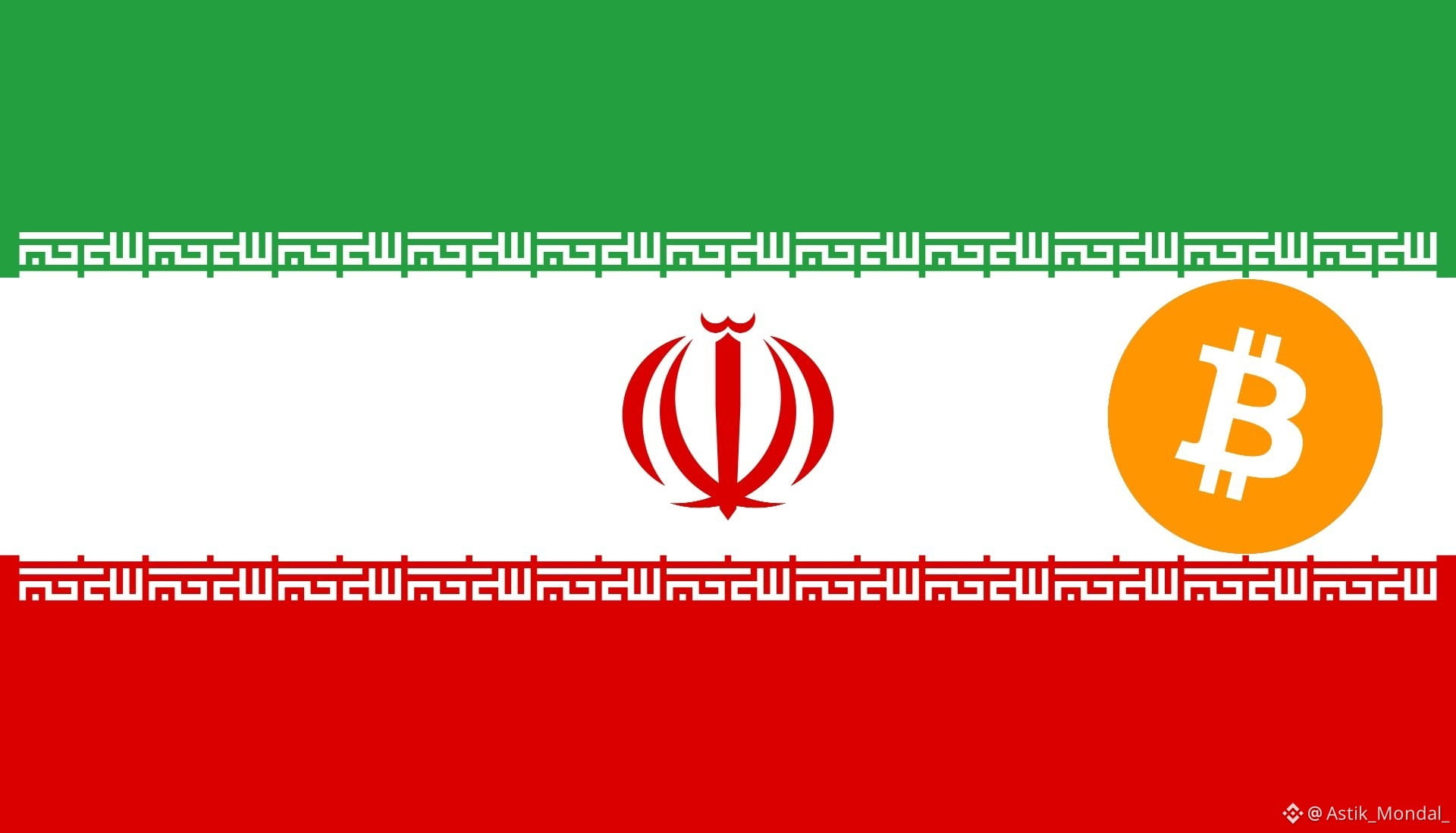
🚨 JUST IN: Iran just admitted, quietly, that crypto has become its financial lifeline against the US blockade.
"Receiving cryptocurrencies for exports is now totally established," a business executive close to the Iranian regime told the Financial Times.
The backstory explains why. Iranian exporters used to be forced to funnel foreign earnings through a government platform at official exchange rates that traded well below market value, a system that gave businesses every incentive to hide revenue overseas or dodge repatriation entirely. Iran's central bank has now quietly stopped enforcing those rules, letting traders settle cross-border payments directly through domestic crypto exchanges instead.
USDT is the tool of choice, followed by Bitcoin. Businesses can now bring earnings home in crypto, trade currency on open markets, or use export revenue to pay for imports directly, bypassing the state financial system almost entirely.
The scale here is enormous. Iranian officials are reportedly trying to claw back over €94 billion in unrepatriated export earnings from more than 20,000 individuals and companies who've been sitting on funds abroad, some analysts suggest the real gray-market total could run near $100 billion. TRM Labs separately measured $9.9 billion in Iran-linked crypto activity in 2025 alone.
This isn't Iran experimenting with crypto as a niche workaround anymore. It's the central bank formally legitimizing a parallel banking system built entirely outside US reach, right as Washington escalates what Bessent calls the "greatest financial offensive ever marshalled against an adversary."
Every dollar Tehran moves through crypto is a dollar the blockade can't touch, at least until Tether's freeze function catches up with it.
#Iran #Bitcoin #USDT #Sanctions #Crypto
"Receiving cryptocurrencies for exports is now totally established," a business executive close to the Iranian regime told the Financial Times.
The backstory explains why. Iranian exporters used to be forced to funnel foreign earnings through a government platform at official exchange rates that traded well below market value, a system that gave businesses every incentive to hide revenue overseas or dodge repatriation entirely. Iran's central bank has now quietly stopped enforcing those rules, letting traders settle cross-border payments directly through domestic crypto exchanges instead.
USDT is the tool of choice, followed by Bitcoin. Businesses can now bring earnings home in crypto, trade currency on open markets, or use export revenue to pay for imports directly, bypassing the state financial system almost entirely.
The scale here is enormous. Iranian officials are reportedly trying to claw back over €94 billion in unrepatriated export earnings from more than 20,000 individuals and companies who've been sitting on funds abroad, some analysts suggest the real gray-market total could run near $100 billion. TRM Labs separately measured $9.9 billion in Iran-linked crypto activity in 2025 alone.
This isn't Iran experimenting with crypto as a niche workaround anymore. It's the central bank formally legitimizing a parallel banking system built entirely outside US reach, right as Washington escalates what Bessent calls the "greatest financial offensive ever marshalled against an adversary."
Every dollar Tehran moves through crypto is a dollar the blockade can't touch, at least until Tether's freeze function catches up with it.
#Iran #Bitcoin #USDT #Sanctions #Crypto