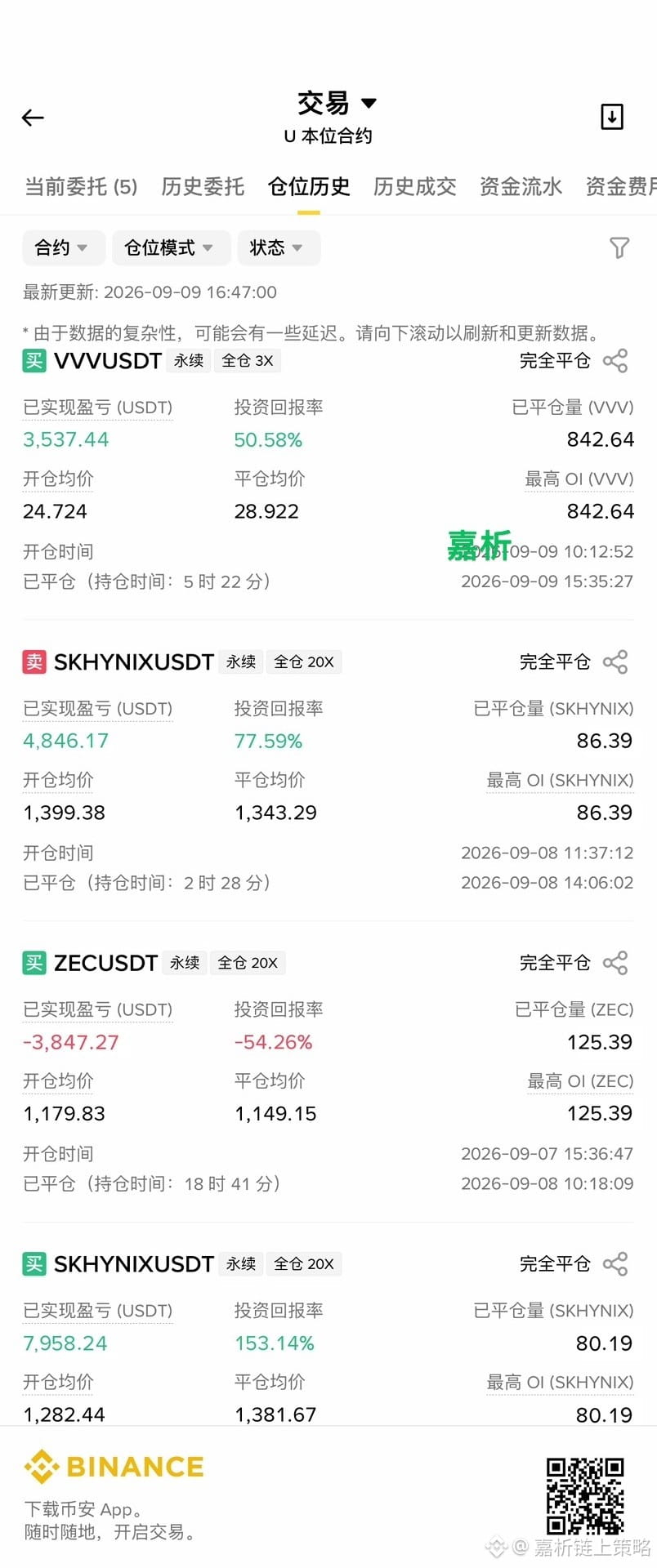
How to control your position? Just keep it simple.
Before you open a trade, ask yourself: if this trade goes against me, how much can I lose and still sleep soundly at night? Then size the position based on that number. Going in with full size right away isn’t trading—it’s gambling with your life.
I’ve always followed one rule: before opening, calculate the maximum you can afford to lose. If the direction is right and you have floating profit, then add gradually. If you’re wrong, exit immediately—never “hold and hope.” I’ve already quit the habit of averaging down to cover floating losses and spread out the cost. If the moving averages break, they break—don’t wait for a bounce to bet on a reversal.
Trading isn’t about having the most accurate judgment. It’s about the ability to control yourself. Those with big nerves fall quickly; those who live longer respect the market—being cautious but with clear boundaries.
Now I only place a few trades each day. If there’s no signal, I stay flat. Lock each loss into a range you can tolerate, and the account can gradually move upward.
People who follow the rules may move slower, but they’ll definitely go farther. Time will give you the results—as long as you’re still at the table.
Before you open a trade, ask yourself: if this trade goes against me, how much can I lose and still sleep soundly at night? Then size the position based on that number. Going in with full size right away isn’t trading—it’s gambling with your life.
I’ve always followed one rule: before opening, calculate the maximum you can afford to lose. If the direction is right and you have floating profit, then add gradually. If you’re wrong, exit immediately—never “hold and hope.” I’ve already quit the habit of averaging down to cover floating losses and spread out the cost. If the moving averages break, they break—don’t wait for a bounce to bet on a reversal.
Trading isn’t about having the most accurate judgment. It’s about the ability to control yourself. Those with big nerves fall quickly; those who live longer respect the market—being cautious but with clear boundaries.
Now I only place a few trades each day. If there’s no signal, I stay flat. Lock each loss into a range you can tolerate, and the account can gradually move upward.
People who follow the rules may move slower, but they’ll definitely go farther. Time will give you the results—as long as you’re still at the table.