PONS for $0.83—what are you betting on?
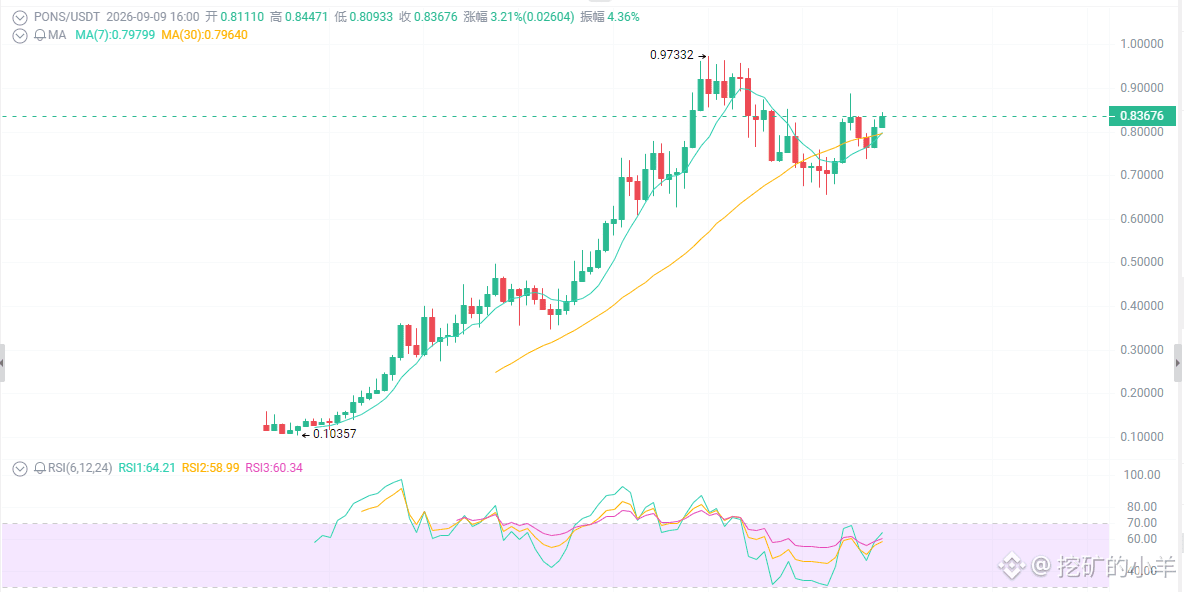
First, look at the surface: in just two months it surged 300x, but after the ATH it pulled back 30%.
The July low was 0.0033. On September 5 it hit an ATH of 0.97, which means a 294x gain over two months. Then it got dumped to 0.68, and now it has rebounded to 0.83. The intraday range is 0.68–0.88. In the last 24 hours, volume is $150 million, and the turnover rate is alarmingly high. The trend isn’t dead, but it’s already overheated.
First thing: the burn is real, the revenue is real—but the celebration has an expiration date
PONS is not air. 80% of protocol revenue is used for buybacks and burning PONS. Cumulatively, about 30% of the total supply has been burned, shrinking from 1 billion to just over 700 million. On September 8, the official confirmed this number.
But pay attention: Robinhood Chain has a 90-day fee subsidy, expiring on September 29.
Right now minting and volume generation cost almost nothing, so tens of thousands of coins can be minted every day, contributing 50%–80% of on-chain activity. Once the subsidy stops, the cost of minting will jump by dozens of times, even up to hundreds. High-frequency minting and trading volume will most likely drop off a cliff.
Second thing: Uniswap bought, big exchanges listed—who’s taking the last baton?
Uniswap Labs bought PONS, calling it “long-term alignment.” Exchanges have listed it one after another, and OK Perps just opened on September 5.
From 0.0033 to 0.97, early participants are sitting on paper gains of hundreds of times.
After the perpetual contracts launched, long and short liquidations already happened once: it was slammed after the ATH down to 0.68, about a 30% drop.
What retail sees is “exchange listing is a positive catalyst.”
What the market maker sees is “liquidity is enough—we can exit in batches.”
Third thing: the chip structure—more dangerous than you think
Initial supply was 1 billion. About 30% has already been burned, leaving circulating supply of roughly 700–710 million. Market cap is around $560–$580 million.
But within this “circulation,” how much is early low-cost inventory—think about that yourself. The project team, early Launchpad participants, and meme teams that minted at launch have costs close to zero.
Trading plan
Spot players:
If you want to buy, wait for a pullback and stabilization around 0.76–0.78, or deeper near 0.70. First target 0.88, second 0.95–0.97. If it breaks 0.68, exit. After September 20, regardless of profit or loss, reduce exposure to save yourself.
Perpetual players:
If it pumps and stalls around 0.86–0.88, you can try a small short position. Targets are 0.78/0.70. But don’t go naked short—the burn funds are buying every day, and shorts can get squeezed at any moment.
No-position players:
Wait. Wait for the pullback to confirm. Wait for real bottom when the panic sells out after the subsidy expires. Wait until BTC holds steady around 80,000 before deciding.
First, look at the surface: in just two months it surged 300x, but after the ATH it pulled back 30%.
The July low was 0.0033. On September 5 it hit an ATH of 0.97, which means a 294x gain over two months. Then it got dumped to 0.68, and now it has rebounded to 0.83. The intraday range is 0.68–0.88. In the last 24 hours, volume is $150 million, and the turnover rate is alarmingly high. The trend isn’t dead, but it’s already overheated.
First thing: the burn is real, the revenue is real—but the celebration has an expiration date
PONS is not air. 80% of protocol revenue is used for buybacks and burning PONS. Cumulatively, about 30% of the total supply has been burned, shrinking from 1 billion to just over 700 million. On September 8, the official confirmed this number.
But pay attention: Robinhood Chain has a 90-day fee subsidy, expiring on September 29.
Right now minting and volume generation cost almost nothing, so tens of thousands of coins can be minted every day, contributing 50%–80% of on-chain activity. Once the subsidy stops, the cost of minting will jump by dozens of times, even up to hundreds. High-frequency minting and trading volume will most likely drop off a cliff.
Second thing: Uniswap bought, big exchanges listed—who’s taking the last baton?
Uniswap Labs bought PONS, calling it “long-term alignment.” Exchanges have listed it one after another, and OK Perps just opened on September 5.
From 0.0033 to 0.97, early participants are sitting on paper gains of hundreds of times.
After the perpetual contracts launched, long and short liquidations already happened once: it was slammed after the ATH down to 0.68, about a 30% drop.
What retail sees is “exchange listing is a positive catalyst.”
What the market maker sees is “liquidity is enough—we can exit in batches.”
Third thing: the chip structure—more dangerous than you think
Initial supply was 1 billion. About 30% has already been burned, leaving circulating supply of roughly 700–710 million. Market cap is around $560–$580 million.
But within this “circulation,” how much is early low-cost inventory—think about that yourself. The project team, early Launchpad participants, and meme teams that minted at launch have costs close to zero.
Trading plan
Spot players:
If you want to buy, wait for a pullback and stabilization around 0.76–0.78, or deeper near 0.70. First target 0.88, second 0.95–0.97. If it breaks 0.68, exit. After September 20, regardless of profit or loss, reduce exposure to save yourself.
Perpetual players:
If it pumps and stalls around 0.86–0.88, you can try a small short position. Targets are 0.78/0.70. But don’t go naked short—the burn funds are buying every day, and shorts can get squeezed at any moment.
No-position players:
Wait. Wait for the pullback to confirm. Wait for real bottom when the panic sells out after the subsidy expires. Wait until BTC holds steady around 80,000 before deciding.