Why STON.fi Is Becoming a Major Player in TON DeFi
TON DeFi is evolving quickly, and @ston_fi is positioning itself as more than just another DEX.
At its core, STON.fi provides liquidity for trading assets across the TON ecosystem. But the bigger story is what happens when that liquidity connects beyond TON.
1. Deep TON Liquidity
STON.fi has processed billions in trading volume, supporting markets around assets such as $TON, $USDt and $NOT.
For traders, deeper liquidity generally means better execution and less price impact.
2. Omniston Changes the Game
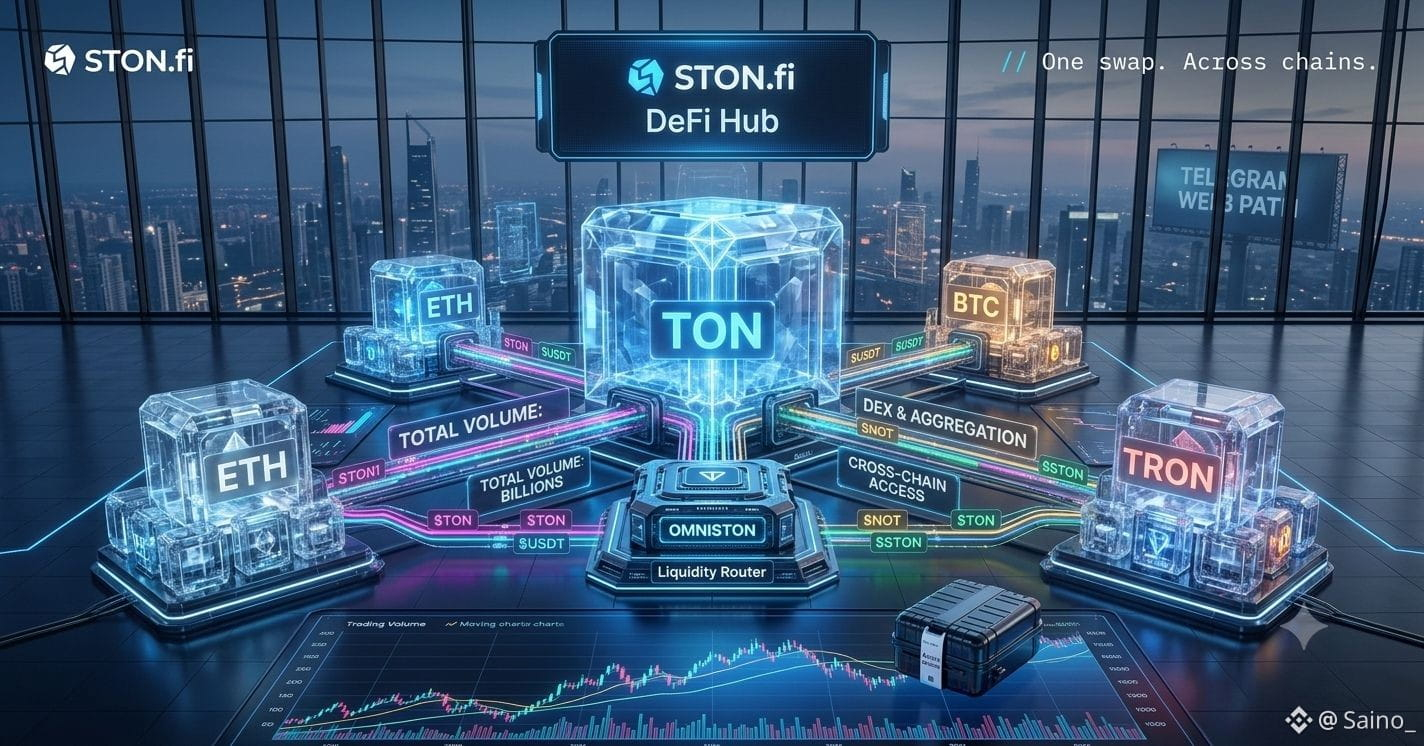
Omniston takes the idea further by aggregating liquidity across multiple ecosystems, including TON, EVM networks and TRON.
Instead of forcing users to manually navigate different liquidity sources, the goal is to optimize execution across them through an RFQ-based architecture.
3. Bringing Major Assets to TON
BTC and ETH exposure is also becoming more accessible within TON through assets such as cbBTC and WETH.
That means users can access major crypto assets without constantly moving between different ecosystems.
4. More Ways to Put Liquidity to Work
STON.fi also goes beyond basic swaps.
Liquidity providers can potentially earn trading fees and participate in farms, while $STON staking provides access to ecosystem incentives and governance-related utility.
The bigger thesis here isn't simply “another DEX.”
It's about making TON liquidity more connected, accessible and useful across ecosystems.
As Telegram pushes TON further into mainstream Web3, infrastructure that can efficiently move liquidity could become increasingly important.
DYOR before using any DeFi protocol, and always verify current APRs, fees and risks.
#TON #STONfi #ETH🔥🔥🔥🔥🔥🔥
TON DeFi is evolving quickly, and @ston_fi is positioning itself as more than just another DEX.
At its core, STON.fi provides liquidity for trading assets across the TON ecosystem. But the bigger story is what happens when that liquidity connects beyond TON.
1. Deep TON Liquidity
STON.fi has processed billions in trading volume, supporting markets around assets such as $TON, $USDt and $NOT.
For traders, deeper liquidity generally means better execution and less price impact.
2. Omniston Changes the Game
Omniston takes the idea further by aggregating liquidity across multiple ecosystems, including TON, EVM networks and TRON.
Instead of forcing users to manually navigate different liquidity sources, the goal is to optimize execution across them through an RFQ-based architecture.
3. Bringing Major Assets to TON
BTC and ETH exposure is also becoming more accessible within TON through assets such as cbBTC and WETH.
That means users can access major crypto assets without constantly moving between different ecosystems.
4. More Ways to Put Liquidity to Work
STON.fi also goes beyond basic swaps.
Liquidity providers can potentially earn trading fees and participate in farms, while $STON staking provides access to ecosystem incentives and governance-related utility.
The bigger thesis here isn't simply “another DEX.”
It's about making TON liquidity more connected, accessible and useful across ecosystems.
As Telegram pushes TON further into mainstream Web3, infrastructure that can efficiently move liquidity could become increasingly important.
DYOR before using any DeFi protocol, and always verify current APRs, fees and risks.
#TON #STONfi #ETH🔥🔥🔥🔥🔥🔥