
橙子Joyce
275 Posts

橙子Joyce
 Square Verified+
价值投资者:以十年为单位投资美股及BTC.ETH.BNB.SOL.推特X:@Joyce88ai
Frequent Trader
8.7 Years
769 Following
33.6K+ Followers
41.7K+ Liked
Posts
All
Quotes
Videos
Live
PINNED
Verified

PINNED

慢就是快Mike
·
--
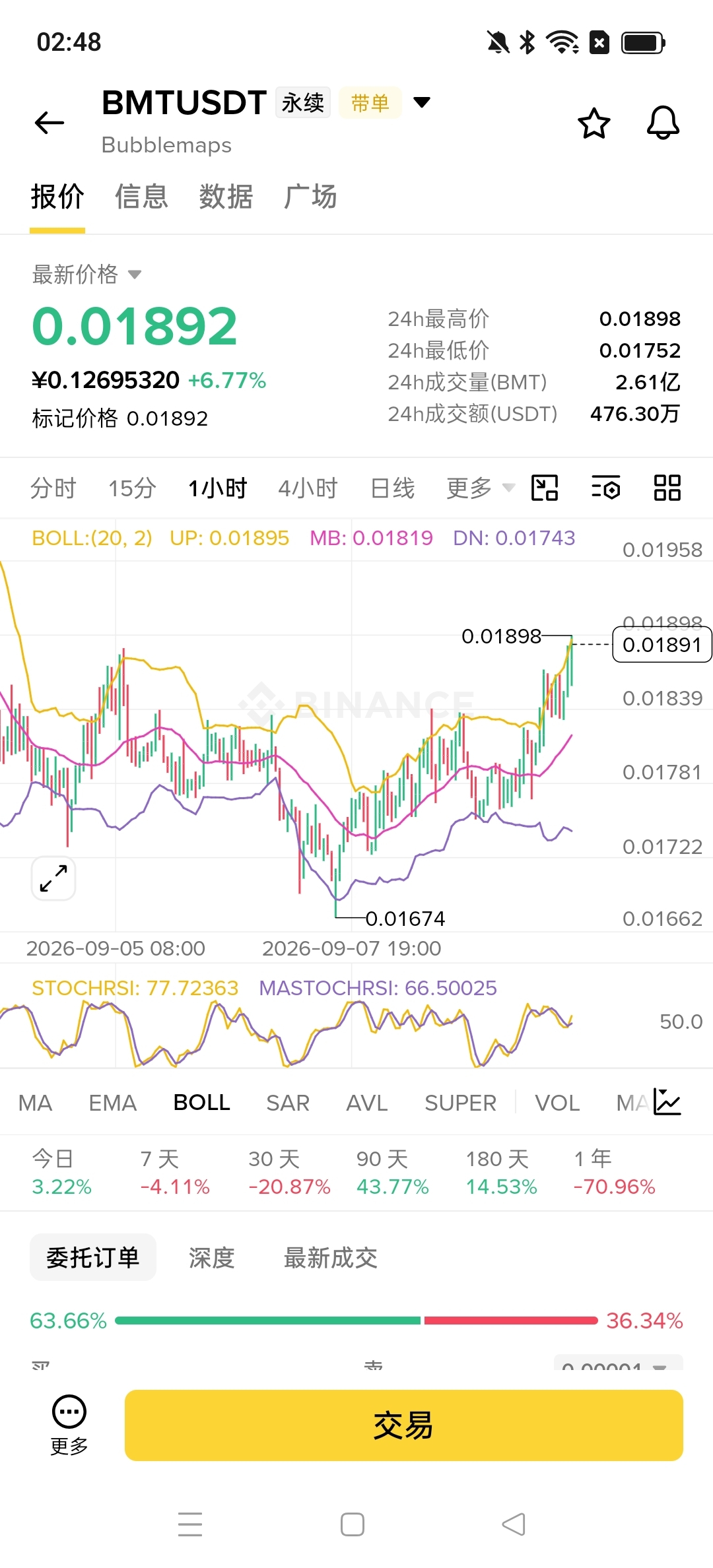
$BMT ! Great!

花涧空
·
--
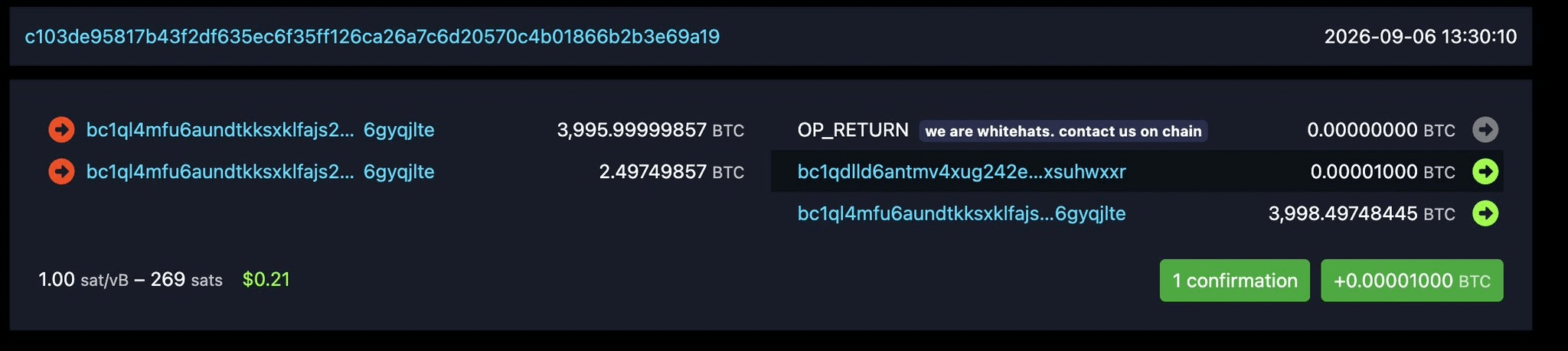
📢4000 BTC Large-Amount Activity on the Blockchain!
About 4,000 BTC were transferred out from the Liquid Network bridge in one go. The transaction includes an OP‑RETURN inscription: “we are whitehats. contact us on chain”(We are white-hats. Please contact us on-chain)
Starting in the early morning, major social groups erupted. At one point, the market spread rumors that a large amount of Bitcoin had been stolen.
But here’s the interesting part: on the order book, $BTC shows almost no movement—the price is rock steady, like an old dog.
Even a “suspected stolen” message at the level of 4,000 BTC couldn’t shake the market.
The market’s ability to absorb is clearly evident—the liquidity in this bull market is completely different 🧊
#Liquid网络遭3.2亿美元攻击
About 4,000 BTC were transferred out from the Liquid Network bridge in one go. The transaction includes an OP‑RETURN inscription: “we are whitehats. contact us on chain”(We are white-hats. Please contact us on-chain)
Starting in the early morning, major social groups erupted. At one point, the market spread rumors that a large amount of Bitcoin had been stolen.
But here’s the interesting part: on the order book, $BTC shows almost no movement—the price is rock steady, like an old dog.
Even a “suspected stolen” message at the level of 4,000 BTC couldn’t shake the market.
The market’s ability to absorb is clearly evident—the liquidity in this bull market is completely different 🧊
#Liquid网络遭3.2亿美元攻击

@大丽7613
is speaking[LIVE] 🎙️ Market pullback, DCA into BNB
7.4k listens

奕澤YiiiiiZze
·
--
🧧Using decentralized consensus to gather the strength to move forward—together, we open up an infinitely broad future for Web3.
Follow, like, and share🎁
———LUCiC
Follow, like, and share🎁
———LUCiC


520龙行天下
·
--
Australia Compliance Project TITAN Payment|Binance Square AMA Special to Bring Big News
Tonight, September 10th, lock in the 520 Dragon Strikes the World livestream room ✨
Time: 20:30–24:00
We’ll have an in-depth discussion on global stablecoin payments, breaking down why crypto payments are the fourth payment revolution.
Join industry partners to talk about the opportunities and challenges of stablecoin issuance in Hong Kong—plenty of interactive giveaways on site 🎁
Tonight, September 10th, lock in the 520 Dragon Strikes the World livestream room ✨
Time: 20:30–24:00
We’ll have an in-depth discussion on global stablecoin payments, breaking down why crypto payments are the fourth payment revolution.
Join industry partners to talk about the opportunities and challenges of stablecoin issuance in Hong Kong—plenty of interactive giveaways on site 🎁


大仁Jaron
·
--
The “sweet spot poison pill” of index weights: SpaceX’s $12.4 billion passive buying is about to collide head-on with a flood of 2.3 billion shares set to be unblocked
A “non-fundamental” rally triggered by index rules
The wave of buying ahead for SpaceX has little to do with its business prospects. It’s more like a mechanical outcome produced after an index construction rule that few people pay attention to gets triggered.
The Nasdaq 100’s quarterly rebalance effective September 21 is expected to raise SpaceX’s weighting from 1.25% to about 1.51%. According to a team led by JPMorgan strategist Min Moon, this adjustment will trigger roughly $12.4 billion in passive net buying.
The direct reason for the jump in weighting is that the free-float ratio has risen from less than 10% after the IPO to nearly 30%—after more than 1 billion shares of lock-up stock are released, the index rules automatically amplify the inclusion weight of this mega-cap with a market value of more than $2 trillion.
The wave of buying ahead for SpaceX has little to do with its business prospects. It’s more like a mechanical outcome produced after an index construction rule that few people pay attention to gets triggered.
The Nasdaq 100’s quarterly rebalance effective September 21 is expected to raise SpaceX’s weighting from 1.25% to about 1.51%. According to a team led by JPMorgan strategist Min Moon, this adjustment will trigger roughly $12.4 billion in passive net buying.
The direct reason for the jump in weighting is that the free-float ratio has risen from less than 10% after the IPO to nearly 30%—after more than 1 billion shares of lock-up stock are released, the index rules automatically amplify the inclusion weight of this mega-cap with a market value of more than $2 trillion.

路飞社区糖宝Luffy
·
--
Brothers and sisters, remember that Tangbao starts streaming every day at 13:30. Follow $SOL to claim a red envelope at the point of follow.


CZ_ANUU
·
--
❤❤❤❤❤❤❤❤❤❤❤❤❤❤❤
🤍🤍🤍🤍follow me please ❤❤❤❤❤
✅✨✅✨✅✨✅✨✅✨✅✨✅✨✅
🤍🤍🤍🤍follow me please ❤❤❤❤❤
✅✨✅✨✅✨✅✨✅✨✅✨✅✨✅


路人1688luren
·
--
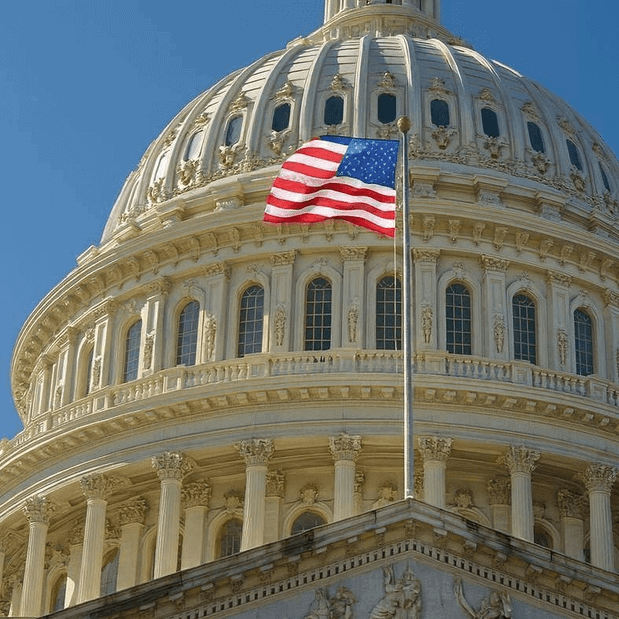
#灰度ZcashETF资产突破5亿美元 9月15日Ripple's Chief Legal Officer Stuart Alderoty stated at a blockchain seminar in Wyoming that September 15 will serve as a key indicator of the prospects for the CLARITY Act—on that day, the Senate will hold its first procedural vote, and the legislation can move forward only with the support of 60 votes. Alderoty said that if the bill fails, the SEC and the CFTC will continue to advance their respective rulemaking, and he hopes the bill can pass. Citing research data from the National Crypto Association, he warned that if the legislation cannot be passed, the United States could push 232,000 crypto-related jobs and $55 billion in economic activity overseas. On the same day, the SEC proposed a new rule titled “Regulation Crypto Assets,” providing an exemption pathway for digital asset financing.$BNB




长得帅不如跑的快1688
·
--
🚨 BNB suddenly drops 4%, BTC holds around $78K — while another corner of crypto is exploding higher.
Something changed in the market today.
Over the past few sessions:
$BTC consolidated.
$ETH held relatively strong.
$BNB clearly outperformed.
But today —
THE LEADERSHIP CHANGED.
BTC is still trading around the $78K area.
ETH remains near $2.47K.
BNB — one of the strongest large caps recently — is correcting roughly 4%.
Meanwhile:
ZEC is moving nearly 5% higher against the market.
That tells me something important:
Capital isn’t disappearing. It’s MOVING.
This market increasingly doesn’t look like:
“BTC pumps → everything pumps.”
It looks more like:
BTC consolidates → capital hunts for the NEXT narrative.
BNB Chain.
DeFi.
Privacy.
What’s next?
That’s the real question.
Because the macro environment is still difficult:
🛢️ Oil remains above $100
📈 Global bond yields are rising
🏦 The Fed decision is approaching
📊 PPI and CPI are coming
Normally, that’s a difficult backdrop for risk assets.
Yet pockets of crypto continue to outperform.
That suggests the market may be shifting from:
“BUY EVERYTHING”
to:
“FIND THE WINNER.”
So I’m not abandoning BNB because of one 4% correction.
And I’m not chasing something just because it pumped today.
I’m watching:
🟠 BTC: Can it keep the market stable?
🟣 ETH: Can consolidation after a 37% rally become another breakout?
🟡 BNB: Is this just a reset — or the end of its relative-strength run?
🔥 Altcoins: Where does liquidity rotate NEXT?
PPI, CPI and the FOMC could decide the next major market direction.
But before that happens —
ROTATION IS ALREADY HAPPENING.
👇 If you could choose only ONE for the next move:
BTC / ETH / BNB?
#BTC #ETH #BNB
Something changed in the market today.
Over the past few sessions:
$BTC consolidated.
$ETH held relatively strong.
$BNB clearly outperformed.
But today —
THE LEADERSHIP CHANGED.
BTC is still trading around the $78K area.
ETH remains near $2.47K.
BNB — one of the strongest large caps recently — is correcting roughly 4%.
Meanwhile:
ZEC is moving nearly 5% higher against the market.
That tells me something important:
Capital isn’t disappearing. It’s MOVING.
This market increasingly doesn’t look like:
“BTC pumps → everything pumps.”
It looks more like:
BTC consolidates → capital hunts for the NEXT narrative.
BNB Chain.
DeFi.
Privacy.
What’s next?
That’s the real question.
Because the macro environment is still difficult:
🛢️ Oil remains above $100
📈 Global bond yields are rising
🏦 The Fed decision is approaching
📊 PPI and CPI are coming
Normally, that’s a difficult backdrop for risk assets.
Yet pockets of crypto continue to outperform.
That suggests the market may be shifting from:
“BUY EVERYTHING”
to:
“FIND THE WINNER.”
So I’m not abandoning BNB because of one 4% correction.
And I’m not chasing something just because it pumped today.
I’m watching:
🟠 BTC: Can it keep the market stable?
🟣 ETH: Can consolidation after a 37% rally become another breakout?
🟡 BNB: Is this just a reset — or the end of its relative-strength run?
🔥 Altcoins: Where does liquidity rotate NEXT?
PPI, CPI and the FOMC could decide the next major market direction.
But before that happens —
ROTATION IS ALREADY HAPPENING.
👇 If you could choose only ONE for the next move:
BTC / ETH / BNB?
#BTC #ETH #BNB

楠楠nannan势不可挡
·
--
You don't have to live so tightly; many worries are shackles you put on yourself. Learn to make peace with life, let go of a tightly clenched inner world—simple, ordinary days can also be happiness. $币安人生


Bitroot铄鸿
·
--
Fine snow drifts with the wind, no bustling noise to chase; falling soft and gentle, covering worldly restless pace!

八方来财势不可挡
·
--
$ZEC Privacy season leader is getting more and more bold—two thousand dollars before the end of the month is locked in! Red envelopes 🧧🧧🧧🧧


白鲨观点
·
--
BTC drops below the 78,000 mark; today’s PPI is the "trailer" for tomorrow’s CPI
This morning, BTC tested the 78,000 support and dipped as low as 77,900.
The market is like a fully drawn bow—just waiting for tonight’s PPI and tomorrow’s CPI to release the string.
Let’s first talk about why PPI matters.
PPI is the Producer Price Index, essentially a "leading indicator" for CPI—
When factory costs rise, it will eventually filter through to consumers.
Market expectations: PPI m/m +0.2%, y/y +1.4%.
If it comes in above expectations, it’s basically a preview that tomorrow’s CPI won’t look good either,
and the probability of further rate hikes will keep climbing—BTC will likely have to test lower levels.
On the other hand, if PPI comes in below expectations,
the market will advance its optimism that "CPI may also cool off,"
and the 80,000 level might be reclaimed just like that.
My plan today: I’m not betting on direction—I'll wait for the data.
I’ve reduced my position to 30%, keeping plenty of dry powder. I’ll act once the data is out.
The PPI data will be released tonight at 20:30. I’ll interpret it in real time in the chatroom.
If you want to know first how the data will impact the market, click my avatar to enter the chatroom. Code: "PPI".
By the way, do you think today’s PPI will beat expectations or come in below them?
Place your bets in the comments: beat expectations deduct 1, below expectations deduct 2.
#BinanceSquare #bitcoin #PPI #加密市场 #CPI前瞻
This morning, BTC tested the 78,000 support and dipped as low as 77,900.
The market is like a fully drawn bow—just waiting for tonight’s PPI and tomorrow’s CPI to release the string.
Let’s first talk about why PPI matters.
PPI is the Producer Price Index, essentially a "leading indicator" for CPI—
When factory costs rise, it will eventually filter through to consumers.
Market expectations: PPI m/m +0.2%, y/y +1.4%.
If it comes in above expectations, it’s basically a preview that tomorrow’s CPI won’t look good either,
and the probability of further rate hikes will keep climbing—BTC will likely have to test lower levels.
On the other hand, if PPI comes in below expectations,
the market will advance its optimism that "CPI may also cool off,"
and the 80,000 level might be reclaimed just like that.
My plan today: I’m not betting on direction—I'll wait for the data.
I’ve reduced my position to 30%, keeping plenty of dry powder. I’ll act once the data is out.
The PPI data will be released tonight at 20:30. I’ll interpret it in real time in the chatroom.
If you want to know first how the data will impact the market, click my avatar to enter the chatroom. Code: "PPI".
By the way, do you think today’s PPI will beat expectations or come in below them?
Place your bets in the comments: beat expectations deduct 1, below expectations deduct 2.
#BinanceSquare #bitcoin #PPI #加密市场 #CPI前瞻


泽栩191
·
--
Turning toward those who match our frequency, we join hands and set out on a long-term journey together.
Walk hand in hand with like‑minded people toward a long‑term journey.
Walk hand in hand with like‑minded people toward a long‑term journey.


杨乐-光明社区
·
--
☘️
Destiny brings you your match.
All encounters are karma.
All true matches are fated.
Destiny will lead you to the person you’re meant to meet;
All encounters are a matter of cause and effect;
All matches are destined.
Destiny brings you your match.
All encounters are karma.
All true matches are fated.
Destiny will lead you to the person you’re meant to meet;
All encounters are a matter of cause and effect;
All matches are destined.


virus世态炎凉
·
--
🧧🧧🧧 Before wealth truly begins to accumulate, what usually happens first is a change in mindset. #virus病毒

Log in to explore more content