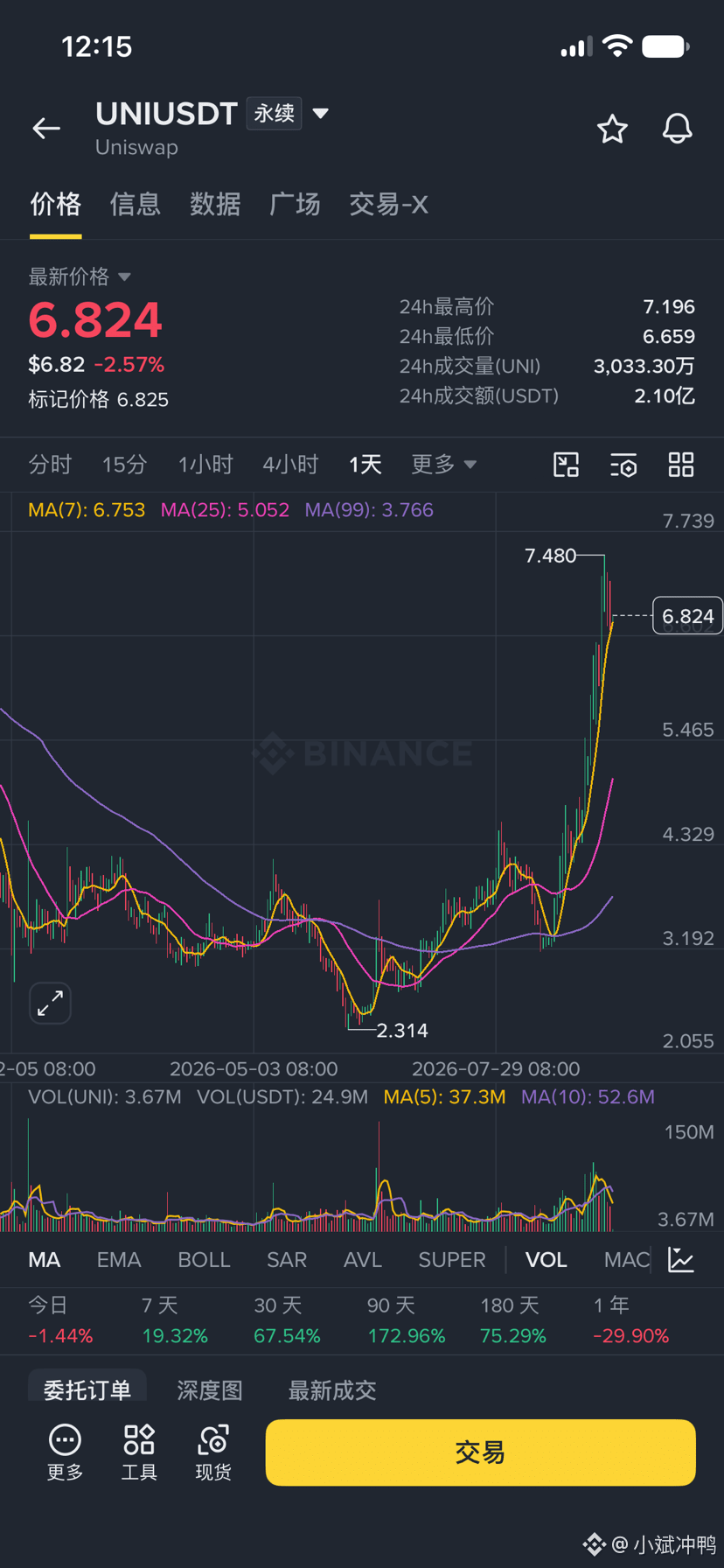
$UNI For UNI’s later-stage space, Standard Chartered Bank has put forward a very bold long-term projection: a target price of $100 by 2030, and it believes that the goal may even be “too low” due to the recent acceleration in token burn.
However, it’s important to stay clear-headed: the realization of this “long-term positive” depends on extremely strict conditions, and the process is full of challenges.
🚀 The core drivers of the rally
The core of this uptrend is a fundamental change to the token economic model—turning UNI from a “governance token” into an “interest-bearing asset”:
· “Printing press” becomes a “buyback machine”: after the “fee switch” is activated by the end of 2025, protocol revenue begins to buy back and burn UNI. Coupled with the cooperation with Robinhood Chain, the annualized burn amount at one point accounted for 4% of the circulating supply, becoming a powerful deflationary engine.
· The “on-chain settlement layer” of big players: Uniswap has become the primary AMM for trading stock tokens on Robinhood Chain, directly contributing about 60% of recent protocol revenue.
· No more supply pressure: all UNI tokens have been fully unlocked, eliminating the potential risk of future unlock-related selloffs.
However, it’s important to stay clear-headed: the realization of this “long-term positive” depends on extremely strict conditions, and the process is full of challenges.
🚀 The core drivers of the rally
The core of this uptrend is a fundamental change to the token economic model—turning UNI from a “governance token” into an “interest-bearing asset”:
· “Printing press” becomes a “buyback machine”: after the “fee switch” is activated by the end of 2025, protocol revenue begins to buy back and burn UNI. Coupled with the cooperation with Robinhood Chain, the annualized burn amount at one point accounted for 4% of the circulating supply, becoming a powerful deflationary engine.
· The “on-chain settlement layer” of big players: Uniswap has become the primary AMM for trading stock tokens on Robinhood Chain, directly contributing about 60% of recent protocol revenue.
· No more supply pressure: all UNI tokens have been fully unlocked, eliminating the potential risk of future unlock-related selloffs.