
Why can’t BTC break through $81,000?
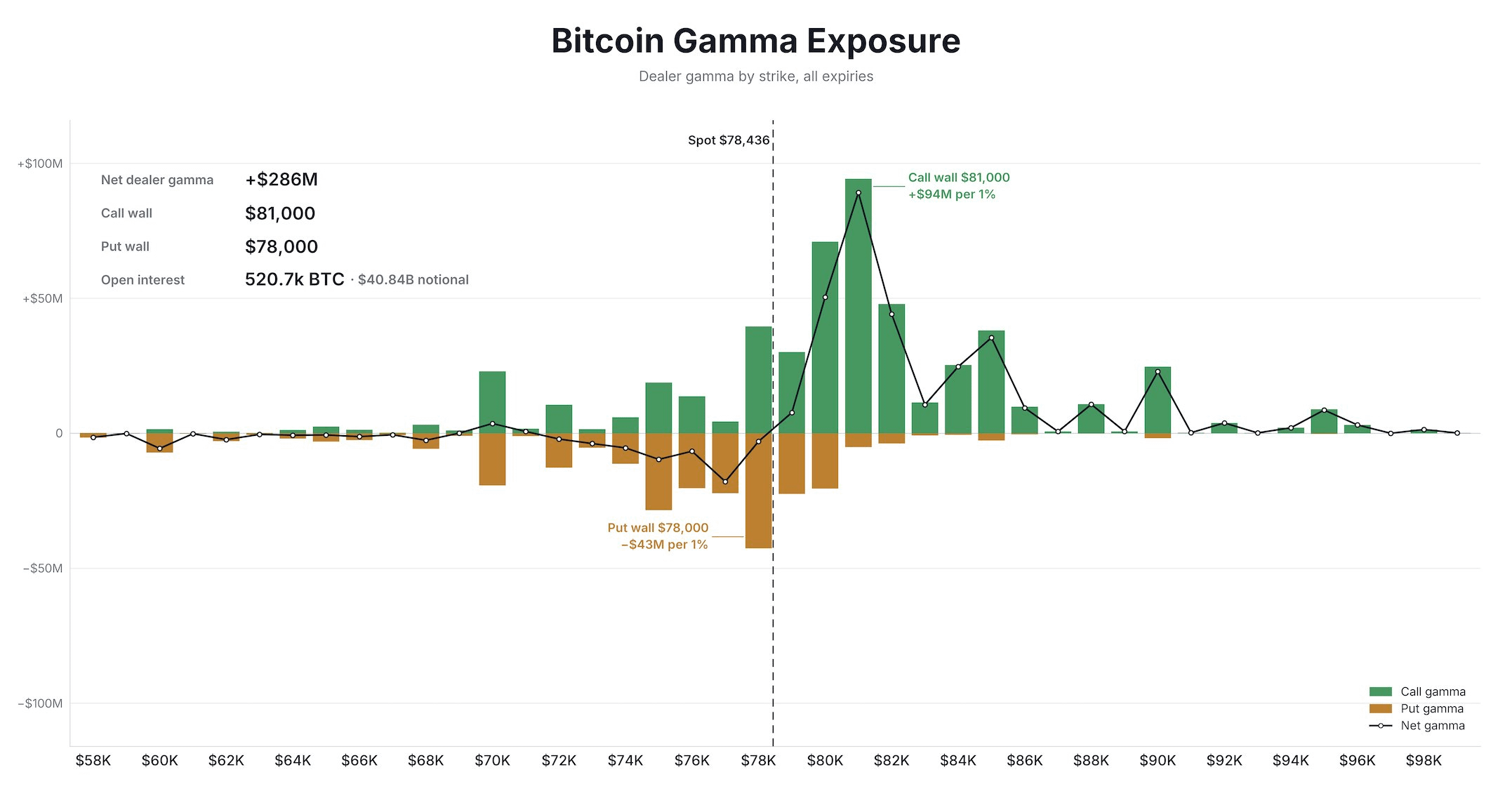
Some say it’s the fault of the $40.8 billion options market. Market makers are forced to sell at $81k and forced to buy at $78k, keeping BTC trapped in a $3,000 box. Every 1% rise brings $94M in sell orders, while every 1% drop brings $43M in buy orders. The closer the price gets to the boundaries, the stronger the market makers’ hedging power.
This analysis is correct. But it only looks at one side of the options market.
The options market says BTC needs to move upward to relieve exposure. Once $81k breaks above resistance, the ceiling is thin. Logically, it makes sense.
The problem is that the options market has never seen the Bank of Japan on September 18.
In August 2024, Japan suddenly raised rates. BTC poked from $67k down to $49k in a single day. What role did the $78k buy wall by the options market makers play that time? None. Because that wasn’t a technical breakdown—it was the liquidation of an arbitrage trade.
Now the difference is this: altcoin OI has already surpassed BTC, with $5.7B worth of ETH long positions stacked there. A Japan rate hike is the fuse, and altcoin OI is the explosive.
The $78k market-maker buy wall is effective under normal conditions. But when faced with a cascading wave of sell pressure from yen arbitrage unwind, the market maker’s hedging is just a drop in the bucket. Once a Zero Flip level is breached, market makers switch from buying to selling, accelerating the decline.
So the real question was never “Can BTC break above $81k?”
The question is: before September 18, would you rather bet on an upside breakout of $81k, or place short orders at $79,700~$80,300 and wait for liquidation?
I choose the latter.
Some say it’s the fault of the $40.8 billion options market. Market makers are forced to sell at $81k and forced to buy at $78k, keeping BTC trapped in a $3,000 box. Every 1% rise brings $94M in sell orders, while every 1% drop brings $43M in buy orders. The closer the price gets to the boundaries, the stronger the market makers’ hedging power.
This analysis is correct. But it only looks at one side of the options market.
The options market says BTC needs to move upward to relieve exposure. Once $81k breaks above resistance, the ceiling is thin. Logically, it makes sense.
The problem is that the options market has never seen the Bank of Japan on September 18.
In August 2024, Japan suddenly raised rates. BTC poked from $67k down to $49k in a single day. What role did the $78k buy wall by the options market makers play that time? None. Because that wasn’t a technical breakdown—it was the liquidation of an arbitrage trade.
Now the difference is this: altcoin OI has already surpassed BTC, with $5.7B worth of ETH long positions stacked there. A Japan rate hike is the fuse, and altcoin OI is the explosive.
The $78k market-maker buy wall is effective under normal conditions. But when faced with a cascading wave of sell pressure from yen arbitrage unwind, the market maker’s hedging is just a drop in the bucket. Once a Zero Flip level is breached, market makers switch from buying to selling, accelerating the decline.
So the real question was never “Can BTC break above $81k?”
The question is: before September 18, would you rather bet on an upside breakout of $81k, or place short orders at $79,700~$80,300 and wait for liquidation?
I choose the latter.