


A “non-fundamental” rally triggered by index rules
The wave of buying ahead for SpaceX has little to do with its business prospects. It’s more like a mechanical outcome produced after an index construction rule that few people pay attention to gets triggered.
The Nasdaq 100’s quarterly rebalance effective September 21 is expected to raise SpaceX’s weighting from 1.25% to about 1.51%. According to a team led by JPMorgan strategist Min Moon, this adjustment will trigger roughly $12.4 billion in passive net buying.
The direct reason for the jump in weighting is that the free-float ratio has risen from less than 10% after the IPO to nearly 30%—after more than 1 billion shares of lock-up stock are released, the index rules automatically amplify the inclusion weight of this mega-cap with a market value of more than $2 trillion.
But the unlocking is far from over. Before the end of October, more than 1 billion shares, and after mid-November following the release of third-quarter earnings, another roughly 1.3 billion shares of restricted stock will gradually enter a tradable state—bringing the total to more than 2.3 billion shares. The tussle between near-term mechanical buy pressure and mid-term supply shocks is becoming a core variable in SpaceX’s fourth-quarter pricing.
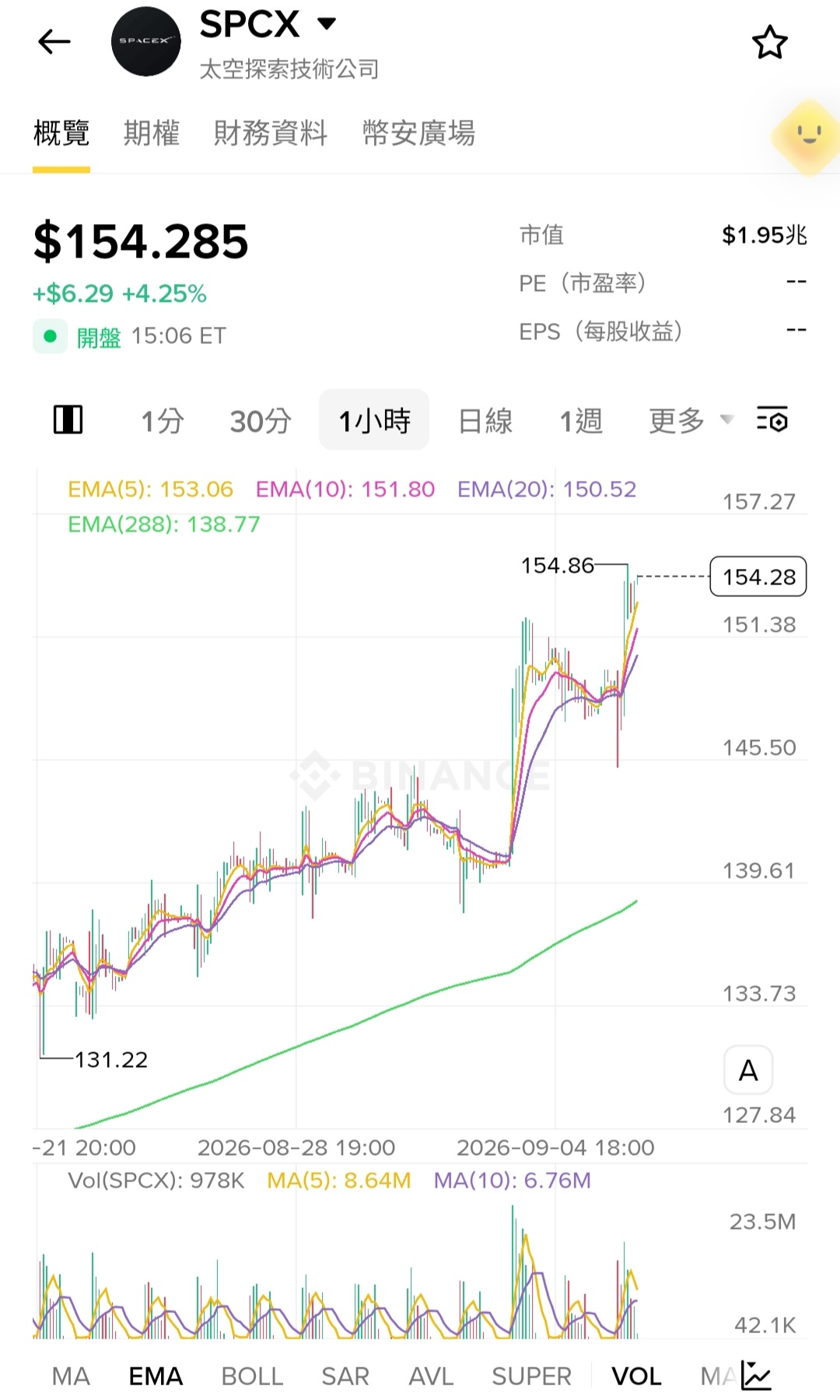
As of the time of publication, SpaceX shares are up more than 3% on Tuesday, trading at their highest levels in nearly two months, and the total market value has returned to $2 trillion.
Weight-doubling mechanism: the knock-on effects of a jump in the free-float ratio
The weight calculation for the Nasdaq 100 is based on the lower of total shares outstanding and the number of shares with three times the free-float shares. For stocks with a relatively low free-float ratio, their market value is heavily discounted when included in the calculation—free-float shares exclude shares held by insiders and shares subject to lock-up or other restrictions.
SpaceX was precisely in this situation earlier. Because of lock-up restrictions, its free-float ratio was below 10%. Even though its market cap is over $2 trillion and it ranks sixth in the index, its weight was only 1.25%, ranking 19th. After more than 1 billion shares of restricted stock were unblocked, the free-float ratio rose to nearly 30%, directly triggering a recalculation of its weighting.
According to Nasdaq data, as of the end of the second quarter, there was about $1.7 trillion in assets tracking the Nasdaq 100 Index, including the well-known Invesco QQQ ETF (ticker: QQQ). The rebalancing plan will be announced after Friday’s close. As more shares are released over the coming year and the free-float ratio keeps rising, SpaceX’s weighting could potentially increase even further.
2.3 billion shares unblocked: a supply flood behind the near-term buying
The jump in the free-float ratio is, in essence, the result of the release of restricted shares, with a larger amount of releases still to come.
According to the timetable:
· By the end of October: more than 1 billion shares of restricted stock become unblocked;
· After mid-November: following the release of third-quarter earnings, another roughly 1.3 billion shares enter a tradable state.
A total of more than 2.3 billion shares across two batches.
The first batch of unlocks in August (in line with SpaceX’s first earnings report) sparked worries about large-scale selling, but insiders largely held their positions, and the selling pressure did not materialize.
River Wealth Advisors CEO Ed O'Gorman believes that the truly key event will only arrive when the unlocking is triggered by November earnings, at which point a large number of shares will enter the market. Interactive Brokers chief strategist Steve Sosnick says the newly unblocked shares will either be sold to potential passive buyers, or the share price will rise due to increased demand from index funds—products such as QQQ are likely to bring additional demand.
Divergence between bulls and bears: can passive buyers hedge the sell-off pressure from the unlock?
In the short term, about $15.5 billion worth of passive buying appears fairly certain. In the medium term, the size and pace of the sell-off pressure from the unlocks will depend on insiders’ willingness to reduce their holdings. Together, these two factors form the biggest expectation gap right now.
Over the past four weeks, SpaceX’s stock has moved sideways in the $133 to $150 range, oscillating around the IPO offering price of $135, with no fundamental catalysts. Ed O'Gorman points out that the market price will be pushed to some extent by forced buying, and it will take time to truly understand what the market thinks of this stock.
Such rules are not unique to Nasdaq. The S&P Dow Jones indices also use a free-float adjusted market-cap weighting methodology. Two years ago, after Berkshire Hathaway cut its stake in Apple, Piper Sandler estimated that it would trigger about $40 billion of passive-fund buying.
SpaceX was added to the Russell 1000 Index in June this year, but the S&P 500 requires at least 12 months of listed trading history, meaning it won’t be eligible for inclusion until the middle of 2027 at the earliest—leaving room for incremental growth in passive flows.
The unlocking triggered by the release of third-quarter earnings in mid-November will be the key test of SpaceX’s true market depth—deciding who wins between bulls and bears in the short term.
