
#美加关税战升级 : The truly dangerous thing isn’t the tariffs themselves
This Canada–U.S. trade war is starting to look a bit different.
Starting September 8, Canada will officially impose retaliatory tariffs of 15%, 25%, and 50% on certain U.S. goods, covering about C$27.6 billion worth of American imports. Steel and aluminum, home appliances, dairy products, agricultural equipment, electronics, and more are all included. Previously, the U.S. had already imposed a 50% tariff on certain Canadian goods. The shift from “negotiation” to “you add, I add” suggests this game is entering a tougher phase.
Many people see tariffs and their first reaction is:
Canadian goods get more expensive, so U.S. goods also rise.
But what’s really worth focusing on is the knock-on effects that follow.
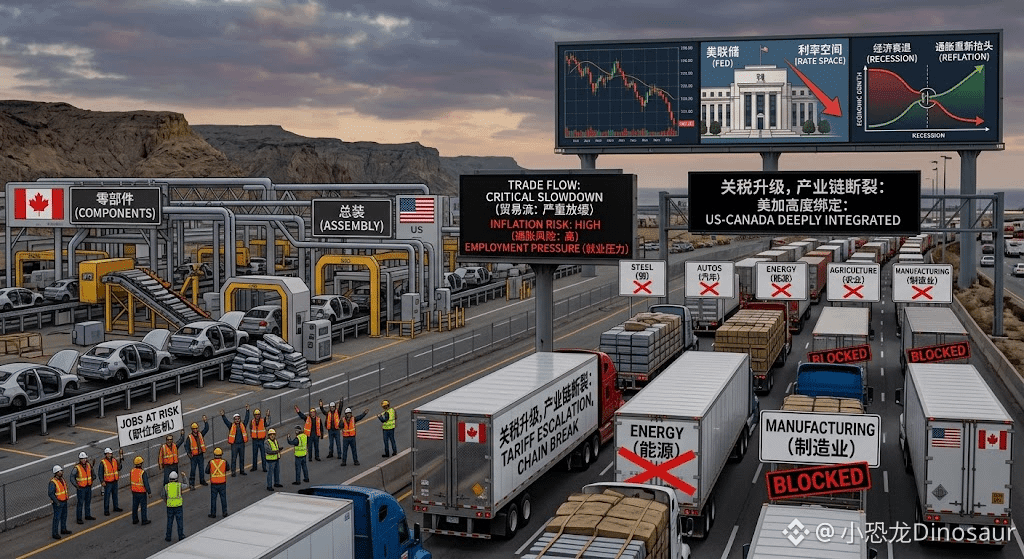
The U.S. and Canada are not two separate, unrelated economies—they’re tightly integrated through highly connected supply chains. Automobiles, energy, steel, agriculture, and manufacturing have long involved cross-border flows.
Once tariffs are in place, companies may initially absorb part of the cost themselves, but over time the expenses ultimately have to be paid by someone—either consumers through higher prices, companies through squeezed profit margins, or else firms by cutting investment and hiring altogether.
That’s also, in my view, the most troublesome part of this escalation:
On the surface, tariffs are meant to punish the other side; in reality, they also add friction to your own economy.
And don’t forget that Canada’s recent employment data has already shown signs of cooling—August saw 41,700 fewer jobs. Trade tensions have also added pressure to export sectors like lumber and manufacturing.
So going forward, what the market really needs to watch isn’t whether Trump or Carney is more hardline—it’s whether tariffs ultimately transmit into inflation, corporate profits, and employment.
If inflation picks up again, the Federal Reserve’s room to cut rates will be squeezed; if corporate profits and jobs begin to deteriorate, economic growth will face additional pressure.
That creates a very typical “blockage at both ends”:
The economy fears a downturn, but inflation won’t come down.
For risk assets such as stocks and cryptocurrencies, this kind of environment is often more punishing than just higher interest rates or a recession on their own.
So when I look at the Canada–U.S. tariff war now, it’s not just about trade news.
At its core, it’s testing how much political cost globalized supply chains can still bear.
And once companies start taking a serious look at rebuilding their supply-chain layouts, the impact of this tariff war may be just beginning.
This Canada–U.S. trade war is starting to look a bit different.
Starting September 8, Canada will officially impose retaliatory tariffs of 15%, 25%, and 50% on certain U.S. goods, covering about C$27.6 billion worth of American imports. Steel and aluminum, home appliances, dairy products, agricultural equipment, electronics, and more are all included. Previously, the U.S. had already imposed a 50% tariff on certain Canadian goods. The shift from “negotiation” to “you add, I add” suggests this game is entering a tougher phase.
Many people see tariffs and their first reaction is:
Canadian goods get more expensive, so U.S. goods also rise.
But what’s really worth focusing on is the knock-on effects that follow.
The U.S. and Canada are not two separate, unrelated economies—they’re tightly integrated through highly connected supply chains. Automobiles, energy, steel, agriculture, and manufacturing have long involved cross-border flows.
Once tariffs are in place, companies may initially absorb part of the cost themselves, but over time the expenses ultimately have to be paid by someone—either consumers through higher prices, companies through squeezed profit margins, or else firms by cutting investment and hiring altogether.
That’s also, in my view, the most troublesome part of this escalation:
On the surface, tariffs are meant to punish the other side; in reality, they also add friction to your own economy.
And don’t forget that Canada’s recent employment data has already shown signs of cooling—August saw 41,700 fewer jobs. Trade tensions have also added pressure to export sectors like lumber and manufacturing.
So going forward, what the market really needs to watch isn’t whether Trump or Carney is more hardline—it’s whether tariffs ultimately transmit into inflation, corporate profits, and employment.
If inflation picks up again, the Federal Reserve’s room to cut rates will be squeezed; if corporate profits and jobs begin to deteriorate, economic growth will face additional pressure.
That creates a very typical “blockage at both ends”:
The economy fears a downturn, but inflation won’t come down.
For risk assets such as stocks and cryptocurrencies, this kind of environment is often more punishing than just higher interest rates or a recession on their own.
So when I look at the Canada–U.S. tariff war now, it’s not just about trade news.
At its core, it’s testing how much political cost globalized supply chains can still bear.
And once companies start taking a serious look at rebuilding their supply-chain layouts, the impact of this tariff war may be just beginning.