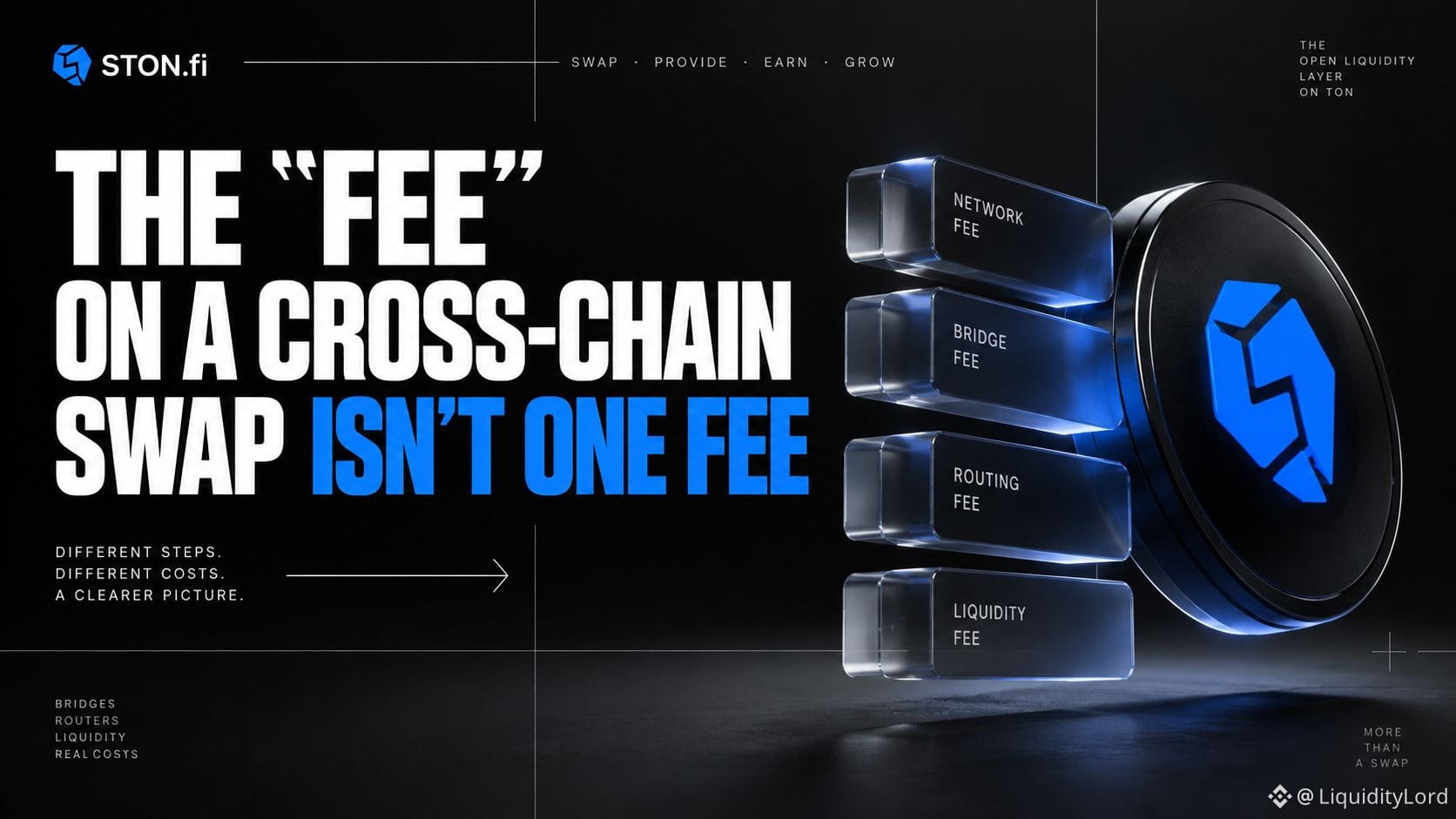
💸 THE “FEE” ON A CROSS-CHAIN SWAP ISN’T ONE FEE
A cross-chain swap can look simple: choose an asset, choose a destination, check the amount, confirm. But the final costs combines several components. Calling everything a “fee” hides why two similar swaps can produce different results.
The useful split is source-chain gas, protocol/execution costs, destination-side costs, and price effects. The first three are actual charges. Price impact and slippage are different: they come from liquidity and market movement.
🔬 FOLLOW THE ROUTE
Imagine swapping USDT on TON for an asset on Base. There can be a source-chain network cost, a protocol or resolver execution charges, and destination-side settlement costs. Each blockchain prices computation differently, so there is no universal gas costs for the whole route.
This is why Ethereum, Base and Polygon can have very different fee profiles. Ethereum mainnet can become expensive when block space is congested, while other networks can settle comparable operations much more cheaply. The relevant question is which networks your swap touches.
👀 BEFORE YOU SIGN
On STONfi, the quote gives you the expected output and route context before confirmation. The destination network changes the execution profile.
Keep one distinction clear: price impact is not a fee. A large order against shallow liquidity can worsen execution even when the protocol fee is low. Slippage can also appear when market conditions move between confirmation and settlement. Neither is a service charge; both are consequences of trading in a live market.
🧠 THE PRACTICAL RULE
Don't ask only, “What is the fee?” Ask, “What will this route cost, and what will I receive?” Separate network costs from price effects.
STONfi’s quote is an execution check before signing. The breakdown makes output easier to evaluate.
Not financial advice. DYOR.
$GRAM
A cross-chain swap can look simple: choose an asset, choose a destination, check the amount, confirm. But the final costs combines several components. Calling everything a “fee” hides why two similar swaps can produce different results.
The useful split is source-chain gas, protocol/execution costs, destination-side costs, and price effects. The first three are actual charges. Price impact and slippage are different: they come from liquidity and market movement.
🔬 FOLLOW THE ROUTE
Imagine swapping USDT on TON for an asset on Base. There can be a source-chain network cost, a protocol or resolver execution charges, and destination-side settlement costs. Each blockchain prices computation differently, so there is no universal gas costs for the whole route.
This is why Ethereum, Base and Polygon can have very different fee profiles. Ethereum mainnet can become expensive when block space is congested, while other networks can settle comparable operations much more cheaply. The relevant question is which networks your swap touches.
👀 BEFORE YOU SIGN
On STONfi, the quote gives you the expected output and route context before confirmation. The destination network changes the execution profile.
Keep one distinction clear: price impact is not a fee. A large order against shallow liquidity can worsen execution even when the protocol fee is low. Slippage can also appear when market conditions move between confirmation and settlement. Neither is a service charge; both are consequences of trading in a live market.
🧠 THE PRACTICAL RULE
Don't ask only, “What is the fee?” Ask, “What will this route cost, and what will I receive?” Separate network costs from price effects.
STONfi’s quote is an execution check before signing. The breakdown makes output easier to evaluate.
Not financial advice. DYOR.
$GRAM