
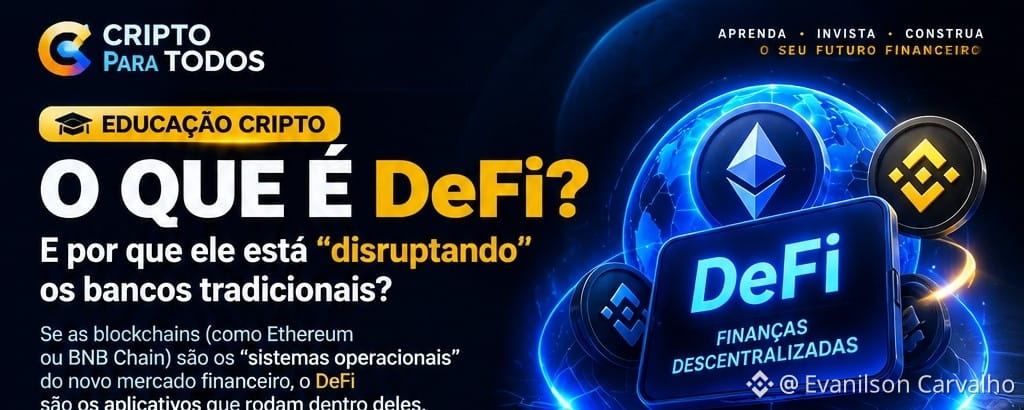

What Is DeFi and Why Is It "Disrupting" Traditional Banks?
Since blockchains (like Ethereum or BNB Chain) are the "operating systems" of the new financial market, DeFi (Decentralized Finance) are the applications that run within them. And the difference from your traditional bank is brutal.
📊 The 3 Pillars of DeFi You Need to Know:
• Uniswap ($UNI): An automatic "exchange counter." It lets you swap any cryptocurrency for another in seconds, without registration, without a manager, and without intermediaries, using liquidity pools.
• Aave ($AAVE): The "no-red-tape" lending bank. You can deposit your crypto to earn passive interest or use your portfolio as collateral to take an instant loan, 24/7.
• PancakeSwap ($CAKE): The high-speed alternative. It runs on the BNB Chain, offering the same swap and yield farming features, but with a focus on drastically lower transaction fees.
💡 The Crypto Connection (The "Shortcut"):
Unlike a traditional bank, where only top shareholders get the profit, many DeFi platforms have governance tokens. When you buy and hold these tokens, you’re not just speculating on the price. You’re acquiring the right to vote in the future of the protocol and, in many cases, direct participation in the fees generated by the platform. You stop being just a "customer" and become a "partner" in the system.
🗳️ POLL: What is your level of experience or interest in using DeFi protocols?
🔘 Active User: I already use Uniswap, Aave, or similar platforms to earn interest or swap coins.
🔘 Cautiously Curious: I understand the concept, but I’m still concerned about bugs or hacks in smart contracts.
🔘 Only an Investor: I prefer to buy governance tokens ($UNI, $AAVE) as an investment, without interacting with the platform.
🔘 Total Beginner: I’m still learning the basics and I prefer to stick to centralized exchanges for now.
#EducaçãoCripto #DeFi #FinançasDescentralizadas #Web3 #BinanceSquare