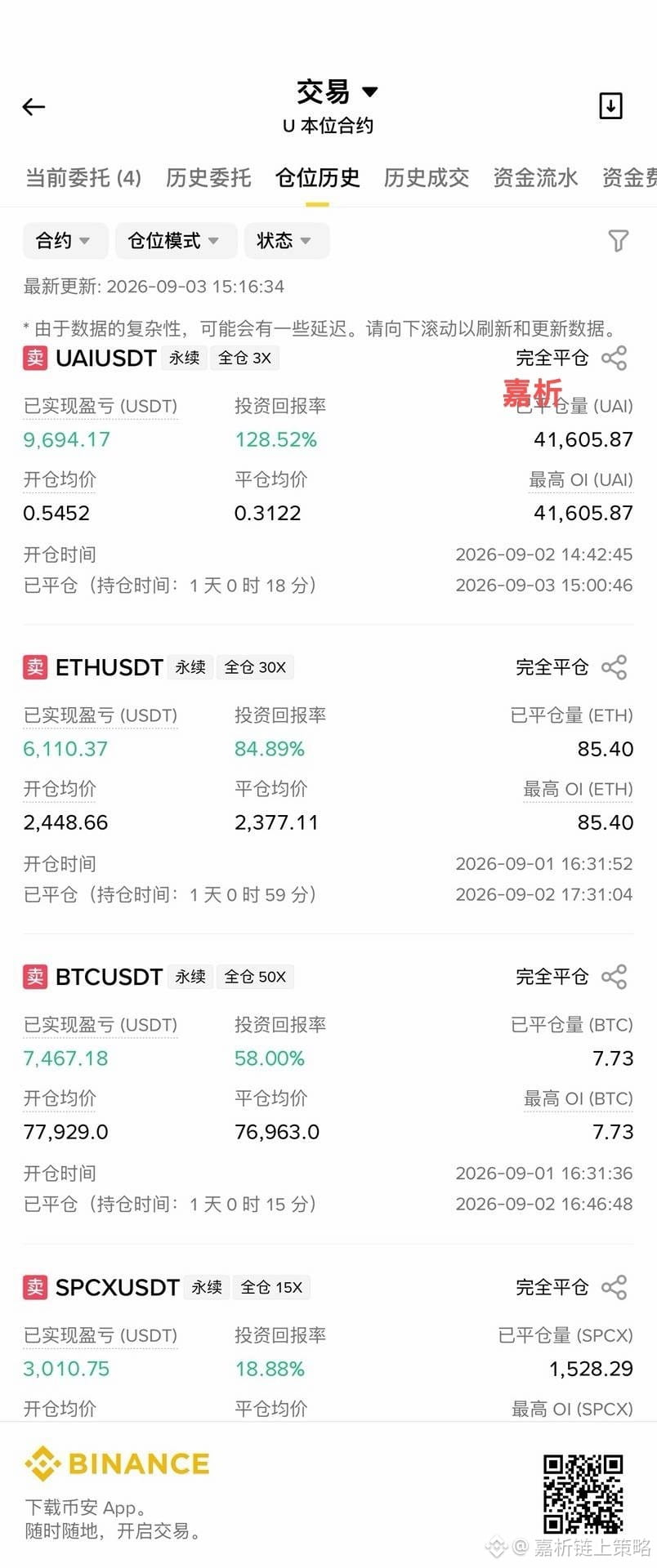
The biggest enemy of contracts is you.
With the same kind of contract work, some people get steadier and steadier, while others lose more and more.
Honestly, most people don’t lose money because their technical skills aren’t good—they don’t figure things out clearly from the moment they place the order. They enter based on feel; when they profit, they don’t want to leave, when they lose, they cling to the fantasy of a rebound, and the account gets drained little by little.
If you’re still repeatedly losing money, first change these habits:
Plan each trade in advance—figure out what you’ll do if you’re wrong. Take profit to prevent greed; set a stop loss to save your life. The market can wait, and if your principal is gone, there won’t be a next time.
Don’t get addicted to frequent trading. Trading more doesn’t mean there are more opportunities—trading fees will grind you down first. If you don’t understand, wait. Being in cash with no position isn’t admitting defeat; it’s protecting yourself.
Don’t think you can turn things around with one big move. With a small capital, growing it comes from controlling risk and long-term compounding, not from going all-in.
The biggest enemy of a contract has never been the market—it’s the you who has no rules. First make sure your account can still continue trading, then consider how to scale up your profits.
With the same kind of contract work, some people get steadier and steadier, while others lose more and more.
Honestly, most people don’t lose money because their technical skills aren’t good—they don’t figure things out clearly from the moment they place the order. They enter based on feel; when they profit, they don’t want to leave, when they lose, they cling to the fantasy of a rebound, and the account gets drained little by little.
If you’re still repeatedly losing money, first change these habits:
Plan each trade in advance—figure out what you’ll do if you’re wrong. Take profit to prevent greed; set a stop loss to save your life. The market can wait, and if your principal is gone, there won’t be a next time.
Don’t get addicted to frequent trading. Trading more doesn’t mean there are more opportunities—trading fees will grind you down first. If you don’t understand, wait. Being in cash with no position isn’t admitting defeat; it’s protecting yourself.
Don’t think you can turn things around with one big move. With a small capital, growing it comes from controlling risk and long-term compounding, not from going all-in.
The biggest enemy of a contract has never been the market—it’s the you who has no rules. First make sure your account can still continue trading, then consider how to scale up your profits.