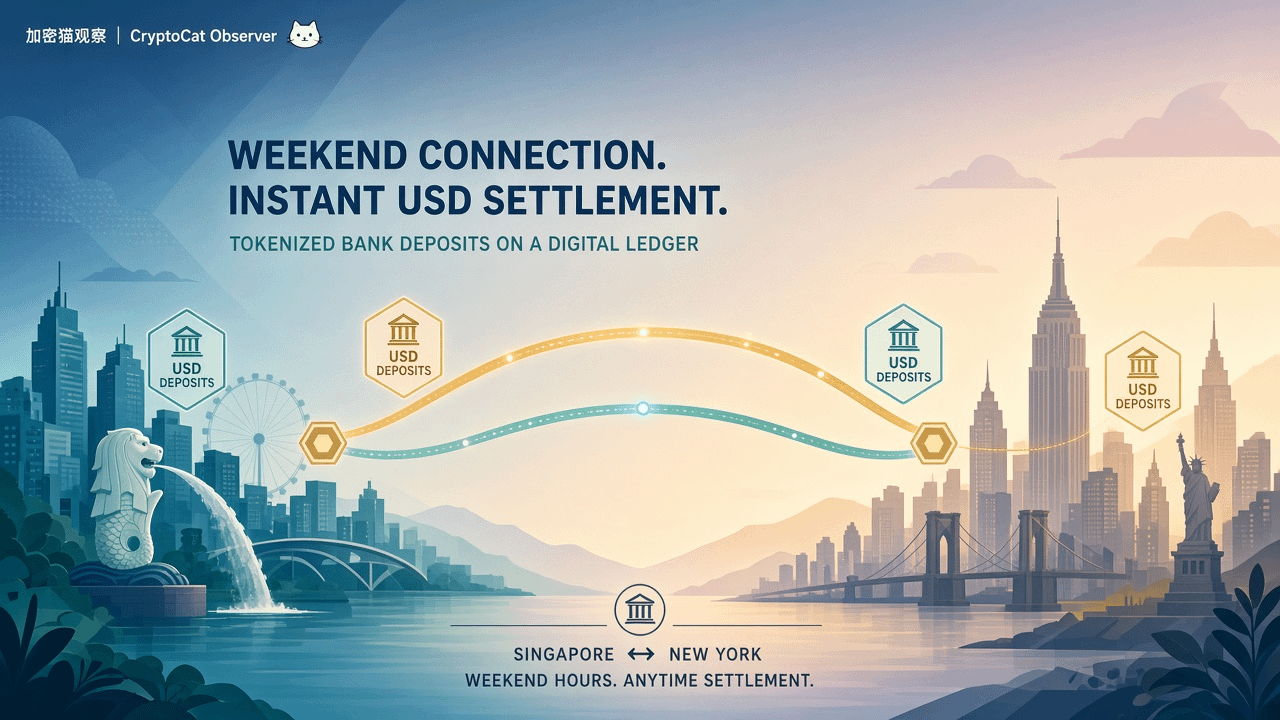
DBS and Citibank’s New York branch completed their first Singapore–U.S. cross-border USD payment over the weekend on September 5. The transaction was settled via the Swift Digital Ledger using tokenized bank deposits, taking only a few minutes.
According to DBS’s official press release, cross-verified by CryptoTimes and The Business Times: traditional cross-border payments often take up to about two business days due to time zone differences and weekend closures. In this pilot, the idea of “bank deposit instruments being put on-chain” was turned into a 7×24 liquidity reallocation trial. The funds still ultimately move through existing interbank settlement mechanisms such as RTGS; it is not a public-chain stablecoin. This pilot is a Swift-controlled concept proof with a window of roughly July–December 2026. Before this, there were earlier corridor trials—for example, HSBC and Standard Chartered on August 19, and Citibank with FAB/OCBC on September 2. Demand for cross-border payments in Asia continues to rise, and the RWA narrative on the bank side is shifting from conceptual discussion to real corridor testing.
Clarify the boundaries: this is a successful controlled pilot, not an indication that corporate customers can already place orders. Details such as pricing/fees, eligibility, and a full commercialization timeline have not been published. Don’t read “cleared over the weekend” as a direct stablecoin replacement, and don’t overlook that final settlement still relies on traditional infrastructure.
Market reference (CoinGecko): Bitcoin is around $78,600 and BNB around $755. With on-chain payments and bank tokenization progressing in parallel, who captures cross-border transaction flows depends on how quickly these solutions roll out.
$BNB $BTC
#代币化 #cross-border payments
Not investment advice
According to DBS’s official press release, cross-verified by CryptoTimes and The Business Times: traditional cross-border payments often take up to about two business days due to time zone differences and weekend closures. In this pilot, the idea of “bank deposit instruments being put on-chain” was turned into a 7×24 liquidity reallocation trial. The funds still ultimately move through existing interbank settlement mechanisms such as RTGS; it is not a public-chain stablecoin. This pilot is a Swift-controlled concept proof with a window of roughly July–December 2026. Before this, there were earlier corridor trials—for example, HSBC and Standard Chartered on August 19, and Citibank with FAB/OCBC on September 2. Demand for cross-border payments in Asia continues to rise, and the RWA narrative on the bank side is shifting from conceptual discussion to real corridor testing.
Clarify the boundaries: this is a successful controlled pilot, not an indication that corporate customers can already place orders. Details such as pricing/fees, eligibility, and a full commercialization timeline have not been published. Don’t read “cleared over the weekend” as a direct stablecoin replacement, and don’t overlook that final settlement still relies on traditional infrastructure.
Market reference (CoinGecko): Bitcoin is around $78,600 and BNB around $755. With on-chain payments and bank tokenization progressing in parallel, who captures cross-border transaction flows depends on how quickly these solutions roll out.
$BNB $BTC
#代币化 #cross-border payments
Not investment advice