
Bitcoin slipped nearly 2% below $80,000 on Monday, giving back its weekend gains as thin holiday liquidity amplified short-term volatility.
The pullback came after BTC posted its highest weekly close since early May, while traders remained cautious ahead of key US inflation data due later this week. QCP Capital said volatility has compressed as the market waits for a clearer macro catalyst, with the inflation prints likely to shape expectations for the Federal Reserve’s next rate decision.
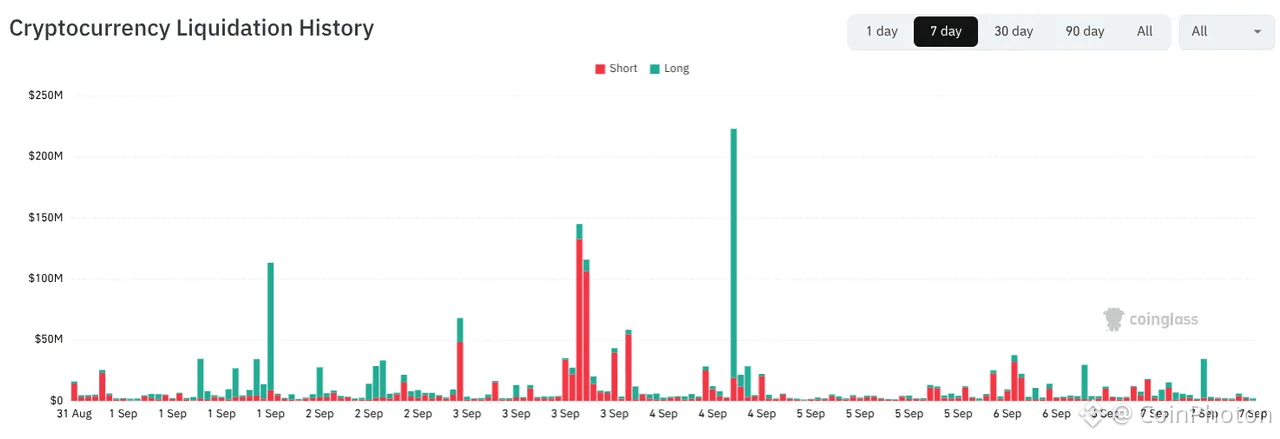
CoinGlass data showed roughly $178 million in crypto liquidations over the past 24 hours, split fairly evenly between long and short positions. Key short-term liquidity zones were clustered around $80,500 and $78,800.
Despite the decline, analysts highlighted Bitcoin’s relative resilience, with BTC still holding most of its roughly 25% gain from earlier last month and trading in a narrow range since mid-August.
Attention also remains on US spot Bitcoin ETFs after the funds recorded about $730 million in net inflows on Thursday, their strongest single-day inflow since January. $BTC
The pullback came after BTC posted its highest weekly close since early May, while traders remained cautious ahead of key US inflation data due later this week. QCP Capital said volatility has compressed as the market waits for a clearer macro catalyst, with the inflation prints likely to shape expectations for the Federal Reserve’s next rate decision.
CoinGlass data showed roughly $178 million in crypto liquidations over the past 24 hours, split fairly evenly between long and short positions. Key short-term liquidity zones were clustered around $80,500 and $78,800.
Despite the decline, analysts highlighted Bitcoin’s relative resilience, with BTC still holding most of its roughly 25% gain from earlier last month and trading in a narrow range since mid-August.
Attention also remains on US spot Bitcoin ETFs after the funds recorded about $730 million in net inflows on Thursday, their strongest single-day inflow since January. $BTC