#usirantradetankerstrikesescalate
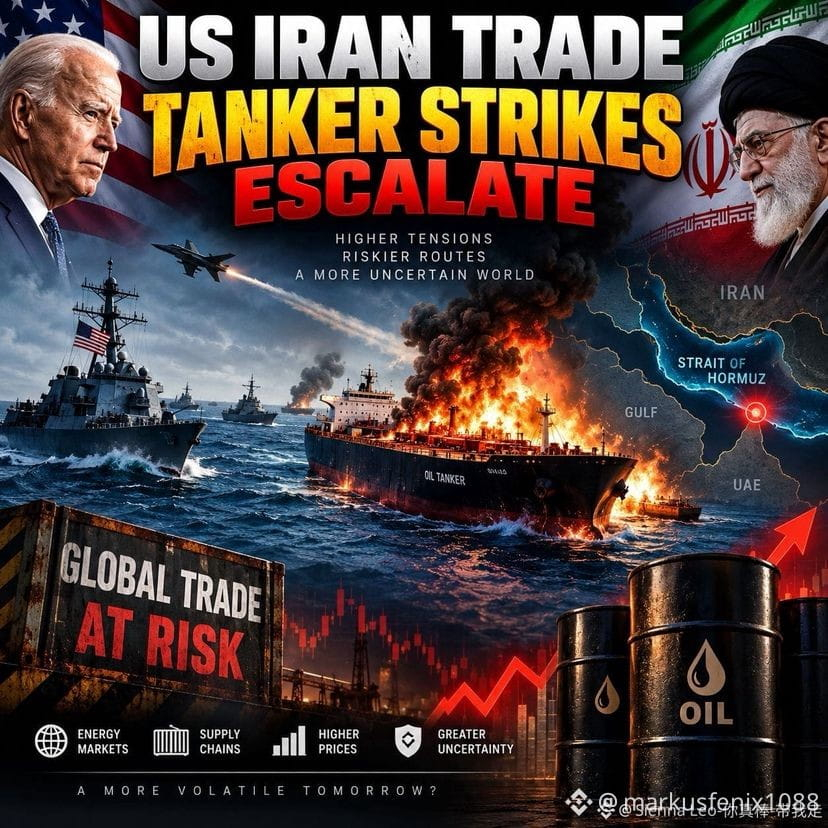
🔥 U.S.-Iran trade tanker ship: attacks raise the escalation 🔥
What I’m continuing to observe isn’t just the attacks. It’s what happens when a military conflict begins to interfere with the routes that move energy around the world.
The U.S. struck three Iranian tankers after Iran launched missiles at two U.S. Navy ships. Then, Iran retaliated by attacking commercial shipping, pushing the confrontation deeper into the maritime economy.
This matters far beyond Washington and Tehran. The Strait of Hormuz is a critical energy corridor, and shipping through it has fallen sharply as operators face growing security risks.
Markets are already reacting. Brent moved to six-week highs as traders priced in higher risk of supply disruption.
The lesson that’s being overlooked is simple: markets don’t need oil production to fully stop. Sometimes, fear that shipping could be disrupted is enough to shift prices, inflation expectations, and risk preferences.
When trade routes become part of the battlefield, the economic impact can spread far faster than missiles.
The real question now isn’t only who strikes next, but how long global shipping can keep operating under this level of uncertainty.
$SHEL.US
🔥 U.S.-Iran trade tanker ship: attacks raise the escalation 🔥
What I’m continuing to observe isn’t just the attacks. It’s what happens when a military conflict begins to interfere with the routes that move energy around the world.
The U.S. struck three Iranian tankers after Iran launched missiles at two U.S. Navy ships. Then, Iran retaliated by attacking commercial shipping, pushing the confrontation deeper into the maritime economy.
This matters far beyond Washington and Tehran. The Strait of Hormuz is a critical energy corridor, and shipping through it has fallen sharply as operators face growing security risks.
Markets are already reacting. Brent moved to six-week highs as traders priced in higher risk of supply disruption.
The lesson that’s being overlooked is simple: markets don’t need oil production to fully stop. Sometimes, fear that shipping could be disrupted is enough to shift prices, inflation expectations, and risk preferences.
When trade routes become part of the battlefield, the economic impact can spread far faster than missiles.
The real question now isn’t only who strikes next, but how long global shipping can keep operating under this level of uncertainty.
$SHEL.US