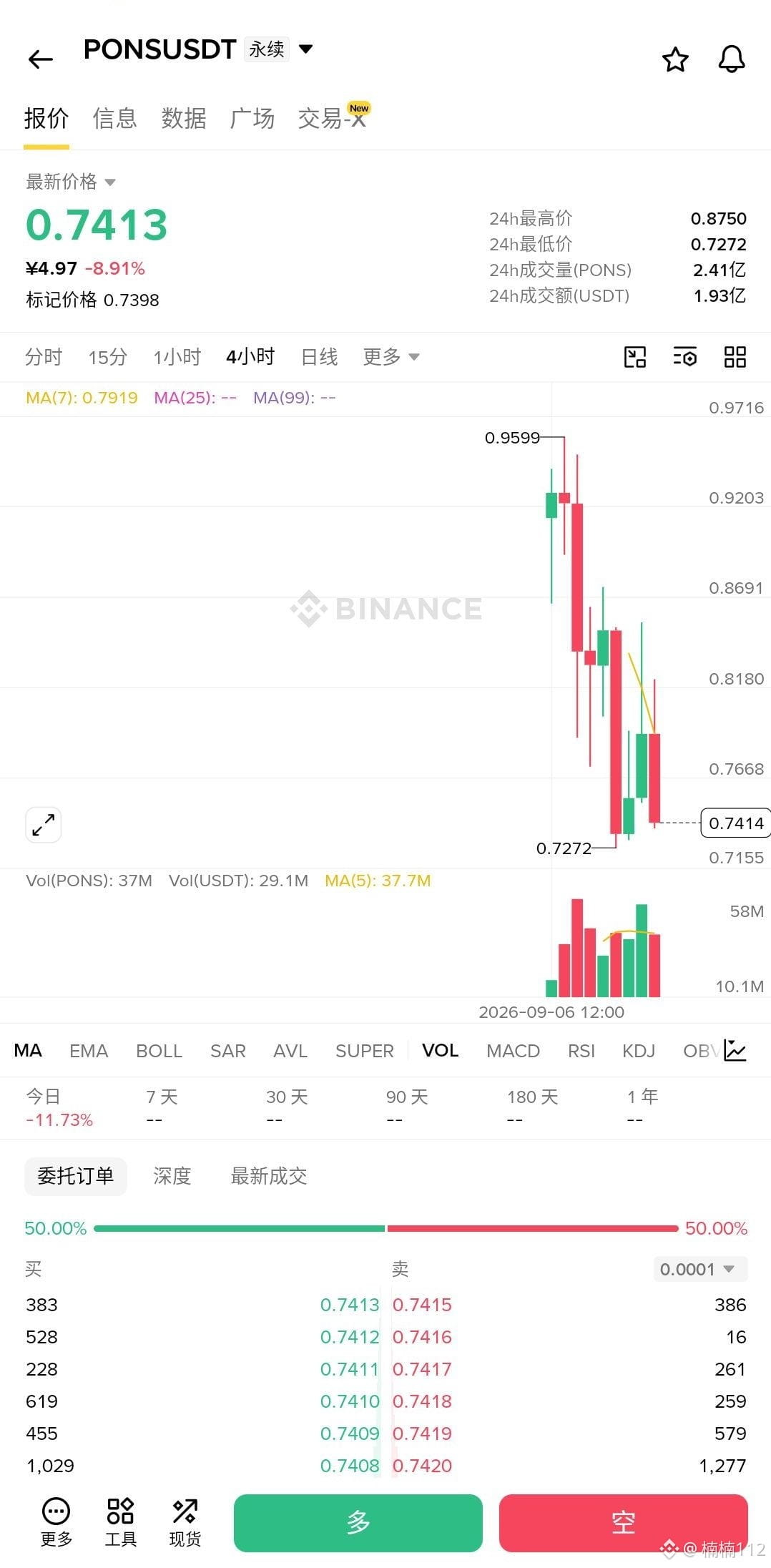
PONS large holders are a bit conflicted: the number of accounts over a seven-hour period rose by 2.42%. It looks like they’re entering, yet the long position ratio in the positions has been cut by 8.83%—accounts are being added while exposure is being withdrawn. This is reducing longs on a retracement. Don’t forget: while large holders withdraw, the futures side is still ramping up leverage step by step.
Open interest over seven hours is +23.7%, the funding rate has stayed positive for eight consecutive candles, but the price has dropped 12% over 24 hours. Positive funding combined with a falling price and rising OI means you’re piling up longs that are already in profit—fuel that will be liquidated later. This accumulation isn’t “catching a dip”; it’s “queueing.”
The order book also doesn’t give longs any face: contract market-making active sell orders are 4.4 million lots versus 2.7 million lots of buy orders—buyers’ share is down to just 38%. Meanwhile, in spot, none of the five K-lines with large orders net inflow; there isn’t even one. Buy-side depth is only half of the sell-side. The sell pressure hasn’t exhausted at all; meanwhile, price is also pinned below the 15-minute dual moving averages, and the four-hour trend is DOWN.
So the stance is clear: go short. Don’t use “oversold” to catch leverage in a positive funding environment. The more OI is built up during a decline, the smoother it becomes for shorts.
A reversal only recognizes one combination: price must reclaim above 0.79 (MA20), the active buy-side ratio must rise back over 50%, and the whales’ long position share must stop falling and start to recover—only when all three line up should you talk about turning long. #pons $PONS
Open interest over seven hours is +23.7%, the funding rate has stayed positive for eight consecutive candles, but the price has dropped 12% over 24 hours. Positive funding combined with a falling price and rising OI means you’re piling up longs that are already in profit—fuel that will be liquidated later. This accumulation isn’t “catching a dip”; it’s “queueing.”
The order book also doesn’t give longs any face: contract market-making active sell orders are 4.4 million lots versus 2.7 million lots of buy orders—buyers’ share is down to just 38%. Meanwhile, in spot, none of the five K-lines with large orders net inflow; there isn’t even one. Buy-side depth is only half of the sell-side. The sell pressure hasn’t exhausted at all; meanwhile, price is also pinned below the 15-minute dual moving averages, and the four-hour trend is DOWN.
So the stance is clear: go short. Don’t use “oversold” to catch leverage in a positive funding environment. The more OI is built up during a decline, the smoother it becomes for shorts.
A reversal only recognizes one combination: price must reclaim above 0.79 (MA20), the active buy-side ratio must rise back over 50%, and the whales’ long position share must stop falling and start to recover—only when all three line up should you talk about turning long. #pons $PONS