🔥 Ethereum Could Soon Make Crypto Wallets Much Easier to Use
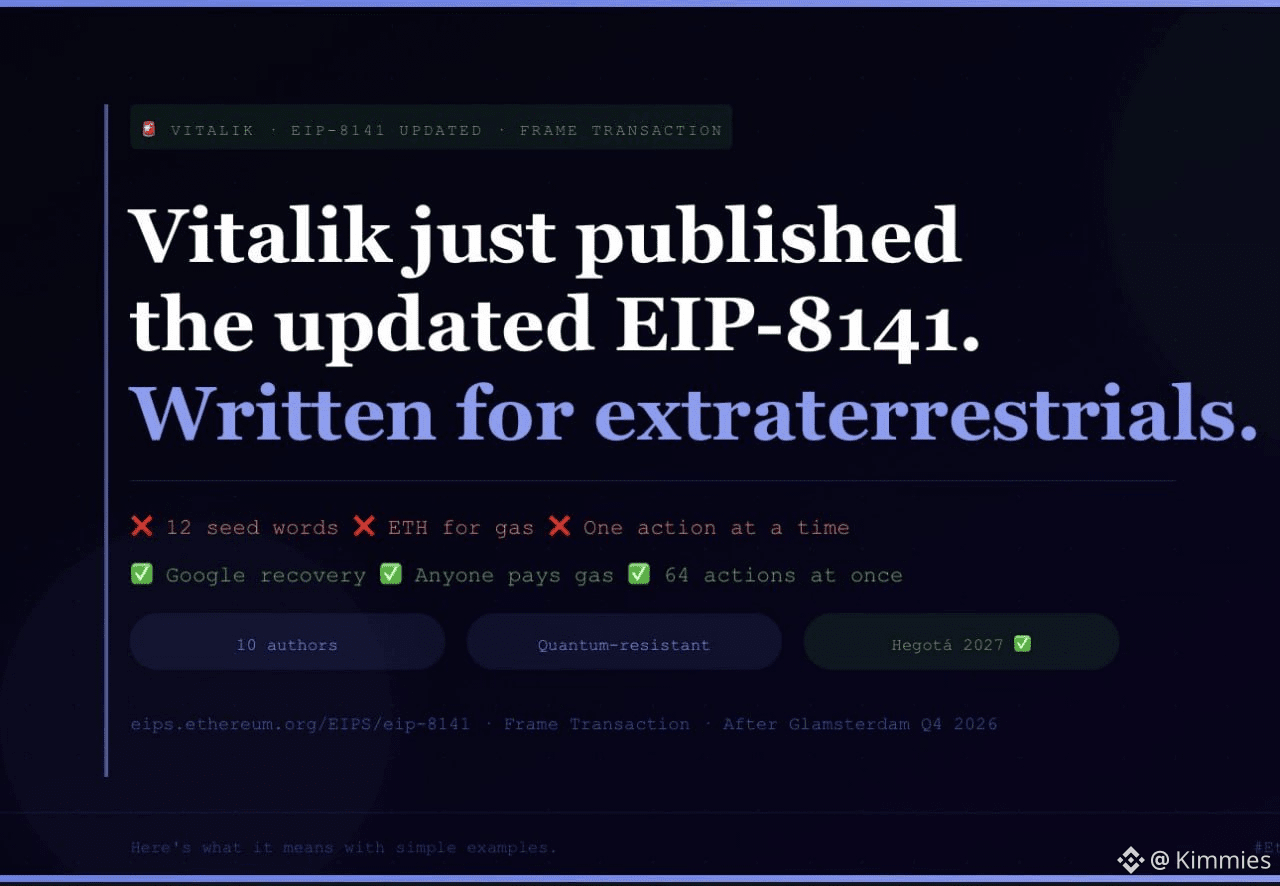
Vitalik Buterin and Ethereum developers are pushing EIP-8141, a proposal designed to bring native account abstraction and smart-wallet functionality directly into Ethereum.
If implemented, users could eventually:
• Bundle multiple actions such as approvals, swaps and token transfers into a single transaction instead of signing each step separately.
• Recover wallet access through trusted contacts or alternative authentication methods.
• Let another party pay gas fees, meaning users could interact with Ethereum without necessarily holding ETH for transaction fees.
• Rotate or replace authentication keys without creating an entirely new wallet and moving assets.
• Support P256 signatures, the cryptographic standard commonly used by modern phones and hardware, while also creating a path toward quantum-resistant authentication.
The bigger idea is simple:
Your Ethereum wallet would no longer have to depend on one permanent private key controlling everything.
Instead, wallet security and transaction authorization could become programmable allowing recovery mechanisms, multiple signers, key rotation and sponsored transactions to be handled at the protocol level.
EIP-8141 is currently being developed toward the Hegotá upgrade, but the proposal is not finalized yet, so its exact specifications and deployment timeline can still change.
If Ethereum gets this right, the biggest impact may not be another DeFi primitive or scaling upgrade.
It could simply make using Ethereum feel much more like using a modern app without giving up self-custody.
$ETH
Vitalik Buterin and Ethereum developers are pushing EIP-8141, a proposal designed to bring native account abstraction and smart-wallet functionality directly into Ethereum.
If implemented, users could eventually:
• Bundle multiple actions such as approvals, swaps and token transfers into a single transaction instead of signing each step separately.
• Recover wallet access through trusted contacts or alternative authentication methods.
• Let another party pay gas fees, meaning users could interact with Ethereum without necessarily holding ETH for transaction fees.
• Rotate or replace authentication keys without creating an entirely new wallet and moving assets.
• Support P256 signatures, the cryptographic standard commonly used by modern phones and hardware, while also creating a path toward quantum-resistant authentication.
The bigger idea is simple:
Your Ethereum wallet would no longer have to depend on one permanent private key controlling everything.
Instead, wallet security and transaction authorization could become programmable allowing recovery mechanisms, multiple signers, key rotation and sponsored transactions to be handled at the protocol level.
EIP-8141 is currently being developed toward the Hegotá upgrade, but the proposal is not finalized yet, so its exact specifications and deployment timeline can still change.
If Ethereum gets this right, the biggest impact may not be another DeFi primitive or scaling upgrade.
It could simply make using Ethereum feel much more like using a modern app without giving up self-custody.
$ETH