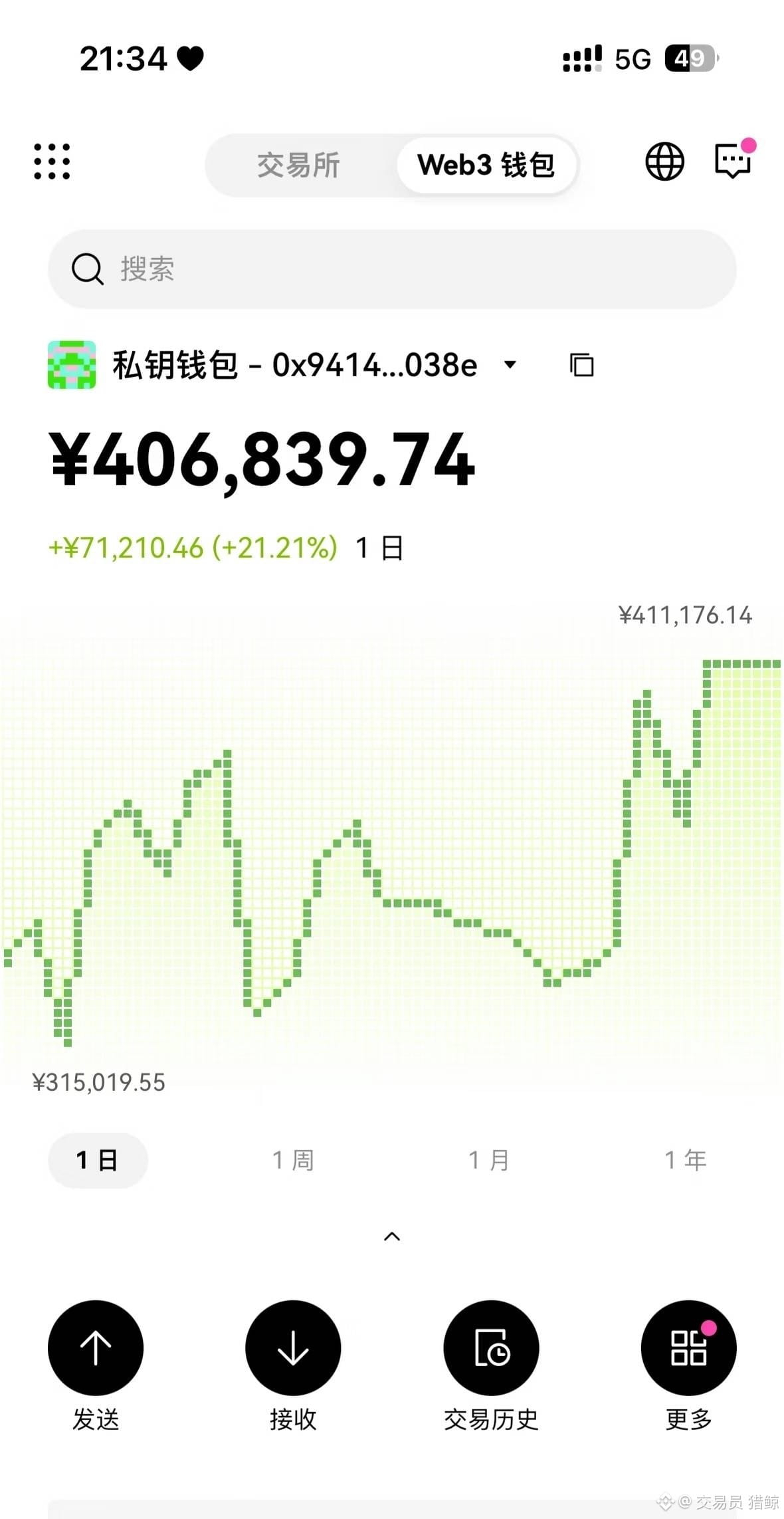
“Bro, I’ve only got 1500U—does it still make sense to do it slowly?” Back then I only replied one sentence: “The money is enough. What you’re afraid of is that you yourself are too impatient. Starting today, all orders follow the rules.” #币圈生存法则
When he first came, his biggest problem was impatience. Seeing a surge, he wanted to chase. When he was at a floating loss, he wanted to average down. He always thought the principal was small, so if he didn’t go all-in and really hit it, he’d never get started.
I laid down three rules for him—strictly.
First, money must be separated.
Take 1500U and split it into three parts: one for short-term trades, one to wait for the trend, and the last one to stay on the sidelines. With a small account, the biggest fear is going all-in. One mistake can get you knocked out.
Second, don’t touch trash market conditions.
If it’s ranging sideways, choppy, or the direction is unclear—just wait. Only act when there’s truly a trend, with volume, and a clear structure. Trading isn’t about who does more; it’s about who can wait and hold their discipline.
Third, if you’re wrong, you must admit it.
If the stop loss is hit, you leave immediately. When you’re in profit, take part of it first. Losses must never be averaged down, and don’t think about “going hard” on the next order to make it back.
Later, his biggest change wasn’t learning more indicators. It was that he finally changed from “searching for opportunities every day” to “waiting only for opportunities.”
If you want to move up with a small capital, there really aren’t any tricks: don’t乱(乱动) your position size, don’t chase opportunities, and don’t drag mistakes.
It’s fine to have little capital. What’s most dangerous is being chaotic. Follow me—first, make the 1500U clear and workable, then we talk about the road ahead. #币圈暴富
When he first came, his biggest problem was impatience. Seeing a surge, he wanted to chase. When he was at a floating loss, he wanted to average down. He always thought the principal was small, so if he didn’t go all-in and really hit it, he’d never get started.
I laid down three rules for him—strictly.
First, money must be separated.
Take 1500U and split it into three parts: one for short-term trades, one to wait for the trend, and the last one to stay on the sidelines. With a small account, the biggest fear is going all-in. One mistake can get you knocked out.
Second, don’t touch trash market conditions.
If it’s ranging sideways, choppy, or the direction is unclear—just wait. Only act when there’s truly a trend, with volume, and a clear structure. Trading isn’t about who does more; it’s about who can wait and hold their discipline.
Third, if you’re wrong, you must admit it.
If the stop loss is hit, you leave immediately. When you’re in profit, take part of it first. Losses must never be averaged down, and don’t think about “going hard” on the next order to make it back.
Later, his biggest change wasn’t learning more indicators. It was that he finally changed from “searching for opportunities every day” to “waiting only for opportunities.”
If you want to move up with a small capital, there really aren’t any tricks: don’t乱(乱动) your position size, don’t chase opportunities, and don’t drag mistakes.
It’s fine to have little capital. What’s most dangerous is being chaotic. Follow me—first, make the 1500U clear and workable, then we talk about the road ahead. #币圈暴富