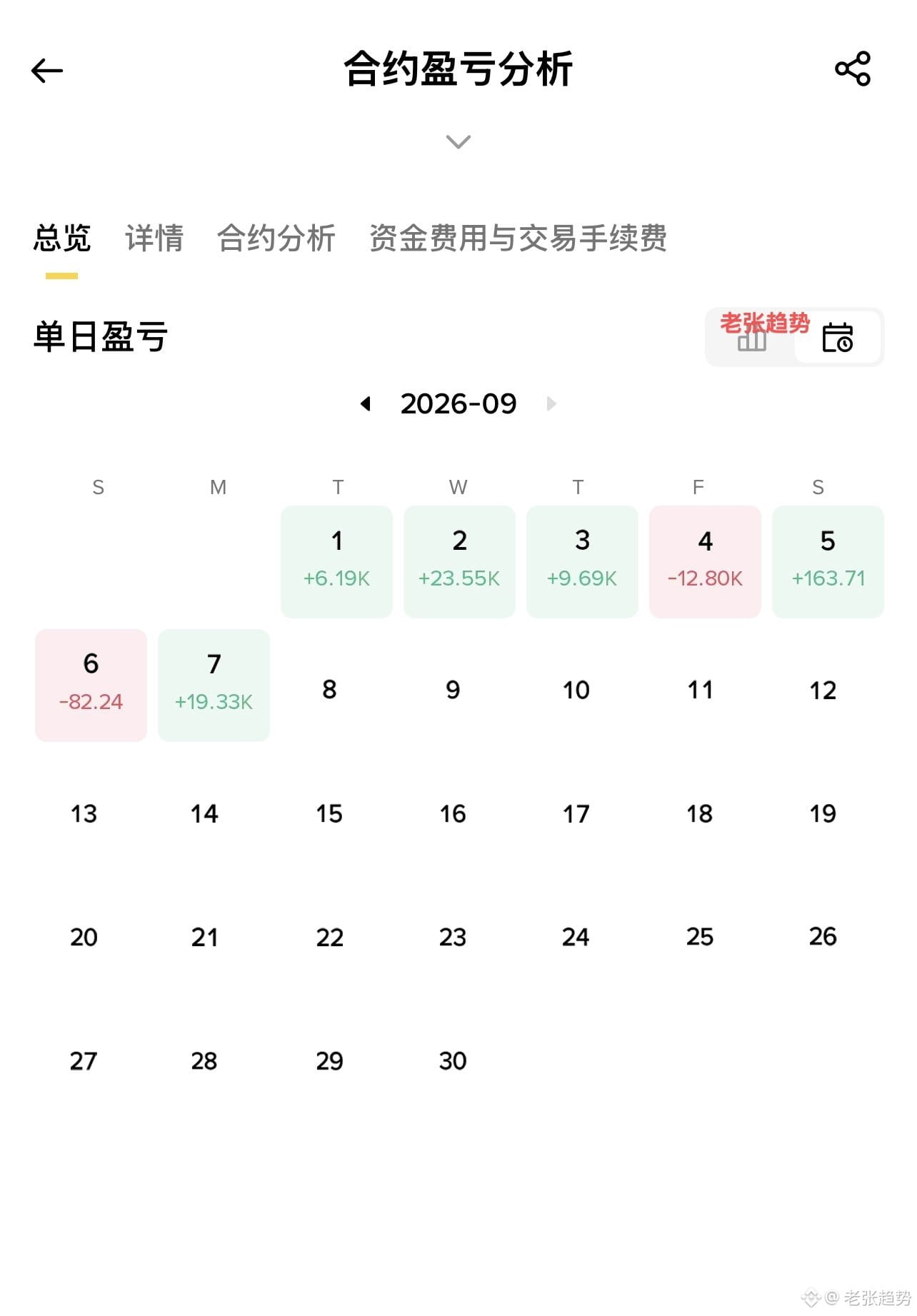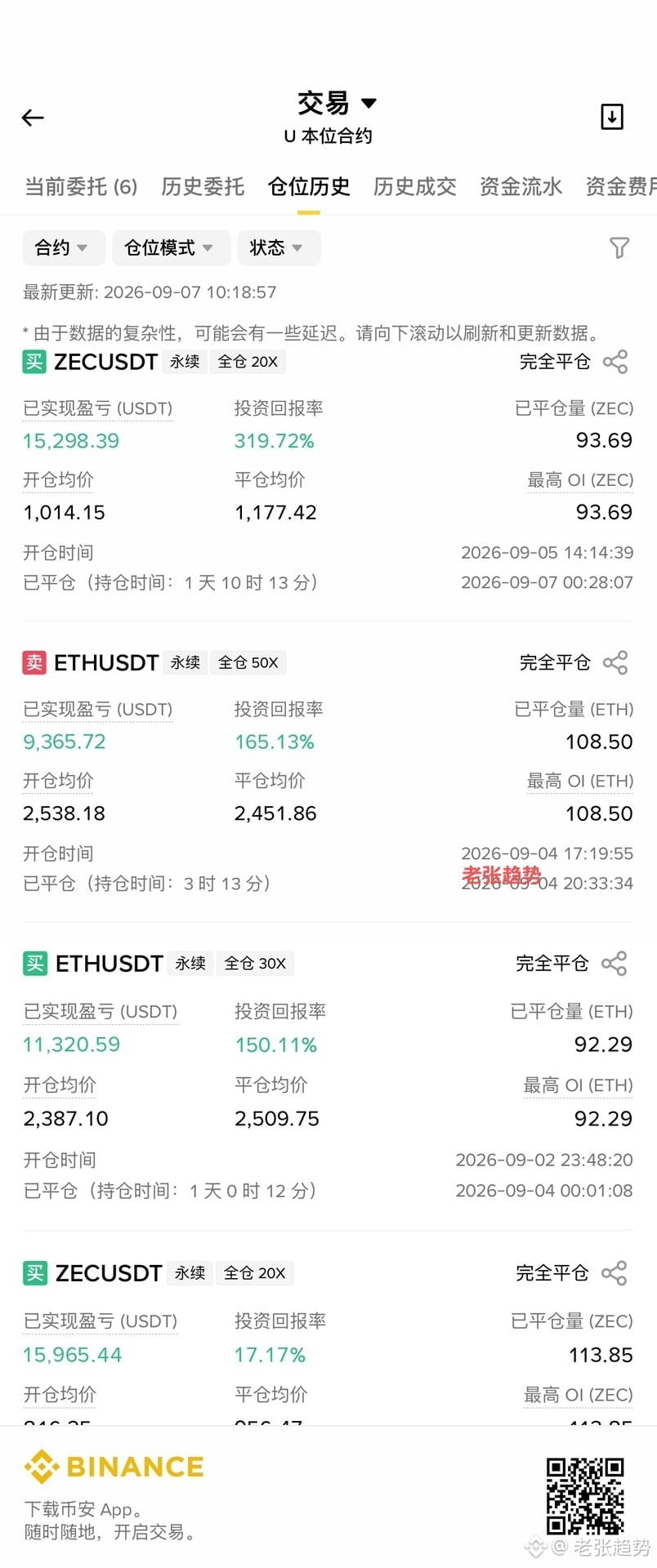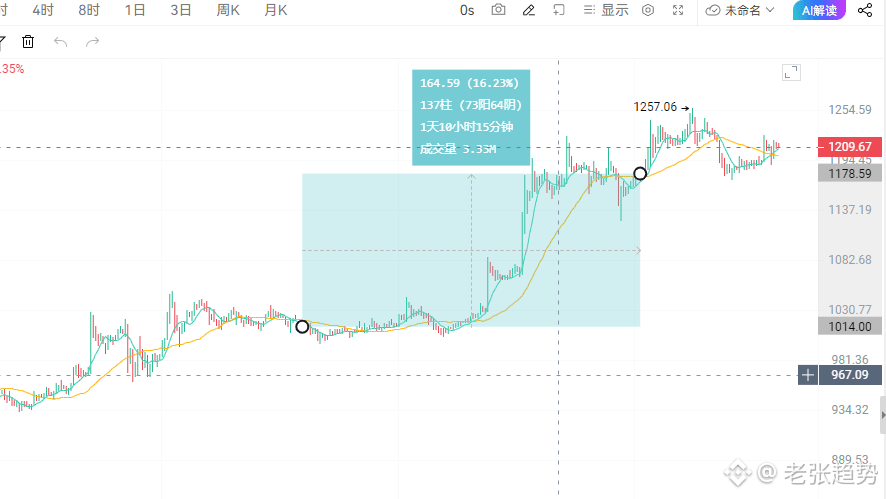
It really isn’t luck that causes a liquidation—it’s because you don’t know how to roll.
Think back to your most recent liquidation. Did you really get the direction wrong? In most cases, no. You went in heavy, and later it did rise—yet you still got liquidated.
Why? Because from start to finish you held one single posture: went in with a large position, kept holding when it went against you, couldn’t withstand the drawdown, and it liquidated.
How do people who know how to roll trade? They keep a base position of 10%. Only when unrealized profit is enough do they add. Each add-on is done with break-even and stop-loss protection. After moving up by certain steps, they push the stop higher, and double the position to take half of the profits off. How far the market runs determines how much they earn. When it retraces, they lock in profits—at worst they lose only up to the break-even stop.
How do people who don’t know how to roll trade? They go in heavy. Unrealized profit piles up, but they don’t take profits or reduce the position. Then on a pullback, the profits get wiped out. And after that, even the principal is gone too.
Direction determines whether you can survive; rolling determines how long you can stay in the trade and how much you can walk away with. Even if you’re very accurate on direction, if you don’t know how to roll, your profits are just numbers. If you do know how to roll, getting it right once lets you eat the whole move—if you’re wrong, you only lose a little.
If you’ve been liquidated before, don’t blame luck. What you’re missing isn’t luck—it’s a set of rules for rolling positions.
Think back to your most recent liquidation. Did you really get the direction wrong? In most cases, no. You went in heavy, and later it did rise—yet you still got liquidated.
Why? Because from start to finish you held one single posture: went in with a large position, kept holding when it went against you, couldn’t withstand the drawdown, and it liquidated.
How do people who know how to roll trade? They keep a base position of 10%. Only when unrealized profit is enough do they add. Each add-on is done with break-even and stop-loss protection. After moving up by certain steps, they push the stop higher, and double the position to take half of the profits off. How far the market runs determines how much they earn. When it retraces, they lock in profits—at worst they lose only up to the break-even stop.
How do people who don’t know how to roll trade? They go in heavy. Unrealized profit piles up, but they don’t take profits or reduce the position. Then on a pullback, the profits get wiped out. And after that, even the principal is gone too.
Direction determines whether you can survive; rolling determines how long you can stay in the trade and how much you can walk away with. Even if you’re very accurate on direction, if you don’t know how to roll, your profits are just numbers. If you do know how to roll, getting it right once lets you eat the whole move—if you’re wrong, you only lose a little.
If you’ve been liquidated before, don’t blame luck. What you’re missing isn’t luck—it’s a set of rules for rolling positions.