
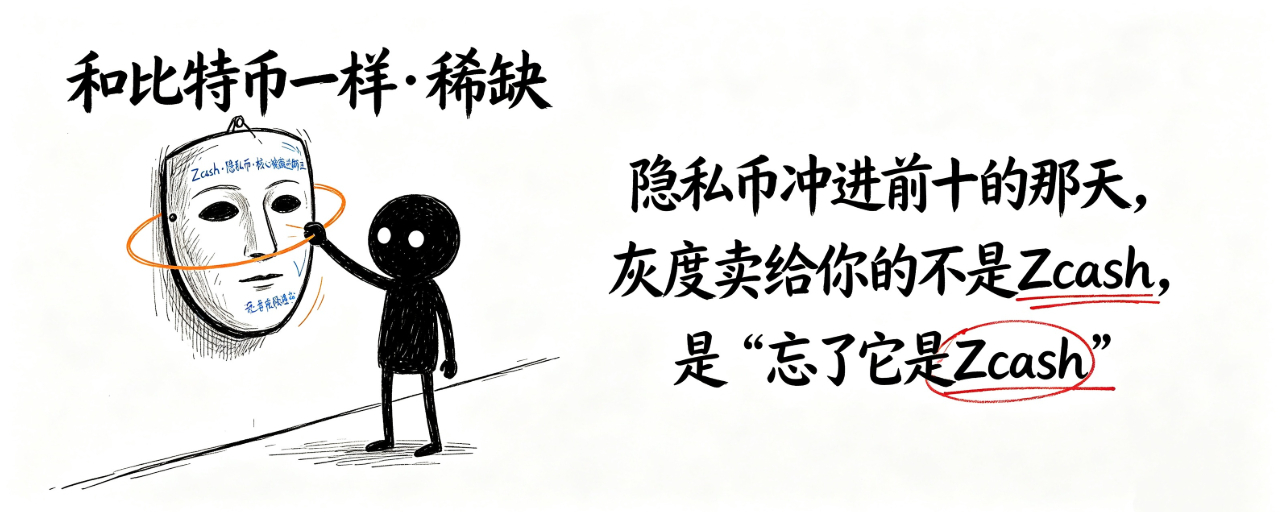

ZEC breaks above $1,000, market cap reaches $19.6 billion, surpasses DOGE, and enters the top ten.
The market is calling this a “legalization frenzy for privacy coins.” But if you take a look at what Grayscale is actually selling in ZCSH’s prospectus, you’ll find a strange fact: an ETF for a privacy coin that never once makes “privacy” its selling point.
It’s selling the “21 million coin supply cap.” It’s “78.6% already mined.” It’s “a scarcity model just like Bitcoin’s.”
A privacy ETF is marketing “scarcity,” not “privacy.” That’s the strangest thing about this news.
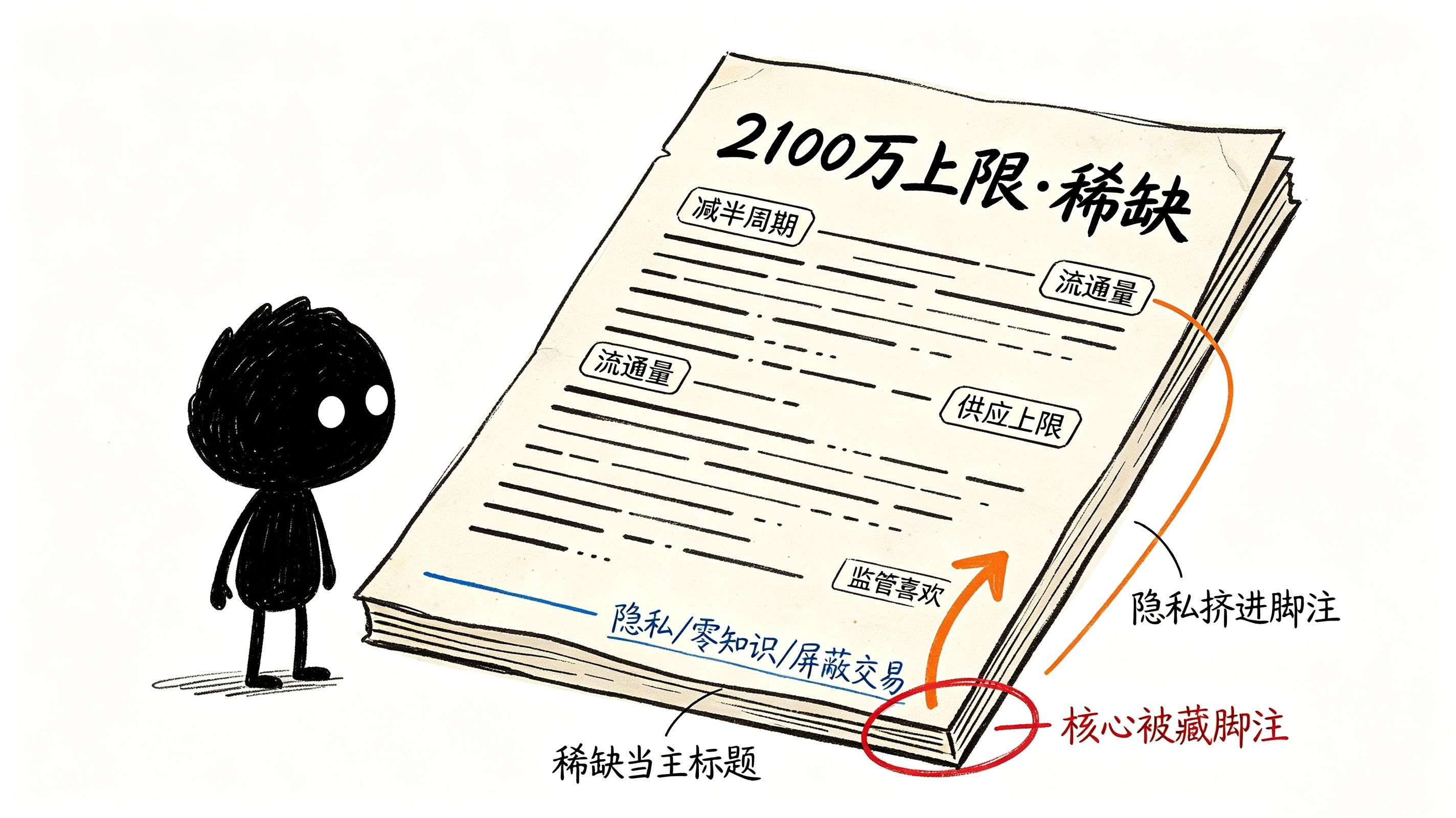
Swap the subject to “that ETF prospectus that intentionally doesn’t mention privacy.”
If the subject is “Zcash,” the story is “market cap突破.” If the subject is “Grayscale,” the story is “compliance arbitrage.” But if you swap the subject to that ETF prospectus that survived regulatory scrutiny yet can’t mention “privacy” a single extra word—the whole narrative fractures.
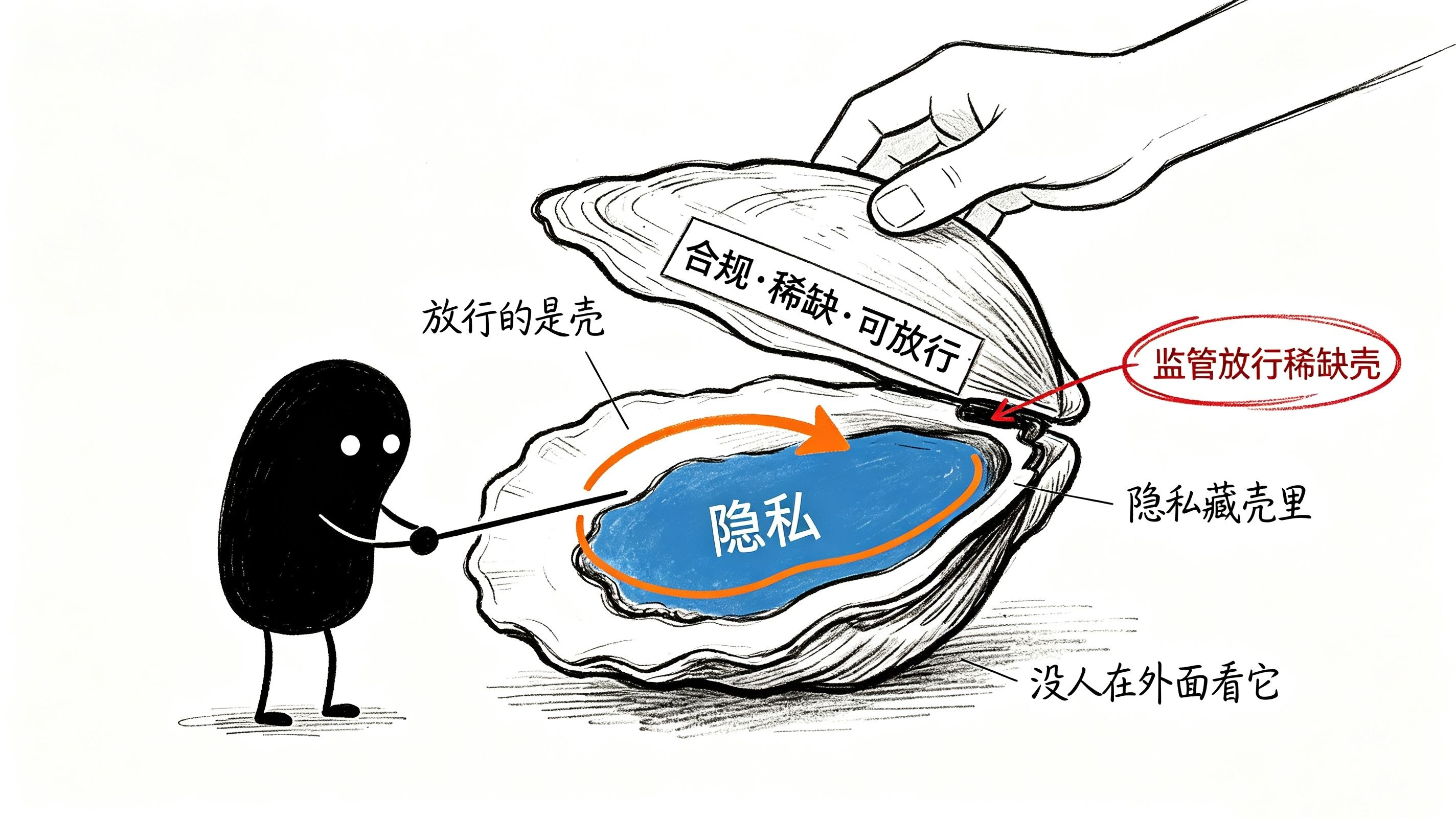
What is this prospectus doing? It’s doing something extremely ruthless: it is repackaging an asset whose genes are “anonymous, resistant to being traced, and far from scrutiny” into a “reliable scarce asset just like Bitcoin.” It buries Zcash’s most essential part—shielded transactions, zero-knowledge proofs, privacy protection—in the footnotes, then amplifies the least important parts—supply cap, halving cycles, circulating supply—into the main headline.
Why? Because regulators don’t like “privacy.” Regulators like “scarcity.” Scarcity is safety; scarcity is compliance; scarcity can be written into a prospectus without the SEC looking too closely.
So Grayscale did the only thing it could do: it didn’t sell Zcash. It sold the Zcash that has “forgotten it’s Zcash.”
Another name for “legalization”: decentralization removal
This market cycle has been packaged as a “legalization victory.” But think about this: a privacy coin’s “legalization” comes at what cost?
The cost is this: its core function—privacy—has been systematically downgraded. Grayscale played down “privacy” and emphasized “scarcity.” The rally happened on the day Zcash was redefined as “another kind of scarce asset.”
The real meaning of “legalization” here is “decentralization removal.” A coin that survives on privacy has to become “less private” to be accepted by the mainstream. And once it really is accepted, it is no longer entirely itself.
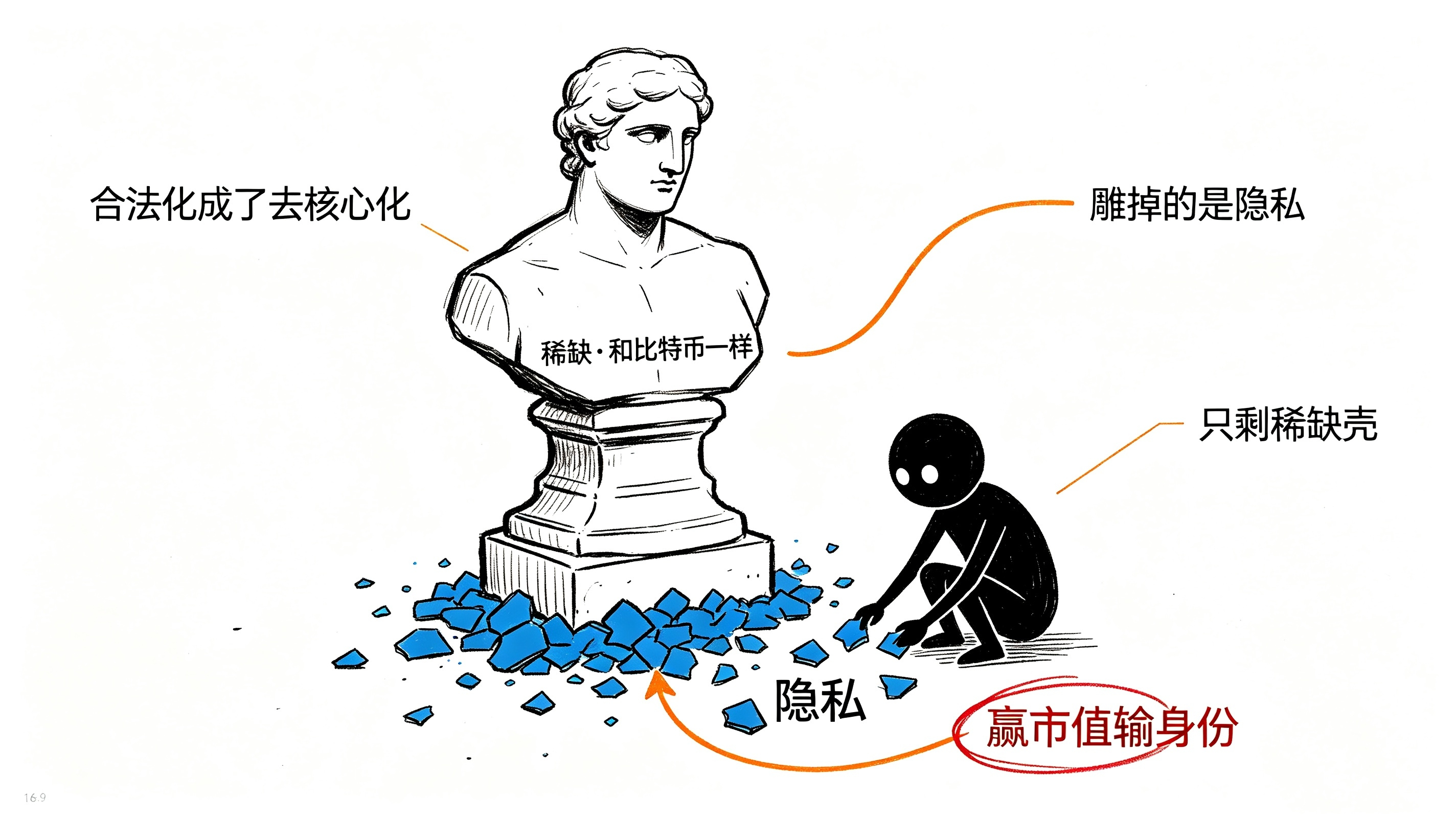
That’s why this time there’s a deep irony hidden in the “legalization frenzy”: Zcash won market value but lost its identity. The reason Wall Street picked it is precisely because Wall Street believes it can persuade everyone— including itself—that “it’s actually not a privacy coin.”
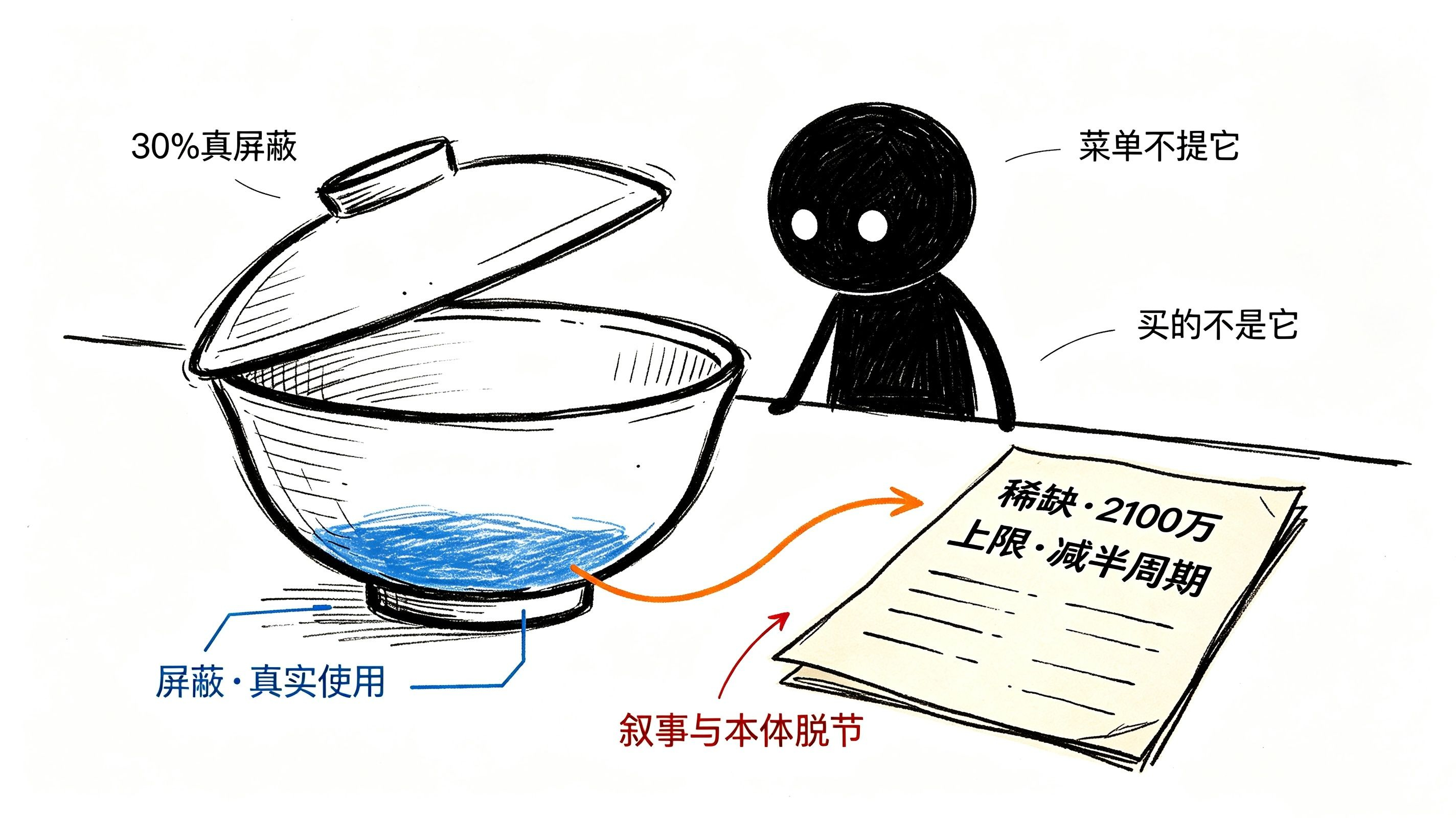
Those 30% of ZEC in shielded addresses have nothing to do with what the ETF is saying
Data don’t lie: more than 30% of the ZEC supply is held in shielded addresses, worth over $1 billion. Shielded transactions account for 59.3% of all network activity. 4.86 million ZEC are actually used in privacy pools.
These are the real proofs of Zcash as a “privacy coin.” They are the reason it exists. They are what makes it different from other coins.
But in the ETF story, none of those data are present. The ETF talks about a “21 million supply cap,” “78.6% already mined,” and “the halving cycle just like Bitcoin.” It frames Zcash as a “Bitcoin knockoff.”
And the market bought it. So what does that mean? It means that most of the capital driving this rally isn’t buying “privacy”—it’s buying a “scarcity narrative plus a compliant access channel.” They probably don’t even know what proportion of Zcash’s transactions are shielded, and they don’t care.
When an asset’s price is driven by its most core function, that’s one thing. When the price is driven by pretending it doesn’t have that function, that’s another. The latter is more dangerous, because the narrative supporting the price, and what the asset itself is actually doing, have already become out of sync.
The real timeline of ZEC rising from $42 to $1,000: not “privacy returning,” but “regulatory clearance.”
Pull the timeline out and look at it:
In January 2026, the SEC ended its two-year investigation into the Zcash Foundation without taking any enforcement action.
On August 25, 2026, Grayscale converted the Zcash Trust into the ZCSH spot ETF and listed it on NYSE Arca.
On September 4, 2026, ZEC broke through $1,000.
The real inflection point isn’t that privacy technology made a breakthrough. It’s that regulators “let it go.” It’s not the day shielded transactions first exceeded 50%. It’s the day the SEC announced it would take no action.
So why did the SEC let it go? Not because it was “compliant”—but because it was repackaged into the “look of compliance.” Regulation didn’t endorse privacy; it endorsed the idea that privacy can be packaged as scarcity.
So the underlying logic of this rally is: regulatory clearance provides a shell of legitimacy; the ETF provides a pipeline for capital; and privacy itself is just the content packed inside that shell—something inconvenient to mention.
Record hash rate, miners rushing in, returns diluted—who benefits the most?
Hash rate hit a record high of 27.9 GSol/s at the end of August. Miner rigs sold out. Miners flooded in.
But network difficulty rises, and per-coin earnings get diluted. Even if ZEC trades above $1,000, miners’ actual profits are lower than the increase in the coin price.
What does that mean? It means the biggest beneficiary of this rally isn’t miners or the development team—it’s the institutions and early holders that positioned themselves early. They obtained the coins at $42 or lower, and then, within the ETF’s compliant narrative, at prices above $1,000, they handed them over to those later entrants who finally “have a compliant buy-in channel.”
The ETF’s role here isn’t “bringing incremental users to Zcash.” It’s “providing an exit channel that’s compliant for early holders.” Grayscale is selling, miners are mining, and the buyers are betting on a story of “scarcity.”
The problem that keeps people up at night the most
Zcash rushed into the top ten, and the market called it the “legalization frenzy.”
But the real question is: when a privacy coin has to rely on “forgetting it’s a privacy coin” to be accepted by the mainstream, how much is its future worth?
If regulators tighten up next—and the EU’s MiCA framework is already planned to ban privacy coins in 2027—at what price do people buying ZEC today exit? When they exit, are they selling “privacy” or selling “scarcity”? If they’re selling “privacy,” the market has already proved that “privacy” isn’t worth much. If they’re selling “scarcity,” then why buy Zcash instead of Bitcoin?
Grayscale “saved” Zcash out of the privacy-coin narrative and shoved it into the template of a scarce asset. But is what was saved still Zcash?
A privacy coin that has lost its core narrative; an anonymous tool that regulators have “let off the hook” but could target again at any time; an asset that surged 2,300% just by “forgetting what it is.” The day it charged into the top ten may not have been its most glorious day—it may have been its most dangerous day.
Because ever since that day, a gap has opened—an invisible seam—between how the market prices it and what it is actually doing. Everyone standing on that seam is pretending not to see it.