


I’m watching the Arbitrum DAO situation closely because this looks less like a simple “funds were misused” story and more like a test of how seriously DAO governance can enforce accountability.
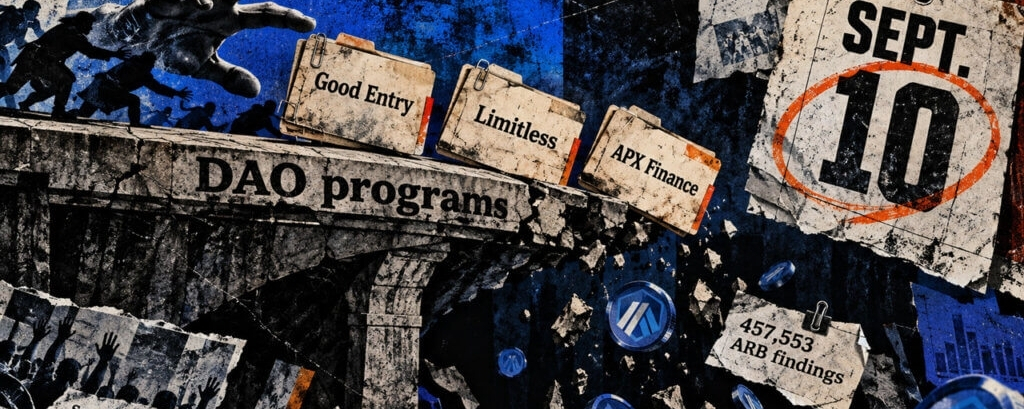
Three DeFi projects Good Entry, Limitless and APX Finance are now facing possible exclusion from future Arbitrum DAO programs after the Watchdog Committee raised high-severity concerns over their grant usage. The committee has given the projects a tentative deadline of Sept. 10 to respond to the findings and resolve the issues, with separate Snapshot votes possible if their explanations are considered unsatisfactory.
The figures involved total 457,553 ARB, but I think it’s important not to treat that number as one confirmed debt. The cases involve different findings, and the amounts represent things such as disputed distributions, transfers and alleged misuse rather than a single amount officially declared stolen or recoverable.
For Good Entry, the committee said its analysis identified “142,839 ARB” distributed to 1,032 users it considered ineligible. It also alleged self-farming involving wallets linked to team addresses and said the project had not provided sufficient clarification. Good Entry had requested 200,000 ARB, meaning the watchdog figure relates to part of the grant rather than automatically representing an outstanding repayment balance.
Limitless is a more direct case. The committee alleged that “75,000 ARB” was swapped into USDC and transferred to Base, while saying it was unable to reach team members for clarification or recovery. That amount also matches the 75,000 ARB requested through its LTIPP application.
APX Finance is harder to reduce to a single repayment figure. The committee linked “239,714 ARB” to several issues, including funds allegedly left unused in treasury addresses, late transfers to distributor contracts and alleged team-linked Sybil activity. APX had requested 525,000 ARB, but the proposal does not provide a detailed breakdown showing how much of the 239,714 ARB relates to each individual issue.
What stands out to me is the proposed consequence. These are not on-chain enforcement actions. Each project could face its own off-chain Snapshot vote, with the proposed ban targeting founders, team members and affiliated contributors where applicable. The goal would be to make those parties “ineligible for future programs run by the Arbitrum DAO.”
That distinction matters. A governance-access ban would not freeze wallets, shut down a protocol or directly recover funds. Instead, it would use future access to DAO-funded programs as the enforcement mechanism.
The broader numbers also show why this process matters. The Watchdog Committee said that, as of Sept. 2, it had received 90 reports, recovered around 532,000 ARB and distributed roughly 268,000 ARB in reporter bounties.
For me, the biggest signal now is not the headline figure of 457,553 ARB. It is whether these projects respond before the tentative Sept. 10 deadline and whether Arbitrum governance actually follows through with exclusion votes if the committee's concerns remain unresolved. That could become a meaningful test of how much power DAO oversight mechanisms really have when grant recipients fail to provide satisfactory answers.