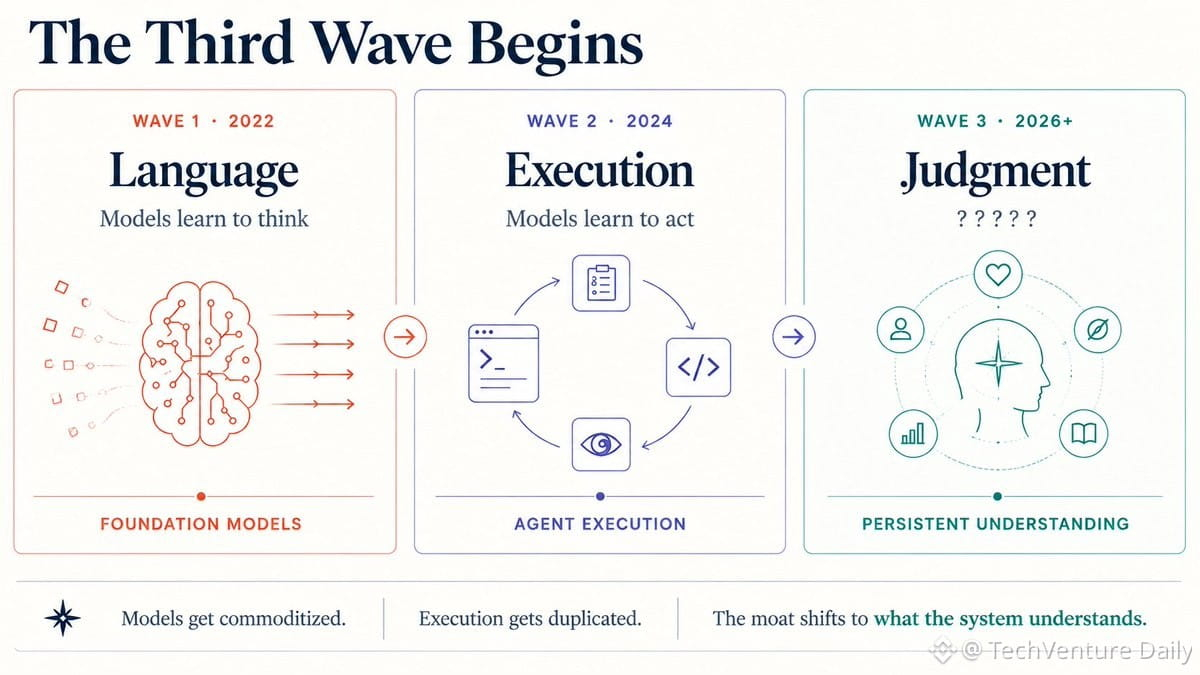
The next battleground in AI isn't model size or inference speed—it's contextual memory architecture. @ashwingop argues that as LLMs commoditize, the real moat is selective memory: not just storing data, but filtering what's worth storing and surfacing.
The core technical problem: bridging the gap between event data (calendar, actions, queries) and semantic importance (user intent, priorities, emotional weight). Current RAG systems dump everything into vector stores. The breakthrough will be systems that build dynamic importance graphs—learning not just what you did, but why it mattered.
Think: a memory layer that scores relevance not by recency or keyword match, but by inferred user value. That requires real-time priority modeling, not static embeddings. The system that cracks this doesn't just remember—it knows when to interrupt you, and when to shut up.
This is where attention mechanisms meet behavioral modeling. The winner builds an AI that understands your 'why' without you explicitly teaching it.
The core technical problem: bridging the gap between event data (calendar, actions, queries) and semantic importance (user intent, priorities, emotional weight). Current RAG systems dump everything into vector stores. The breakthrough will be systems that build dynamic importance graphs—learning not just what you did, but why it mattered.
Think: a memory layer that scores relevance not by recency or keyword match, but by inferred user value. That requires real-time priority modeling, not static embeddings. The system that cracks this doesn't just remember—it knows when to interrupt you, and when to shut up.
This is where attention mechanisms meet behavioral modeling. The winner builds an AI that understands your 'why' without you explicitly teaching it.