

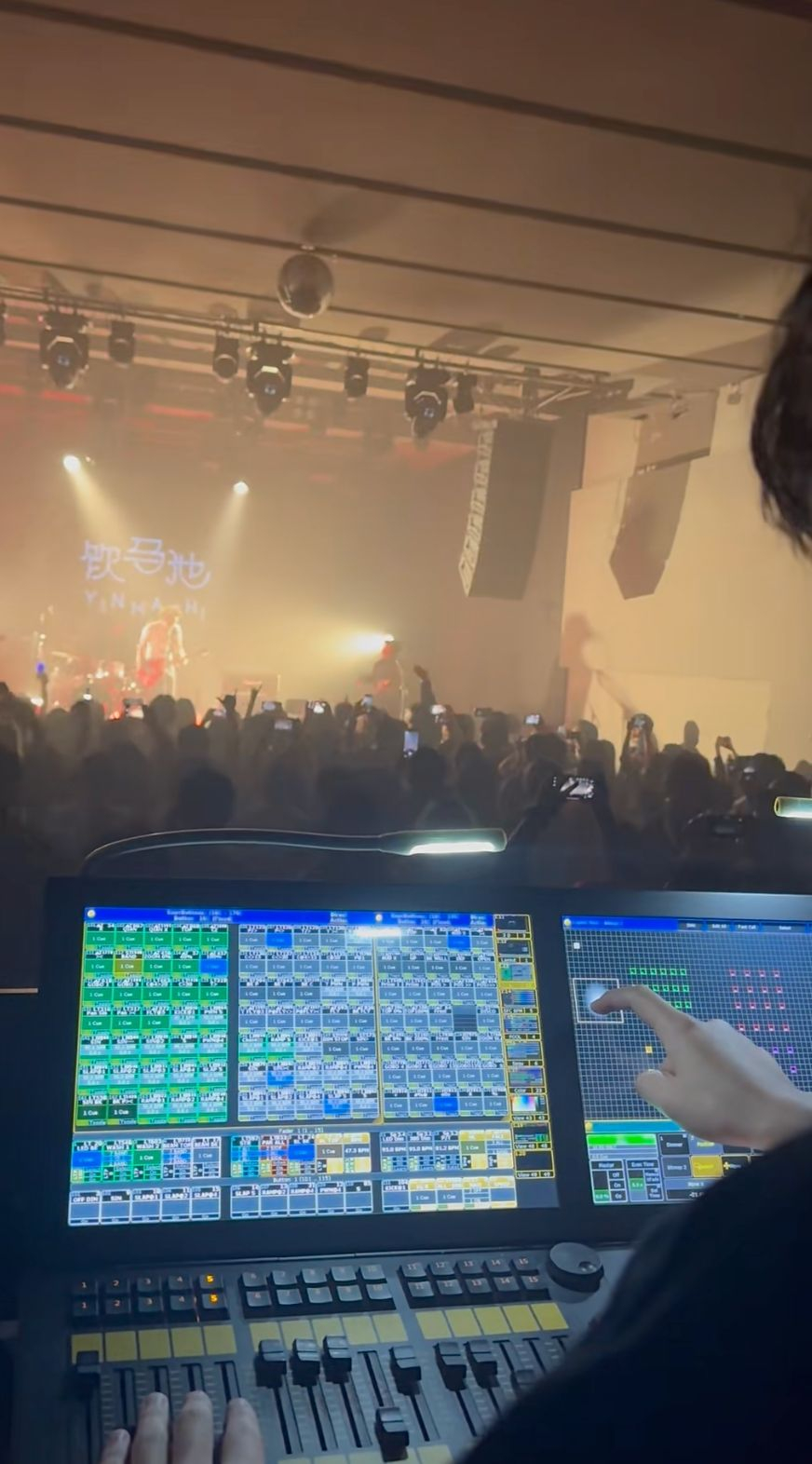
I used to work in stage lighting. Bars, concerts, commercial events—any place that needed lighting, I’d basically been there. Taking equipment apart at two or three in the morning was routine; carrying lights that weighed dozens of pounds one by one, coiling up cables one by one. What people saw was how beautiful the lights on stage were, but what we saw was the floor full of wires and equipment after the event ended. In the beginning, I just made money with physical labor. I could earn several thousand yuan from one event after being busy all night. Later, after doing it for a long time, I slowly came to understand one thing: what really makes money in this industry is not how many hours you go out and work every day, but how much equipment, resources, and how many clients you have in your hands. So I started saving money to buy equipment, slowly building up from a few lights and a few control consoles, then taking on projects and using the money I earned to keep adding equipment. A few years later, I went from being a lighting technician working for others to running my own equipment company. Later, I could also take on large events as a full package. One project could bring in tens of thousands or even over a hundred thousand yuan, and my income finally started to rise to a whole new level. 💰
The first time I ever came into contact with cryptocurrency was when a DJ I had worked with brought me into it. He used to chat with me about BTC whenever he had nothing to do. At the time I didn’t really take it seriously, until one day he said to me: “Those equipment you store in a warehouse only make that much in a year, but BTC’s volatility in a month can sometimes be bigger than your business in a year.” That sentence sparked my interest. Later I put in 60,000 yuan to test the waters, and unexpectedly I got very lucky. Right after I entered, I caught an upswing, and the few tens of thousands quickly turned into hundreds of thousands. That feeling was completely different from the first time I made money buying equipment, because in business you have to find customers, negotiate contracts, move gear, and stay up late working; here it felt like I was just sitting in front of a computer while the numbers kept jumping upward by themselves. So I kept adding more money, from hundreds of thousands to over a million, and at the highest point my account reached over 1.8 million. Looking back now, the real danger wasn’t that I made 1.8 million, but that I started believing I had already understood this market.
Later I started trading contracts. At first I was actually quite cautious, because I knew this thing had leverage, and a small mistake could cause trouble. But for the next few months I kept making money, trading more than ten times a day—buying when it rose, buying when it fell—and my account slowly climbed from 1.8 million to 3.5 million. By then I was completely hooked, and I felt like every candlestick on the market was sending me money. In fact, so-called “trends” aren’t nearly as complicated as people imagine; simply put, it’s about whether the market is clearly running in one direction. If the price keeps going up, you follow it; if it keeps going down, don’t insist on standing in the middle of the road fighting it. But back then I stubbornly thought I was great: when the market rose, I wanted to take it all; when it fell, I thought it was money being handed out, and my position kept getting bigger and bigger. I used to look at lighting and know that too much power could burn the equipment; when trading, though, I forgot that too large a position can also “burn” the account. 😅
The real turning point happened after a sharp rally. That day I was still up by several hundred thousand, but then the market suddenly reversed, and prices dropped like the power had been cut. My first reaction wasn’t to run, but to think, “This is just a pullback.” So I kept adding to the position. Prices kept falling, and I kept adding. The thought kept repeating in my head: “At such a good price, buy a little more, and the rebound will come.” But the market didn’t follow my script at all. A few hours later, my prior profits were gone, and the account started showing a loss. Normally, by that point I should have admitted I was wrong and exited, but I was already controlled by emotion. What I was thinking about wasn’t how to protect the remaining money, but **“I have to win back the money I lost.”** So I started trading continuously, making a trade after a loss, adding more after another mistake, and in the end 3.5 million fell all the way to 400,000. During that period I truly understood: the most dangerous time in trading is not when you misread the market, but when you misread it and refuse to admit it.
The more practical problem came right away. My equipment company was still operating normally: I had to rent warehouses, pay employees, maintain the equipment, and front funds for projects. Before, I thought that as long as I had a few million in my account, the company’s cash flow wouldn’t be a problem no matter how it turned over. But when my trading account was left with only 400,000, I realized that those so-called “assets,” if they can’t generate stable cash flow, aren’t actually as safe as I imagined. At the hardest point, I even seriously considered selling the company, because I felt I no longer had the energy to deal with both business and trading at the same time. During that period, every day I looked at the equipment in the warehouse and felt something very strange: these things were real, the lights were real, the machines were real, the clients were real, yet the millions in my trading account felt like a dream I had suddenly woken up from. I used to think I lost money; later I realized I had actually lost my judgment of my own ability.
Later I completely stopped and separated my trading account from the company’s funds. Before, whenever I lost money I always thought about taking some from the company to fill the gap, but now I don’t touch a single cent. The company’s cash flow is the company’s, the family’s money is the family’s, and the trading account is the trading account; no one’s money can be used to put out someone else’s fire. Then I pulled out all the trades I had lost the worst on before and looked through them. I found a very painful problem: it wasn’t that I couldn’t make money, it was that I liked making money too much. When there was no market move, I insisted on trading; the moment the market moved a little, I was afraid of missing out; after winning a few times, I thought the next time would definitely work too. Later I set a very simple rule for myself: if I don’t understand it, I don’t do it; if the trend isn’t clear, I wait; once it really emerges, I follow it. It’s just like stage lighting: before the show starts, if every light is on, it only looks messy; but when it’s time to light up, one beam is enough to reveal the entire stage. Trading is the same. You don’t need to catch every wave. When a move that truly belongs to you appears, do that stretch well and that’s enough.
I also rethought stop-losses. Before, I thought stop-loss meant admitting defeat, so I always wanted to hold on and win it back; now I think a stop-loss is actually leaving yourself an escape route. If you’re wrong, cut the loss and go; if you’re right, let the profit run on its own. That sounds very ordinary, but once you really do it, your account feels much more comfortable. Position sizing is the same. You can’t just throw all your chips in because this time it looks certain. What the market likes most is giving you a heavy blow right when you’re most confident. You can lose one trade, but you can’t lose the qualification to start over.
I started over with 400,000, and at first the pace was very slow. From 400,000 to 800,000, then to 1.5 million, 2.5 million, and finally back to over 4 million. To be honest, this time it wasn’t as exciting as before. Sometimes in a month I’d make less than I used to make in a single day, but I actually felt more relaxed than before. Because in the past, when my account climbed to 3.5 million, I was thinking about how to push it to 5 million; now that I’m at 4 million, I’m thinking about how to keep it steady here. The equipment company has also stabilized again, and there’s still normal show equipment business. I don’t have to personally handle everything like before. Next I’m planning to keep expanding the equipment warehouse and build up more equipment rentals and long-term services, so the company can generate stable cash flow on its own. It’s the same on the investing side: take it slowly, and stop thinking a single big move can change your life.
After experiencing the fall from 3.5 million down to 400,000, I’m actually no longer interested in the words “sudden wealth.” Because what truly makes a person steady is never the day an account suddenly gains a few million, but whether you stay calm when the market rises, stay unpanicked when it falls, know how to keep the money you’ve made, and know when to leave when you’ve made a mistake. That is the real growth of a trader.
So if I had one sentence to leave to friends who are still in crypto now, I wouldn’t tell you to go all in, and I wouldn’t tell you the next wave is guaranteed to rise. My only feeling is this: don’t treat one win as proof of skill, and don’t treat one loss as the end of your life. The market is like a very bad-tempered teacher; the more eager you are to prove yourself, the more it likes to teach you a lesson. A real comeback is never about betting right on the next move, but about being willing to correct every mistake you made before after you’ve fallen to the bottom, and then building up again from there.
Money can be earned slowly, opportunities can be waited for slowly, but your principal must be protected. Because as long as you’re still sitting at the table, when the next round comes, you’ll still have the right to turn on the light. 🎤💡🔥