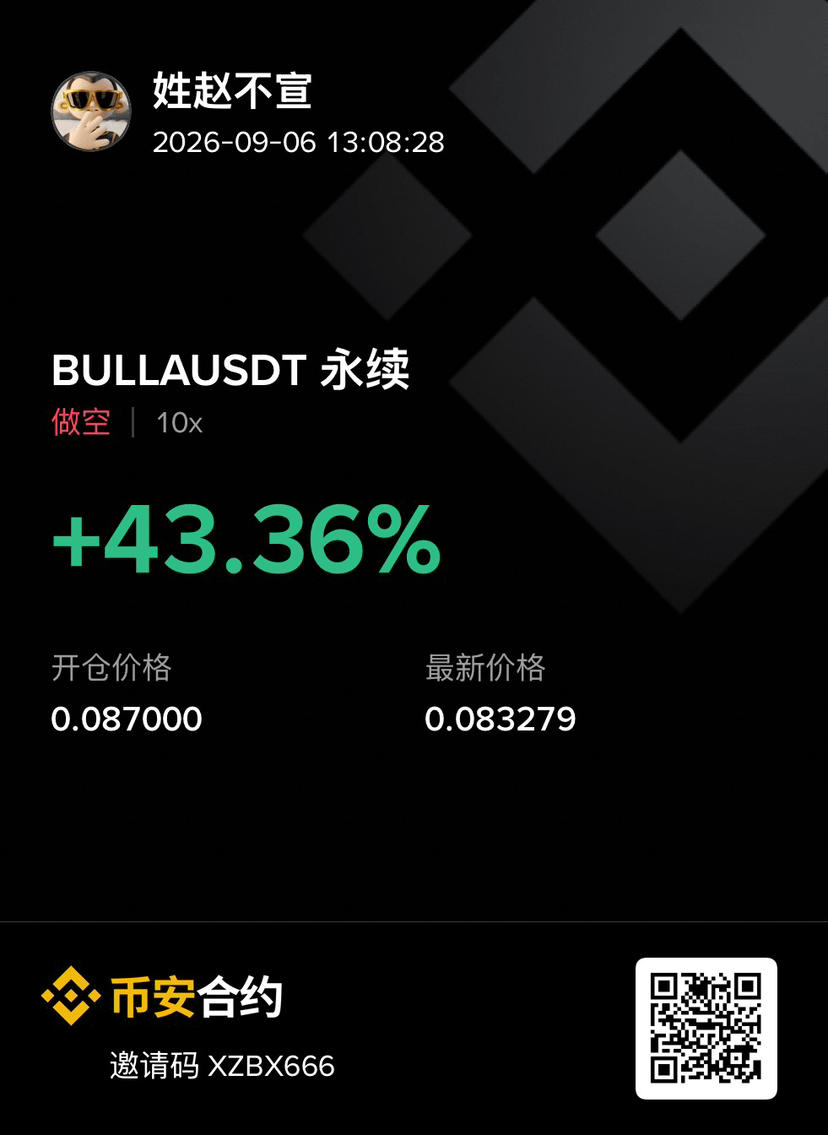

BULLA is up 35% today, and I shorted it.
This is not luck; this is logic.
Entry price: $0.087. Current price: $0.085. With 10x leverage, the unrealized gain is nearly 25%. But what I want to talk about is not how much this trade made; it’s why I shorted after a 35% rally.
First, look at the data.
BULLA has risen nearly 70% from today’s low, hitting a high of $0.092. Trading volume was $569M, so the surge came with heavy volume. But large holders account for only 48.6% of positions—less than 50%. The whales aren’t in it. Retail traders are chasing, while the big players are not following. When this kind of divergence appears at elevated levels, there is usually only one conclusion.
The funding rate is +0.07%, which means longs are paying extra interest every 8 hours. Paying interest means longs are using leverage to go long; it is not genuine spot-style holding. The longer it goes on, the higher the cost for longs.
From a technical perspective, the FVG (fair value gap) gives two magnet levels: $0.066 below as the short target, and $0.076 above as resistance for a rebound. The price is between rebound resistance and the target, pointing downward.
Why not chase long?
BULLA has already gained 35% today. Anyone chasing longs is handing over exit liquidity to the whales at the top.
The whales’ logic is simple: pump it up, let retail see the gain, attract them to buy in, then distribute. The larger the volume, the easier the distribution. $569M in volume means there was a lot of turnover today, and early buyers are selling their positions to latecomers.
Shorting is not betting that it will fall; it is because the logic supports a drop, and then you enter.
Before every trade, ask yourself: whose money am I making? If you can’t explain that clearly, don’t enter.
This BULLA short is making money from the retail traders who chased at the highs. The logic is clear; just execute.
Targets: $0.066, $0.055.
Stop loss: exit if it breaks above $0.092 and closes bullish.
This is not luck; this is logic.
Entry price: $0.087. Current price: $0.085. With 10x leverage, the unrealized gain is nearly 25%. But what I want to talk about is not how much this trade made; it’s why I shorted after a 35% rally.
First, look at the data.
BULLA has risen nearly 70% from today’s low, hitting a high of $0.092. Trading volume was $569M, so the surge came with heavy volume. But large holders account for only 48.6% of positions—less than 50%. The whales aren’t in it. Retail traders are chasing, while the big players are not following. When this kind of divergence appears at elevated levels, there is usually only one conclusion.
The funding rate is +0.07%, which means longs are paying extra interest every 8 hours. Paying interest means longs are using leverage to go long; it is not genuine spot-style holding. The longer it goes on, the higher the cost for longs.
From a technical perspective, the FVG (fair value gap) gives two magnet levels: $0.066 below as the short target, and $0.076 above as resistance for a rebound. The price is between rebound resistance and the target, pointing downward.
Why not chase long?
BULLA has already gained 35% today. Anyone chasing longs is handing over exit liquidity to the whales at the top.
The whales’ logic is simple: pump it up, let retail see the gain, attract them to buy in, then distribute. The larger the volume, the easier the distribution. $569M in volume means there was a lot of turnover today, and early buyers are selling their positions to latecomers.
Shorting is not betting that it will fall; it is because the logic supports a drop, and then you enter.
Before every trade, ask yourself: whose money am I making? If you can’t explain that clearly, don’t enter.
This BULLA short is making money from the retail traders who chased at the highs. The logic is clear; just execute.
Targets: $0.066, $0.055.
Stop loss: exit if it breaks above $0.092 and closes bullish.