

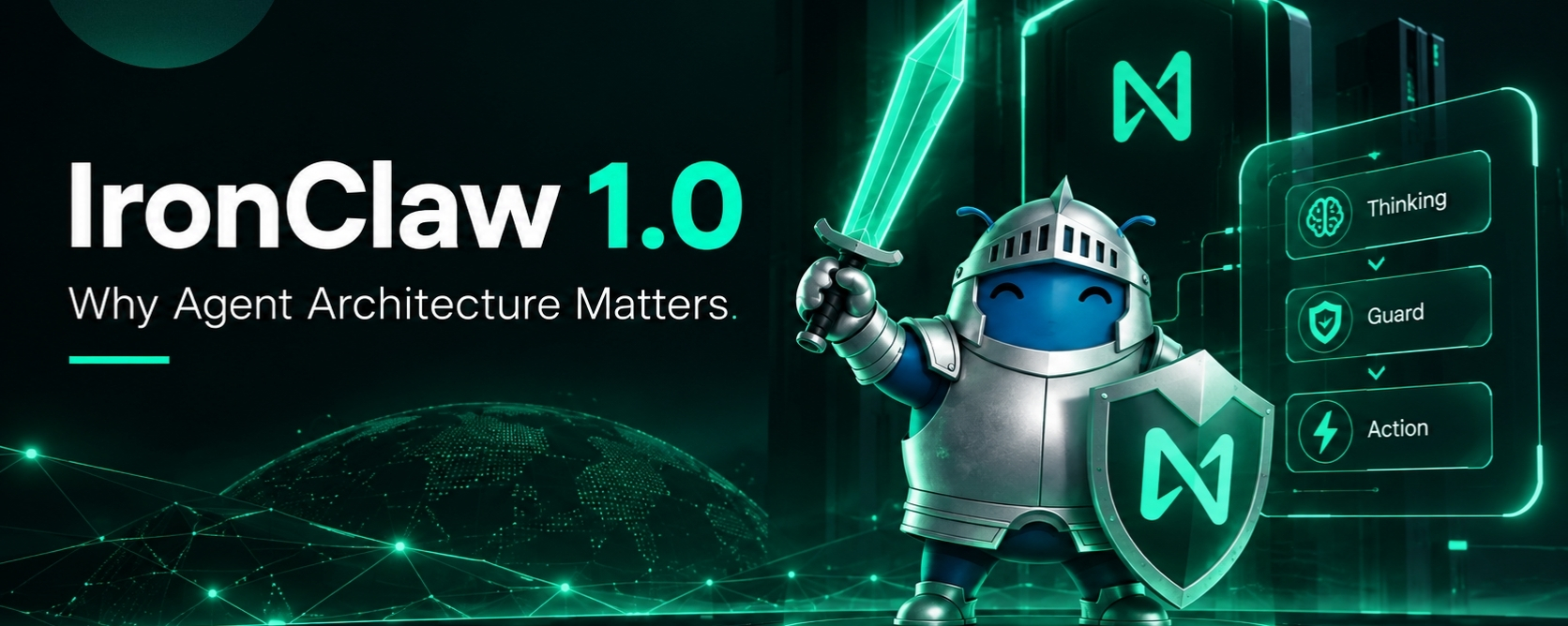

What I find interesting about @NEAR Protocol approach is that it treats AI agents as infrastructure, not just chatbots with more tools.
A lot of agent systems still have reasoning, execution, secrets, and internet access running through the same loop. That can look impressive in a demo, but real-world work is a different story. The more tools an agent can access, the more opportunities there are for something to go wrong.
IronClaw 1.0 takes a different approach.
The agent makes the decisions, while a separate coordination layer called the guard controls how those decisions are carried out. Every action goes through that layer, including new capabilities added later.
The benchmark results are interesting because the underlying model stayed the same: deepseek-v4-flash.
• PinchBench: 93.5% across 147 real-world tasks
• ClawBench: 88.6% across 140+ production websites
• OfficeQA: 76.4% on reasoning over decades of U.S. Treasury documents
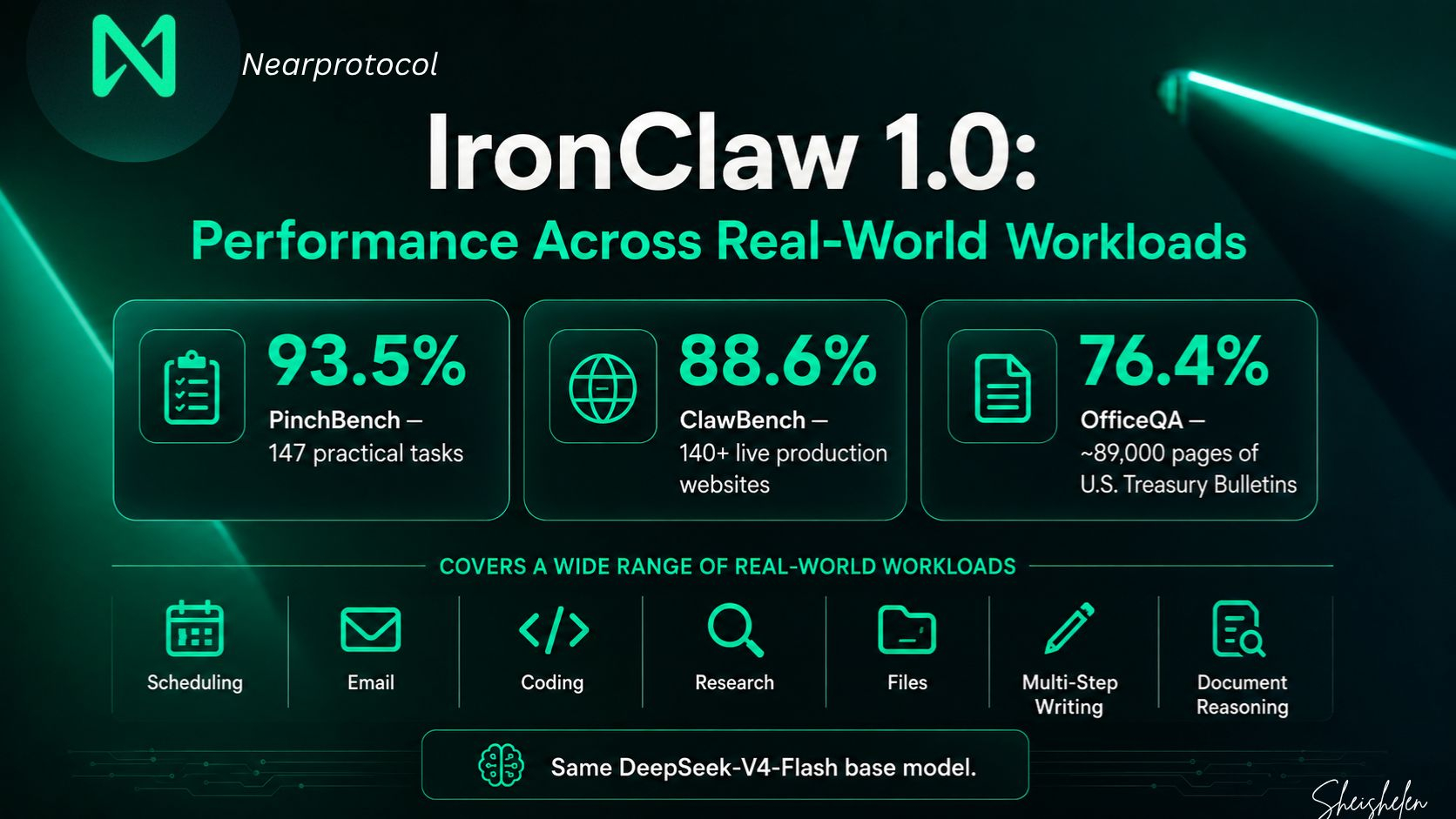
Same base model. Different runtime. IronClaw performs better.
But personally, I think the architecture is more important than the numbers.
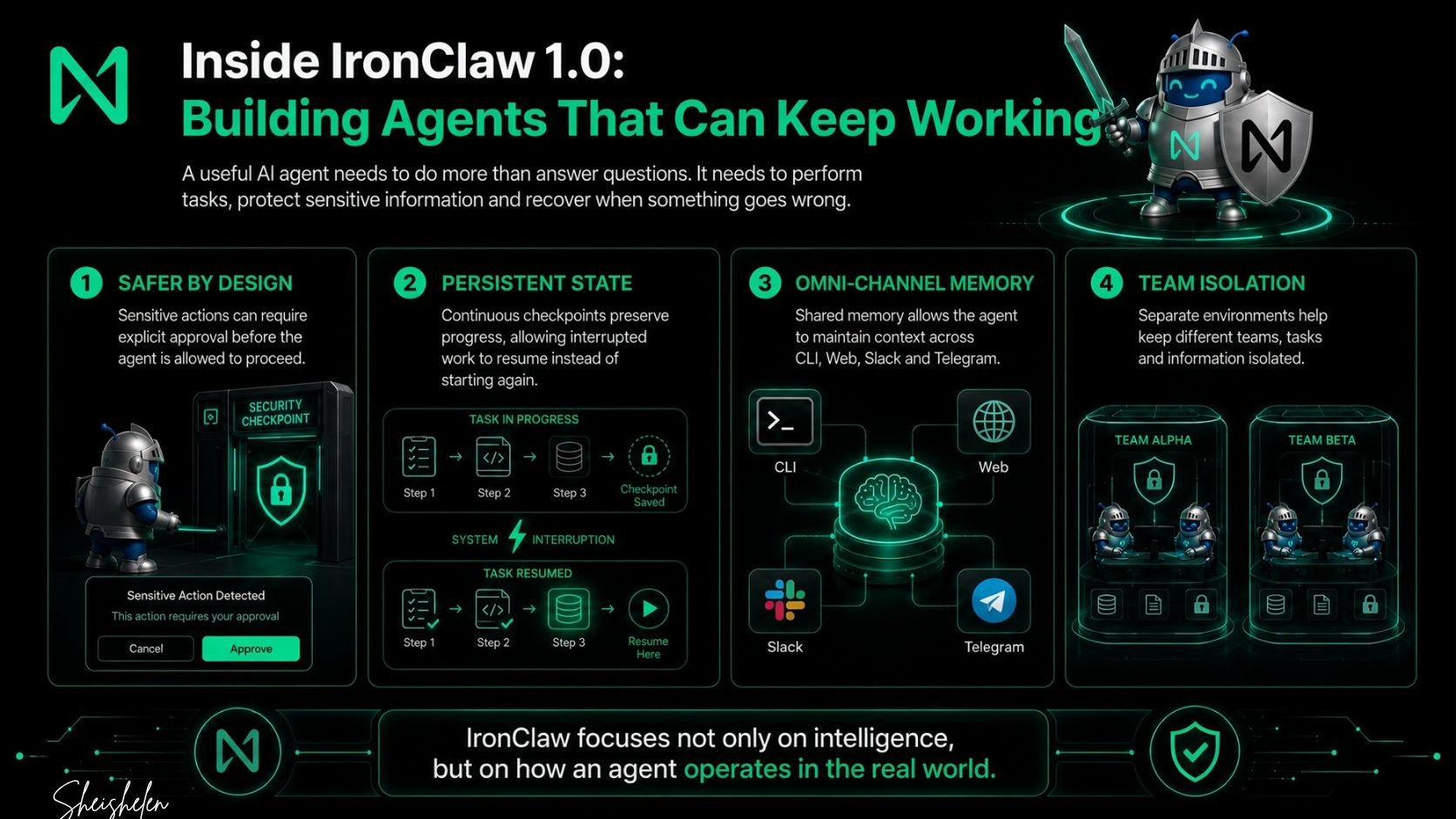
IronClaw is built around a few practical safeguards:
Safer by design: Sensitive actions can require explicit approval, while secrets can be issued when needed and then scrubbed.
Persistent state: Continuous checkpoints allow an agent to pick up where it stopped instead of losing its progress after an interruption.
Omni-channel memory: CLI, Web, Slack, and Telegram can work as one assistant while keeping the same rules and context.
Team isolation: Organizations can share tools without automatically exposing private workspaces.
Then there’s the bigger NEAR AI and staking picture.
NEAR AI is building infrastructure for decentralized AI, with a focus on things like confidential inference, compute, and AI agents. In that context, staking is about more than earning yield. It also helps support and secure the decentralized infrastructure these systems rely on.
Users can stake NEAR and receive recurring compute credits for confidential inference and IronClaw hosting, while the principal remains withdrawable.
That becomes increasingly relevant as AI agents move beyond simple conversations and start interacting with websites, tools, data, and sensitive systems. Upcoming deployments such as OpenClaw are part of that broader direction.
My main takeaway is simple:
AI agents don't just need better models. They need better systems around those models.
If security only exists in a policy document, it can easily become an afterthought.
With IronClaw, the idea is to make security part of the runtime itself.
And honestly, that’s the part of NEAR’s AI approach I find most interesting.
I also shared a deeper breakdown of IronClaw 1.0 and NEAR AI staking on X and LinkedIn if you want to go deeper.
X: https://x.com/sheishelen914/status/2096210978027303108
LinkedIn:
https://www.linkedin.com/pulse/ironclaw-10-near-staking-why-agent-architecture-now-matters-essien-6xfse?utm_source=share&utm_medium=member_android&utm_campaign=share_via