


Bitcoin ($BTC ) remains the most recognized and valuable cryptocurrency in the world. Created in 2009 by the pseudonymous Satoshi Nakamoto, Bitcoin introduced a decentralized financial system that operates without banks, governments, or centralized authorities. Over the years, BTC has evolved from an experimental digital currency into a global financial asset held by institutions, corporations, governments, and millions of individual investors worldwide.
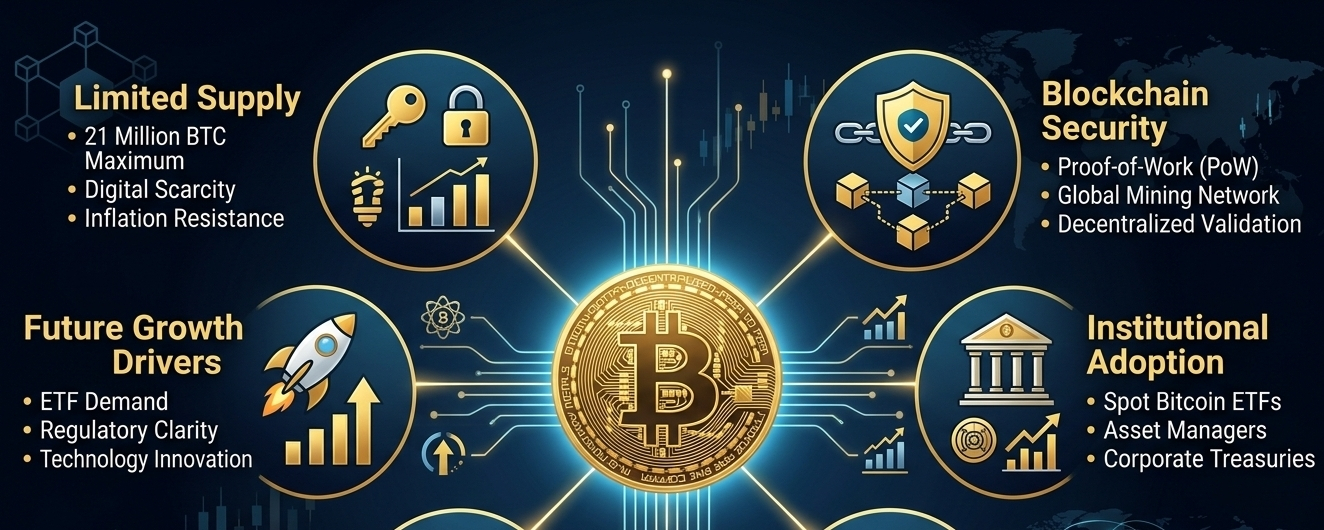
One of Bitcoin's most important features is its fixed supply. Only 21 million BTC will ever exist, making it a scarce digital asset. This scarcity is often compared to gold, leading many investors to refer to Bitcoin as "digital gold." Unlike traditional fiat currencies that can be printed indefinitely, Bitcoin's supply is mathematically limited, making it attractive as a hedge against inflation and currency debasement.
The Bitcoin network is secured through Proof-of-Work (PoW), where miners validate transactions and protect the blockchain. This decentralized security model has allowed Bitcoin to operate continuously for more than a decade while maintaining one of the strongest security records in the digital asset industry.
Institutional adoption continues to be a major driver of Bitcoin's growth. Spot Bitcoin ETFs have opened the door for traditional investors to gain BTC exposure through regulated financial products. Large asset managers, financial institutions, pension funds, family offices, and registered investment advisors are increasingly participating in the Bitcoin ecosystem through ETFs and other investment vehicles.
The crypto market has also matured significantly, with institutional participation expanding through spot markets, futures, options, ETFs, and treasury strategies. Bitcoin has become a recognized asset class within many professional investment portfolios.
Global Bitcoin adoption continues to grow. Recent industry research estimates hundreds of millions of Bitcoin holders worldwide, while institutional and corporate entities collectively control a meaningful portion of BTC's circulating supply. Corporate treasury adoption and ETF-driven demand have become important factors influencing long-term market dynamics.
From a macroeconomic perspective, Bitcoin is increasingly viewed as an alternative store of value. Investors often monitor inflation trends, central bank policies, government debt levels, and global liquidity conditions when evaluating Bitcoin's long-term outlook. Market sentiment toward BTC is frequently influenced by interest rate expectations and broader risk appetite across global financial markets.
Recent market activity has demonstrated Bitcoin's resilience. Despite periods of volatility, BTC has continued attracting institutional attention, with major financial institutions expanding their crypto-related services and investment products. Growing integration between traditional finance and digital assets is further strengthening Bitcoin's position within the global financial system.
Looking ahead, Bitcoin's future will likely be shaped by several key factors: institutional adoption, ETF flows, regulatory developments, technological improvements, and macroeconomic conditions. While short-term price fluctuations remain a natural part of the market, Bitcoin's long-term narrative as a scarce, decentralized, and globally accessible asset continues to attract investors from around the world.
Whether viewed as digital gold, a hedge against inflation, a treasury reserve asset, or a technological innovation, Bitcoin has already established itself as one of the most influential financial inventions of the 21st century. As adoption expands and infrastructure matures, BTC remains at the center of the global cryptocurrency ecosystem and continues to play a leading role in the future of digital finance.#BitcoinETFsBiggestDailyInflowSinceJanuary #BitcoinEthereumHitMultiMonthHighs