
自由1688
298 Posts

自由1688

ETH Holder
Occasional Trader
1.9 Years
546 Following
21.5K+ Followers
13.0K+ Liked
Posts
All
Quotes
Videos
Live
PINNED
Apple is brewing its biggest change since the iPhone X! “iPhone 20” preview revealed 📱
According to the latest supply chain news, Apple plans to launch the highly disruptive “iPhone 20” in 2027 (the 20th anniversary of the iPhone), which could be the most radical redesign since the iPhone X in 2017.
💡 Core upgrade highlights:
- Seamless glass aesthetics: Say goodbye to right-angle bezels and adopt “equal-depth quad-curved glass,” fully moving toward the minimalist form of “a single seamless piece of glass,” with an almost borderless look.
- Eliminating physical buttons: Pressure-sensitive solid-state buttons will replace all mechanical buttons (volume, power, etc.), combined with vibration motors, ending wear on mechanical cutouts!
- Racing toward a true full-screen display: Apple is developing a solution to completely hide Face ID and the front-facing camera under the display, achieving a front side with “zero cutouts.”
- Hardcore AI and computing power: It is expected to be powered by the A21 chip built on TSMC’s 2nm process, and may for the first time introduce an HBM (high-bandwidth memory) architecture dedicated to on-device large models, along with Apple’s first self-developed 5G baseband and a new pure-silicon battery, fully maximizing both AI performance and battery life!
Opinion: Apple’s major moves in hardware and on-device AI computing power will not only determine the form of smartphones for the next few years, but also provide a stronger foundation for the development of Web3, on-device AI applications, and crypto hardware wallets.
What do you think—can the iPhone 20, with this major redesign, change the world again? 👇 #Apple #iPhone20 #端侧AI #Web3硬件
According to the latest supply chain news, Apple plans to launch the highly disruptive “iPhone 20” in 2027 (the 20th anniversary of the iPhone), which could be the most radical redesign since the iPhone X in 2017.
💡 Core upgrade highlights:
- Seamless glass aesthetics: Say goodbye to right-angle bezels and adopt “equal-depth quad-curved glass,” fully moving toward the minimalist form of “a single seamless piece of glass,” with an almost borderless look.
- Eliminating physical buttons: Pressure-sensitive solid-state buttons will replace all mechanical buttons (volume, power, etc.), combined with vibration motors, ending wear on mechanical cutouts!
- Racing toward a true full-screen display: Apple is developing a solution to completely hide Face ID and the front-facing camera under the display, achieving a front side with “zero cutouts.”
- Hardcore AI and computing power: It is expected to be powered by the A21 chip built on TSMC’s 2nm process, and may for the first time introduce an HBM (high-bandwidth memory) architecture dedicated to on-device large models, along with Apple’s first self-developed 5G baseband and a new pure-silicon battery, fully maximizing both AI performance and battery life!
Opinion: Apple’s major moves in hardware and on-device AI computing power will not only determine the form of smartphones for the next few years, but also provide a stronger foundation for the development of Web3, on-device AI applications, and crypto hardware wallets.
What do you think—can the iPhone 20, with this major redesign, change the world again? 👇 #Apple #iPhone20 #端侧AI #Web3硬件

PINNED

See translation


燕寶Melissa
·
--
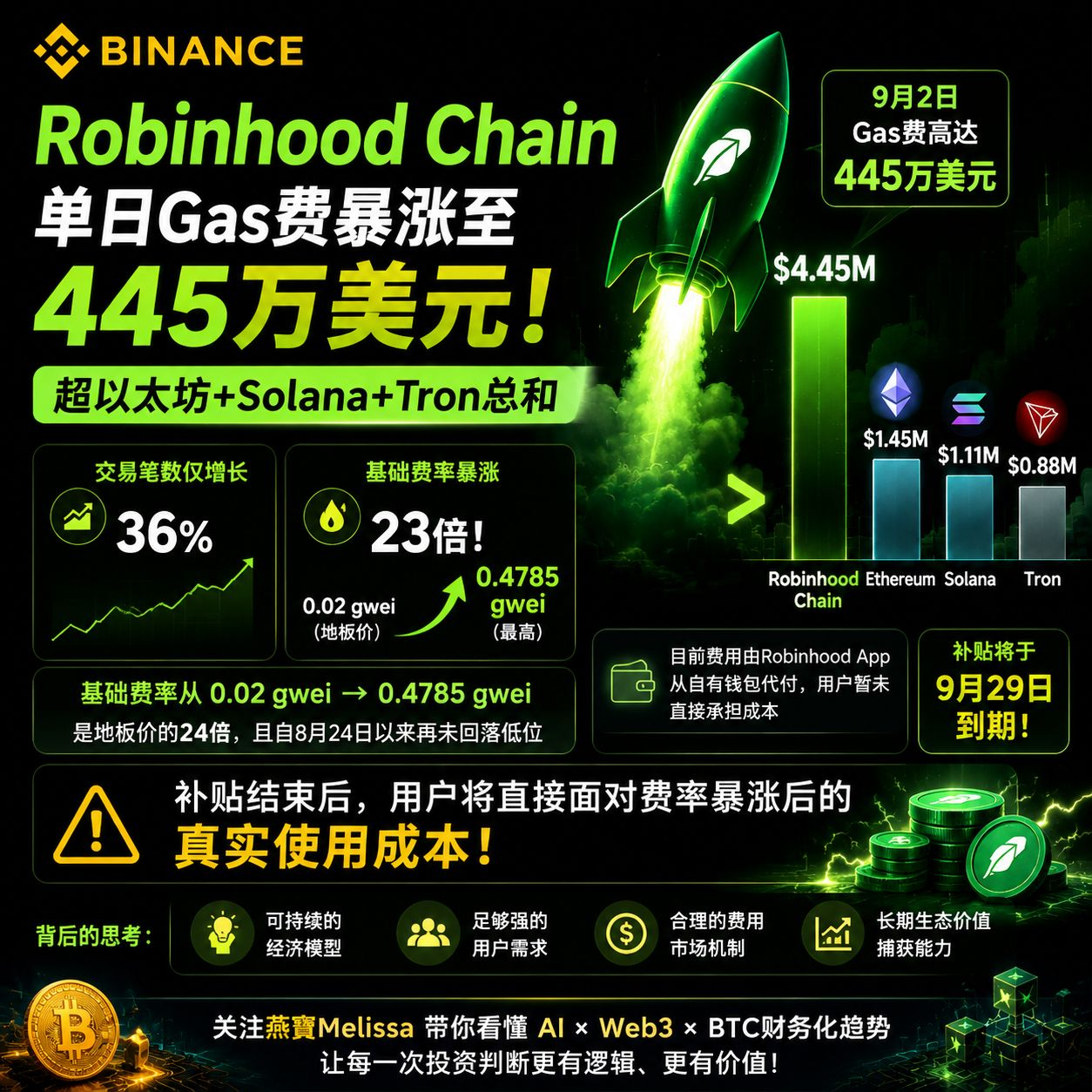
Bearish🔥 Robinhood Chain’s one-day gas fees hit $4.45 million! Who will pay after the subsidy ends?
🚨 A new phenomenon in the crypto market is worth paying attention to:
Robinhood Chain set an astonishing record for one-day gas fees!
According to The Defiant data:
📌 On September 2, Robinhood Chain users paid about $4.45 million in gas fees
This figure even exceeded:
⚡ Ethereum
⚡ Solana
⚡ Tron
The combined gas fees of the three major public chains on that day!
But what’s even more noteworthy is:
This spike in fees was not caused by a surge in trading volume👇
📈 Transaction count increased by only about 36%
📈 But the base fee rate surged by about 23x
Gas prices went from:
0.02 gwei
➡️ to a peak of 0.4785 gwei
Rising more than 20x in a short period of time!
At present, this portion of the fees is covered by Robinhood App’s own wallet, so users have not directly felt the cost pressure yet.
But the key moment is approaching:
⏰ The subsidy mechanism may end on September 29
At that point, if on-chain fees remain high, users will face the real cost of gas for the first time.
#比特币以太坊触及数月高点
$BTC
$ETH
$BNB
🚨 A new phenomenon in the crypto market is worth paying attention to:
Robinhood Chain set an astonishing record for one-day gas fees!
According to The Defiant data:
📌 On September 2, Robinhood Chain users paid about $4.45 million in gas fees
This figure even exceeded:
⚡ Ethereum
⚡ Solana
⚡ Tron
The combined gas fees of the three major public chains on that day!
But what’s even more noteworthy is:
This spike in fees was not caused by a surge in trading volume👇
📈 Transaction count increased by only about 36%
📈 But the base fee rate surged by about 23x
Gas prices went from:
0.02 gwei
➡️ to a peak of 0.4785 gwei
Rising more than 20x in a short period of time!
At present, this portion of the fees is covered by Robinhood App’s own wallet, so users have not directly felt the cost pressure yet.
But the key moment is approaching:
⏰ The subsidy mechanism may end on September 29
At that point, if on-chain fees remain high, users will face the real cost of gas for the first time.
#比特币以太坊触及数月高点
$BTC
$ETH
$BNB
@路人1688luren

路人1688luren
·
--
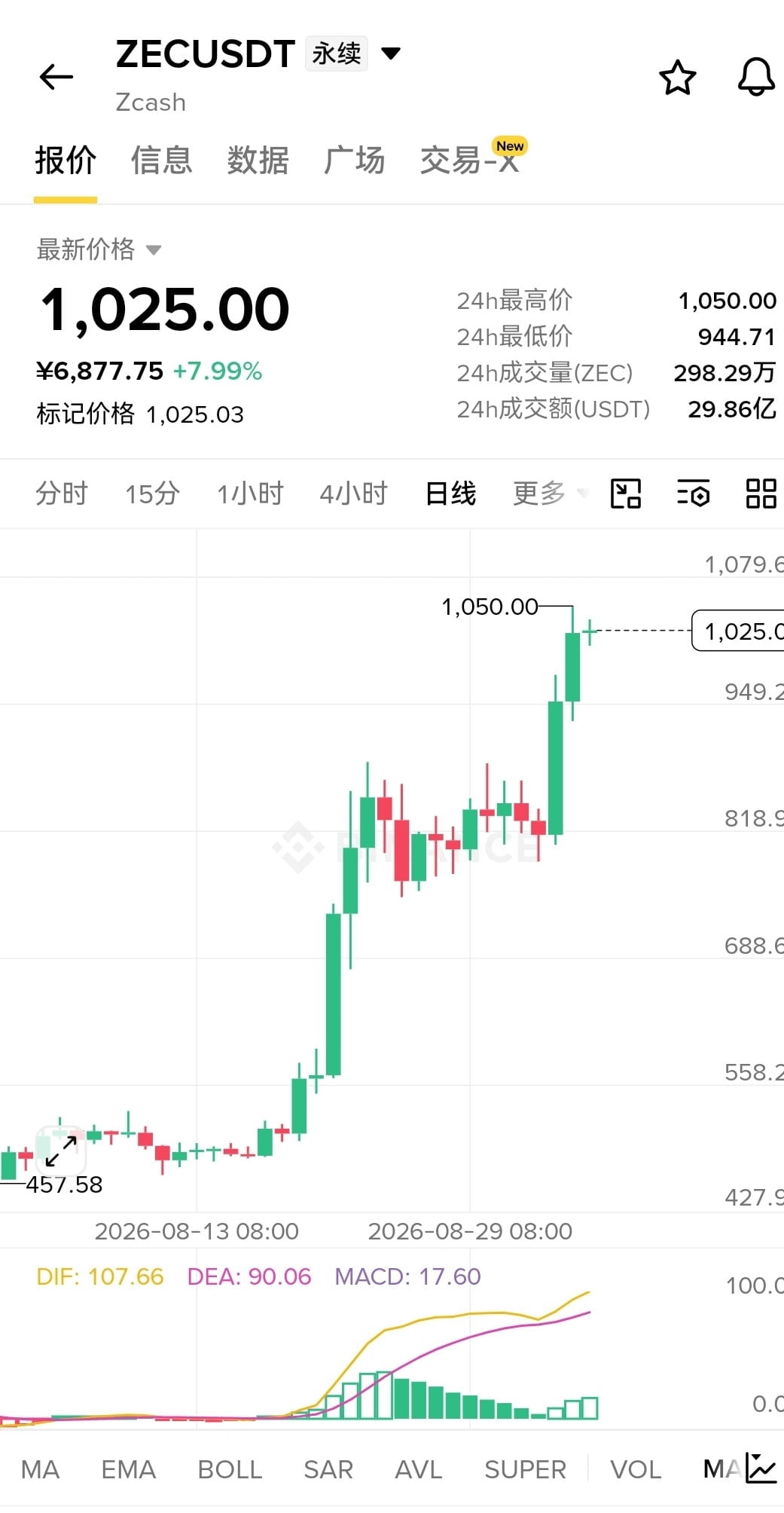
$ZEC This explosive pump directly pushed it to 1050. On the surface, it looked lively, but in essence it was a typical speculative theme rally combined with concentrated capital-driven price support, with nothing to do with fundamentals.
Many on-chain holdings didn’t even have time to rotate, and it was simply major funds forcefully pushing the price up at relatively low cost in a market with shallow liquidity.
The most dangerous part of this kind of price action is that the token structure is extremely fragile. Once large holders decide to begin distributing liquidity in stages at high levels, the order book, lacking genuine buying support at the bottom, can be broken through instantly.
Looking back at $ZEC ’s past token distribution history, when the dump came, it never gave retail traders time to hesitate. There was once a brutal scene where it cascaded all the way down from 750 to 150 without any dumping turnover, wiping out 50% of floating profit in a single day.
Structurally, the upper range from 1080 to 1120 is a dense overhead supply zone where bullish holdings were previously exhausted, while the short-term downside test buffer lies in the 980 to 1000 area.
What truly determines whether this liquidity premium can continue is the key dense accumulation zone around 920.
If the price loses 920, it means profit-taking and trapped positions from the entire rally will trigger a stampede of selling, and this fund-driven impulse move will be completely over.
#zec续刷历史新高
Many on-chain holdings didn’t even have time to rotate, and it was simply major funds forcefully pushing the price up at relatively low cost in a market with shallow liquidity.
The most dangerous part of this kind of price action is that the token structure is extremely fragile. Once large holders decide to begin distributing liquidity in stages at high levels, the order book, lacking genuine buying support at the bottom, can be broken through instantly.
Looking back at $ZEC ’s past token distribution history, when the dump came, it never gave retail traders time to hesitate. There was once a brutal scene where it cascaded all the way down from 750 to 150 without any dumping turnover, wiping out 50% of floating profit in a single day.
Structurally, the upper range from 1080 to 1120 is a dense overhead supply zone where bullish holdings were previously exhausted, while the short-term downside test buffer lies in the 980 to 1000 area.
What truly determines whether this liquidity premium can continue is the key dense accumulation zone around 920.
If the price loses 920, it means profit-taking and trapped positions from the entire rally will trigger a stampede of selling, and this fund-driven impulse move will be completely over.
#zec续刷历史新高


@心月势不可挡 can be blocked

心月势不可挡
·
--
BullishCZ said that it's a good thing for quick money to run to AI, and those who stay to do crypto are actually more level-headed. $BNB

@Bilawal Ashiq

Bilawal Ashiq
·
--
🧧🧧Clam And Shere pls 🎉


请叫我TomCat
·
--
BullishGood evening, it's the last day of the weekend
$BTC keep going
Join the 1688 army on the second day
Comment 1688 to drop random 🧧
$BTC keep going
Join the 1688 army on the second day
Comment 1688 to drop random 🧧


归舟Bruce
·
--
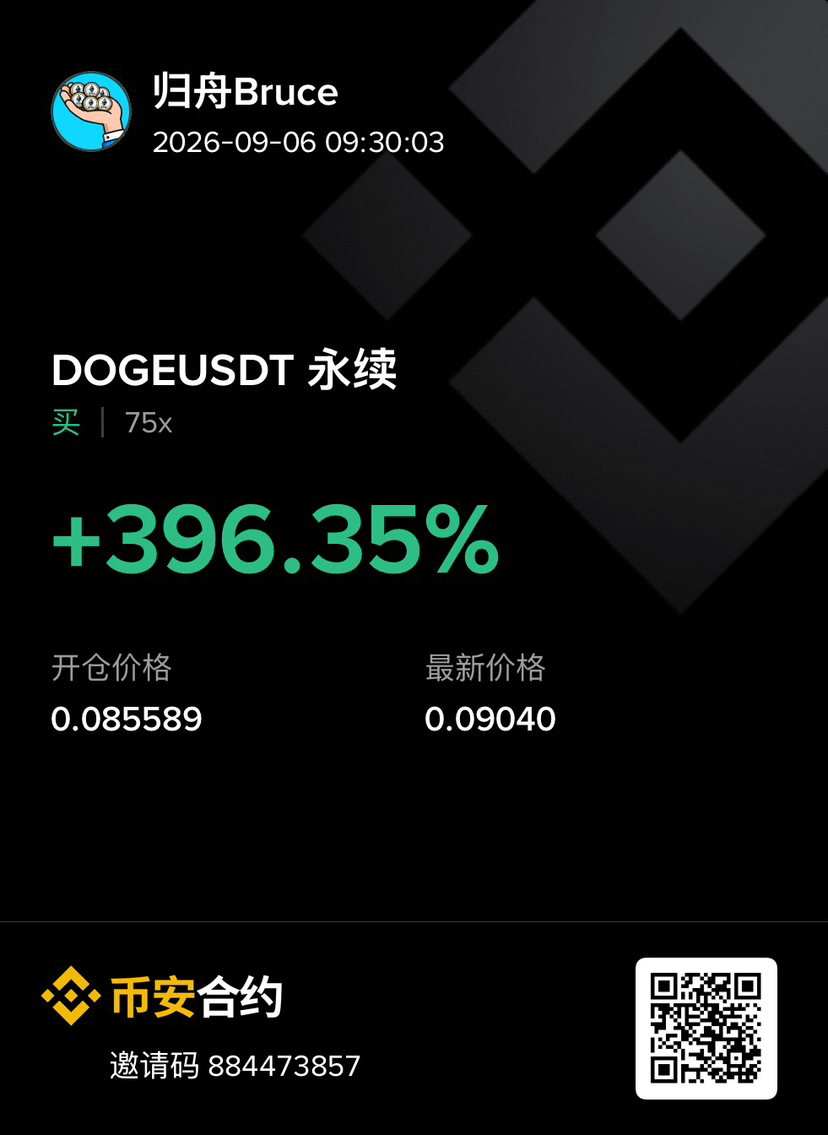
🎁🔥 Doge giveaway event — claim your reward! 🔥🎁
💰 Doge rewards waiting for lucky participants!
✅ Follow
✅ Like ❤️
✅ Comment “Doge”
✅ Share 🔄
🎯 Hurry up and claim your chance to win Doge!
Good luck to everyone! 🚀💛
#Doge#giveaway #claim #cryptocurrency #Binance
💰 Doge rewards waiting for lucky participants!
✅ Follow
✅ Like ❤️
✅ Comment “Doge”
✅ Share 🔄
🎯 Hurry up and claim your chance to win Doge!
Good luck to everyone! 🚀💛
#Doge#giveaway #claim #cryptocurrency #Binance

@Z O N E P R I M E

Z O N E P R I M E
·
--
Bullish🎁 ZONE PRIME BTC SURPRISE DROP! 🎁
✨ The Red Packet is full and ready to open! ✨
👇 Simple Steps to Participate 👇
❤️ Follow ZONE PRIME
🔁 Like & Share
💬 Comment “BTC”
🔔 Stay connected and active for upcoming surprise drops!
#BTC #Crypto #ZONEPRIME #RedPacket #Binance $BTC
✨ The Red Packet is full and ready to open! ✨
👇 Simple Steps to Participate 👇
❤️ Follow ZONE PRIME
🔁 Like & Share
💬 Comment “BTC”
🔔 Stay connected and active for upcoming surprise drops!
#BTC #Crypto #ZONEPRIME #RedPacket #Binance $BTC

@Ahmed Ali Nizamani

Ahmed Ali Nizamani
·
--
✨ another blessing day with 🎁🎁

@周周1688

@周周1688
is speaking[LIVE] 🎙️ Let's talk about market trading and regularly investing in BNB spot!
2.6k listens
@Ze Xu191

泽栩191
·
--
Gather kindred spirits for the promising journey ahead.
Gather kindred spirits for the promising journey ahead.
#LUCiC
Gather kindred spirits for the promising journey ahead.
#LUCiC

@E L E X A

E L E X A
·
--
🚨 GOING LIVE NOW! 🚨
Free $USDT? 👀
If you’re already here, you might as well take your shot. 🎁
💬 Comment 666
❤️ Like
🔁 Share
➕ Follow
That’s it. Simple and quick. ⏳
Don’t wait until the spots are gone.
👇 Drop 666 in the comments NOW! 🚀
#Crypto #USDT #Giveaway
Free $USDT? 👀
If you’re already here, you might as well take your shot. 🎁
💬 Comment 666
❤️ Like
🔁 Share
➕ Follow
That’s it. Simple and quick. ⏳
Don’t wait until the spots are gone.
👇 Drop 666 in the comments NOW! 🚀
#Crypto #USDT #Giveaway

@Crypto Wolf Official

Crypto Wolf Official
·
--
30K followers is calling. 🚀
Not chasing numbers, building a community. 🧡
1K more. Let’s make it happen.
🎁 Like + Follow + Quote + Comment = BNB
#BinanceSquare #RoadTo30K #BinanceSquareFamily
Not chasing numbers, building a community. 🧡
1K more. Let’s make it happen.
🎁 Like + Follow + Quote + Comment = BNB
#BinanceSquare #RoadTo30K #BinanceSquareFamily


Alina53
·
--
🎁 RED PACKET 🎁
Do you believe crypto adoption will keep growing in the coming years? 👀
The answer is YES ✅
Good luck everyone! 🧧🔥
Do you believe crypto adoption will keep growing in the coming years? 👀
The answer is YES ✅
Good luck everyone! 🧧🔥

@Guangming Community-Pei Pei Portal Latino

光明社区-裴佩 Portal Latino
·
--
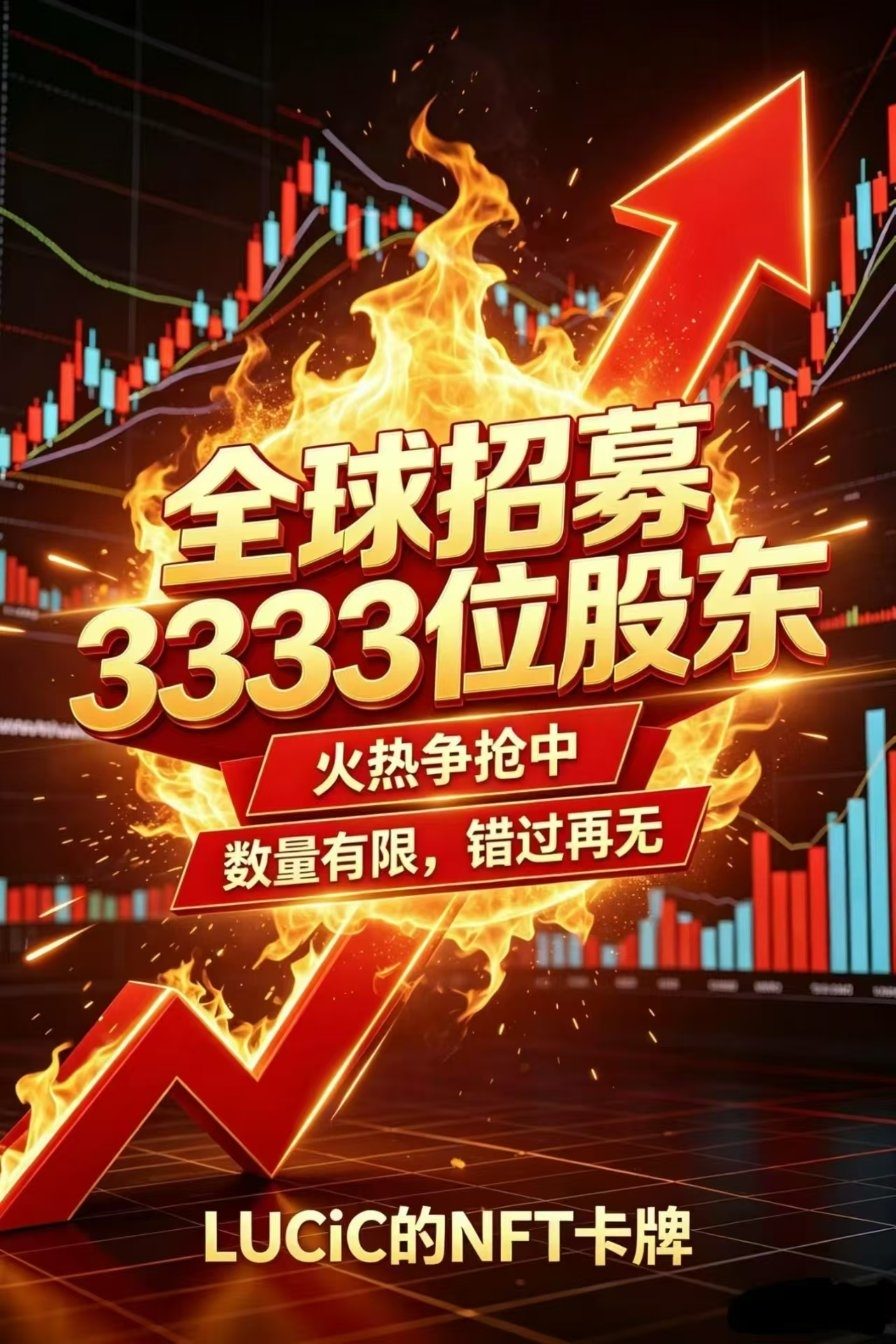
Bullish🌟 LUCIC: A NEW LIGHT IN THE WEB3 ECOSYSTEM 💡🚀
Have you heard of LUCIC (Lucidum Coin) before? 👀
LUCIC is a project built on BNB Smart Chain (BEP-20) that aims to combine community, DeFi, NFTs, and DAO governance. 🌐
🔥 Some points that caught my attention:
🪙 Max supply: 210M LUCIC
⛓️ Built on BNB Smart Chain
🔥 Tokenomics with a burn mechanism
🖼️ NFTs with a participation model in the project
🏛️ Focus on DAO governance
🌍 A Web3 ecosystem-oriented community
LUCIC has also gained presence on exchanges such as Gate and XT, expanding its exposure within the crypto market.
#LUCIC #Lucidum #BNBChain #Web3 #crypto $BNB $BTC $ETH
Have you heard of LUCIC (Lucidum Coin) before? 👀
LUCIC is a project built on BNB Smart Chain (BEP-20) that aims to combine community, DeFi, NFTs, and DAO governance. 🌐
🔥 Some points that caught my attention:
🪙 Max supply: 210M LUCIC
⛓️ Built on BNB Smart Chain
🔥 Tokenomics with a burn mechanism
🖼️ NFTs with a participation model in the project
🏛️ Focus on DAO governance
🌍 A Web3 ecosystem-oriented community
LUCIC has also gained presence on exchanges such as Gate and XT, expanding its exposure within the crypto market.
#LUCIC #Lucidum #BNBChain #Web3 #crypto $BNB $BTC $ETH


生蚝哥Oyster
·
--
🧧On-chain Briefing|An unusual signal in the rally: in this BTC surge, whales did not use the move to sell into strength
On September 6, on-chain analyst Murphy released a report. Using the BTC on-chain accumulation trend score, he compared whale on-chain behavior across multiple rebound cycles to interpret the underlying quality of this round of price action.
This indicator is used to observe whether whales holding the equivalent of 1,000 BTC / 10,000 BTC are net accumulating or reducing their holdings over a 30-day period:
• Values close to the black zone ≈ whales are continuously accumulating
• Values close to the yellow zone ≈ whales are distributing coins, or choosing to stay on the sidelines
Looking back at the last two rebound phases in history:
During the rallies in January this year, when BTC challenged $97,000, and in May, when it climbed to $82,000, the indicator was both in the yellow zone. The price increases were driven by short covering and short-term capital. Large holders sold into strength at the highs, while long-term capital failed to take over, which is a typical bear-market rebound structure.
But this round, as BTC rose from $60,000 to $80,000, the indicator remained in the black zone, and whales as a whole were net buyers over the past 30 days.
This is the first time across the three rounds of price action that the combination of “price surge + whales adding at the same time” has appeared. Historically, this structure has been more common during the main upward phase of a bull market, indicating that the underlying structure of this rally is relatively healthy.
Compared with the similar move in January 2023:
After the FTX collapse in November 2022, whales at the $16,000 bottom began positioning; but once the market rallied in January 2023, the indicator quickly turned yellow, with large holders stopping accumulation and starting to realize floating profits. That year’s gains relied more on short covering and improved macro expectations, while the drying up of market liquidity amplified volatility. The indicator could not capture the position changes of smaller retail traders.
It is therefore clear that although January 2023 and August 2026 had similar price trajectories, the behavior of on-chain dominant capital was fundamentally different.
On September 6, on-chain analyst Murphy released a report. Using the BTC on-chain accumulation trend score, he compared whale on-chain behavior across multiple rebound cycles to interpret the underlying quality of this round of price action.
This indicator is used to observe whether whales holding the equivalent of 1,000 BTC / 10,000 BTC are net accumulating or reducing their holdings over a 30-day period:
• Values close to the black zone ≈ whales are continuously accumulating
• Values close to the yellow zone ≈ whales are distributing coins, or choosing to stay on the sidelines
Looking back at the last two rebound phases in history:
During the rallies in January this year, when BTC challenged $97,000, and in May, when it climbed to $82,000, the indicator was both in the yellow zone. The price increases were driven by short covering and short-term capital. Large holders sold into strength at the highs, while long-term capital failed to take over, which is a typical bear-market rebound structure.
But this round, as BTC rose from $60,000 to $80,000, the indicator remained in the black zone, and whales as a whole were net buyers over the past 30 days.
This is the first time across the three rounds of price action that the combination of “price surge + whales adding at the same time” has appeared. Historically, this structure has been more common during the main upward phase of a bull market, indicating that the underlying structure of this rally is relatively healthy.
Compared with the similar move in January 2023:
After the FTX collapse in November 2022, whales at the $16,000 bottom began positioning; but once the market rallied in January 2023, the indicator quickly turned yellow, with large holders stopping accumulation and starting to realize floating profits. That year’s gains relied more on short covering and improved macro expectations, while the drying up of market liquidity amplified volatility. The indicator could not capture the position changes of smaller retail traders.
It is therefore clear that although January 2023 and August 2026 had similar price trajectories, the behavior of on-chain dominant capital was fundamentally different.

Good

@Anna-汤圆
is speaking[LIVE] 🎙️ Just asking, with the market rising like this, has everyone made money?
4.9k listens

·
--
🎙️ Cryptocurrency Market Discussion; Newcomer Q&A ✅ Co-building the Binance Square 🦅 Spreading the idea of freedom! Maintaining ecological balance!
End
03 h 10 m 36 s
12.2k
76
·
--
🎙️ Let's talk about market trading and regular investing in BNB spot!

End
03 h 09 m 03 s
16.5k
32
Log in to explore more content