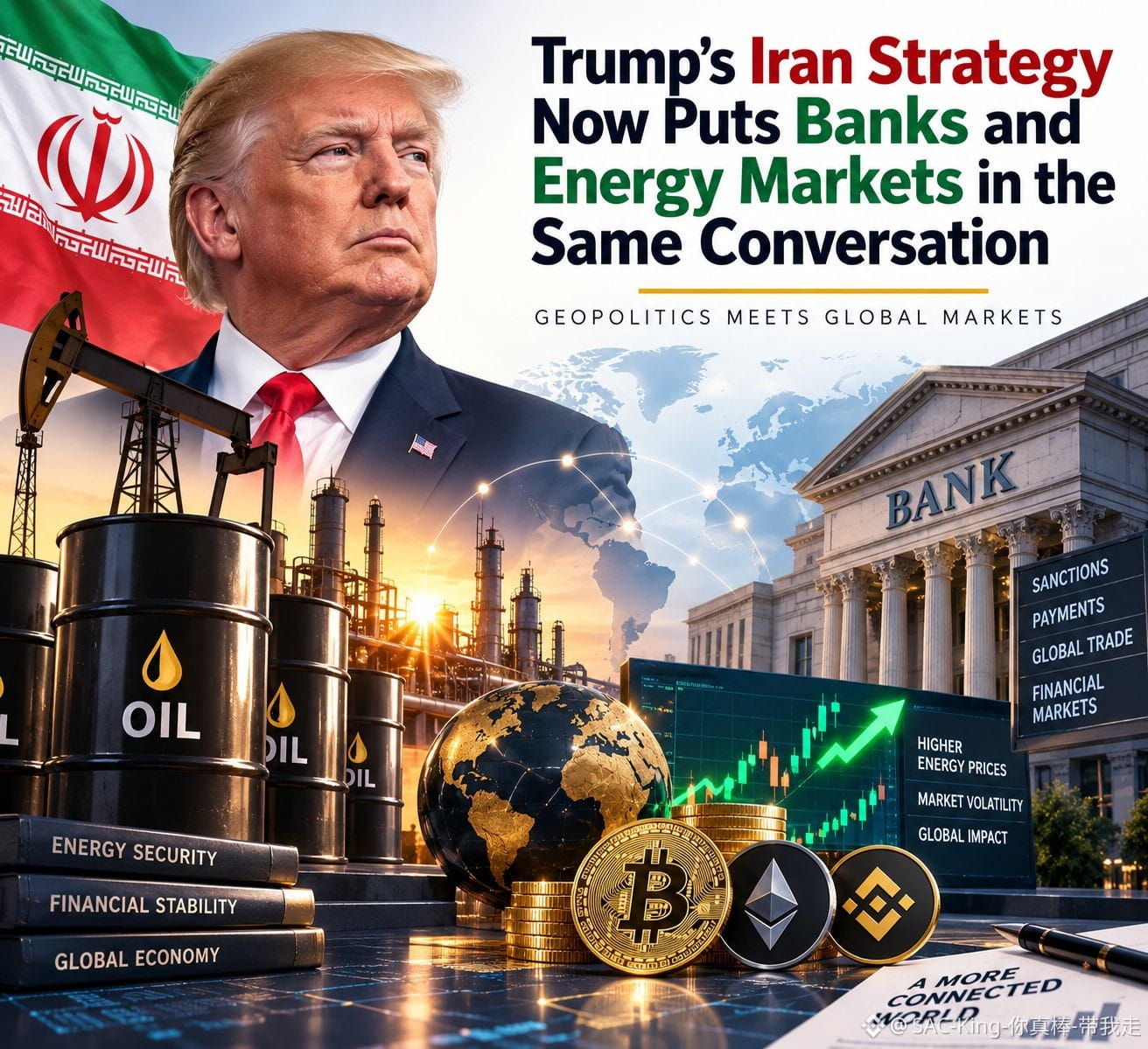

🌍 Trump’s Iran Strategy Now Puts Banks and Energy Markets in the Same Conversation | A New Global Risk Signal 🌍
The trading desk is quiet. Then an alert flashes: another bank has been sanctioned, while oil prices react to renewed tension around Iran. Suddenly, a political decision thousands of miles away feels much closer to every market screen.
That connection is becoming clearer under President Donald Trump’s Iran strategy. On September 4, the U.S. Treasury sanctioned Türkiye-based Golden Global Bank and two subsidiaries, accusing them of helping move Iranian funds internationally.
The financial pressure matters because Iran is deeply connected to global energy flows. The renewed conflict and restrictions around Iranian oil have already contributed to higher energy prices, keeping inflation risks in focus.
This creates a powerful link: sanctions can target banks, while geopolitical disruption can influence oil, shipping, currencies, inflation expectations, and ultimately interest-rate decisions.
For crypto traders, the lesson is important. Bitcoin does not trade in isolation. When oil rises and markets become more defensive, liquidity and risk appetite can change across multiple asset classes.
Still, sanctions do not guarantee a global financial shock. Their impact depends on enforcement, alternative payment channels, diplomatic developments, and whether energy supply remains disrupted.
The smartest approach is to watch the chain reaction, not just the headline: sanctions → banking access → energy flows → inflation → liquidity → risk assets.
When financial pressure reaches energy markets, geopolitics becomes a market variable.
❓Could prolonged Iran-related pressure accelerate demand for alternative payment and settlement systems?
Disclaimer: Educational content only, not financial advice. Markets involve significant risk.
#Iran #Geopolitics #GrowWithSAC $DCR $NOM $COTI
The trading desk is quiet. Then an alert flashes: another bank has been sanctioned, while oil prices react to renewed tension around Iran. Suddenly, a political decision thousands of miles away feels much closer to every market screen.
That connection is becoming clearer under President Donald Trump’s Iran strategy. On September 4, the U.S. Treasury sanctioned Türkiye-based Golden Global Bank and two subsidiaries, accusing them of helping move Iranian funds internationally.
The financial pressure matters because Iran is deeply connected to global energy flows. The renewed conflict and restrictions around Iranian oil have already contributed to higher energy prices, keeping inflation risks in focus.
This creates a powerful link: sanctions can target banks, while geopolitical disruption can influence oil, shipping, currencies, inflation expectations, and ultimately interest-rate decisions.
For crypto traders, the lesson is important. Bitcoin does not trade in isolation. When oil rises and markets become more defensive, liquidity and risk appetite can change across multiple asset classes.
Still, sanctions do not guarantee a global financial shock. Their impact depends on enforcement, alternative payment channels, diplomatic developments, and whether energy supply remains disrupted.
The smartest approach is to watch the chain reaction, not just the headline: sanctions → banking access → energy flows → inflation → liquidity → risk assets.
When financial pressure reaches energy markets, geopolitics becomes a market variable.
❓Could prolonged Iran-related pressure accelerate demand for alternative payment and settlement systems?
Disclaimer: Educational content only, not financial advice. Markets involve significant risk.
#Iran #Geopolitics #GrowWithSAC $DCR $NOM $COTI