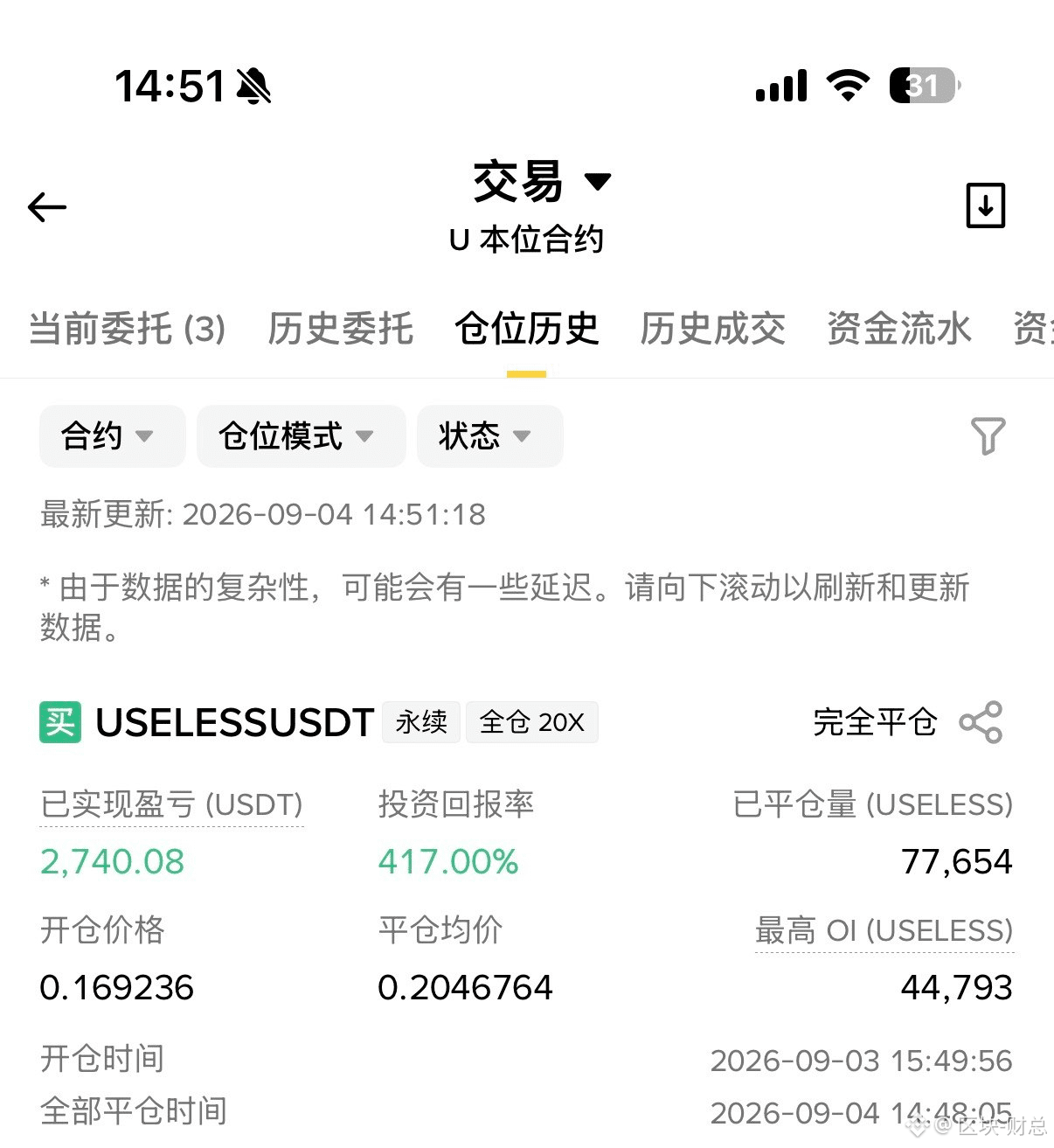
In the crypto world, can 3,000 yuan be turned into 100,000?
I’m not saying that anyone who follows this will definitely succeed, but if you really want to build up a small amount of capital slowly, there are some detours I genuinely hope you can avoid.
First, figure out what suits you. Spot trading or contracts, it doesn’t matter—don’t just rush in because you see others making money. The biggest risk for small capital is not slow gains, but starting off with full risk exposure and then losing the chance to start over after a few mistakes.
What I personally value most are these 6 points:
1. After a series of sharp declines, don’t rush to buy the dip. First look for signs of stabilization. Buying more as it falls does not mean it becomes safer as it falls.
2. After a series of rises, know how to take profits in batches. Profit only truly belongs to you once it’s in your hands. Don’t always try to catch every wave at the very top.
3. If price has been moving sideways for a long time and then suddenly volume surges, it’s worth watching closely, but volume alone does not mean it will rise. Confirm the trend before deciding whether to participate.
4. Decide your exit conditions before buying. If the trend keeps failing to meet expectations, don’t keep holding on just because you’re reluctant to pay fees or accept a small loss. Time is just as valuable as principal.
5. Don’t blindly believe so-called the “357 rule” or fixed price movement patterns. The market has no universal password. Rankings and percentage gains can only be used as references, not as direct grounds for buying or selling.
6. After a continuous rise, pay even more attention to risk. When to reduce positions and when to stop loss should ideally be written down in advance, rather than decided only after the market has already reversed.
If your capital isn’t large, I actually recommend slowing the pace down. Dollar-cost averaging can be used to spread out entry timing, and long-term holding should also be based on logic you personally agree with regarding the asset. $4
If you want to turn 3,000 yuan into something bigger, the first goal is not to get rich overnight, but to first learn how to control drawdowns. Don’t use living expenses or borrowed money to gamble. $MARSCOIN
For small capital, the real first bucket of gold is often not made by going all in on one bet, but by accumulating it little by little through making fewer mistakes. $USELESS
#ZEC续刷历史新高
#币圈暴富
I’m not saying that anyone who follows this will definitely succeed, but if you really want to build up a small amount of capital slowly, there are some detours I genuinely hope you can avoid.
First, figure out what suits you. Spot trading or contracts, it doesn’t matter—don’t just rush in because you see others making money. The biggest risk for small capital is not slow gains, but starting off with full risk exposure and then losing the chance to start over after a few mistakes.
What I personally value most are these 6 points:
1. After a series of sharp declines, don’t rush to buy the dip. First look for signs of stabilization. Buying more as it falls does not mean it becomes safer as it falls.
2. After a series of rises, know how to take profits in batches. Profit only truly belongs to you once it’s in your hands. Don’t always try to catch every wave at the very top.
3. If price has been moving sideways for a long time and then suddenly volume surges, it’s worth watching closely, but volume alone does not mean it will rise. Confirm the trend before deciding whether to participate.
4. Decide your exit conditions before buying. If the trend keeps failing to meet expectations, don’t keep holding on just because you’re reluctant to pay fees or accept a small loss. Time is just as valuable as principal.
5. Don’t blindly believe so-called the “357 rule” or fixed price movement patterns. The market has no universal password. Rankings and percentage gains can only be used as references, not as direct grounds for buying or selling.
6. After a continuous rise, pay even more attention to risk. When to reduce positions and when to stop loss should ideally be written down in advance, rather than decided only after the market has already reversed.
If your capital isn’t large, I actually recommend slowing the pace down. Dollar-cost averaging can be used to spread out entry timing, and long-term holding should also be based on logic you personally agree with regarding the asset. $4
If you want to turn 3,000 yuan into something bigger, the first goal is not to get rich overnight, but to first learn how to control drawdowns. Don’t use living expenses or borrowed money to gamble. $MARSCOIN
For small capital, the real first bucket of gold is often not made by going all in on one bet, but by accumulating it little by little through making fewer mistakes. $USELESS
#ZEC续刷历史新高
#币圈暴富