
橙子Joyce
264 Posts

橙子Joyce
 Square Verified+
价值投资者:以十年为单位投资美股及BTC.ETH.BNB.SOL.推特X:@Joyce88ai

SOL Holder
Frequent Trader
8.7 Years
747 Following
32.8K+ Followers
41.0K+ Liked
Posts
All
Quotes
Videos
Live
PINNED
Verified
Underestimated Risks in the U.S. Midterm Elections?
The market is seriously underestimating the risk that the results of the U.S. midterm elections could be challenged, triggering political and legal disputes. At the same time, hedging costs on Wall Street have fallen to their lowest level of the year, and the implied volatility of S&P 500 put options for November has dropped below 15%, creating a low-cost window to buy protection early.
The probability that the election results could be disputed, or even spark political turmoil, is being severely underestimated by the market, and current pricing in the options market does not fully reflect this tail risk.
As the market calmed in August, the implied volatility of S&P 500 put options has fallen significantly from its July highs. The calmer the market, the cheaper protection becomes; but once election risk is truly priced into assets, volatility could rise rapidly, and the cost of hedging at that point would increase markedly.
The core logic is built on the current polling situation. Polls generally show Trump’s approval rating slipping, Democrats likely to regain control of the House, and Republicans expected to keep their Senate majority.
What the market is truly overlooking is not the election result itself, but the political and legal disputes that could emerge if the result is challenged. If the final outcome is unfavorable to Trump, the market is severely underestimating the likelihood that Trump would react strongly and challenge results in certain districts.
In that scenario, Trump may launch legal challenges to every “contested” district, delaying the certification process and triggering a wave of media coverage around disputes such as “what happens next” and claims that the election was “stolen.”
This political uncertainty could ultimately spill over into financial markets and drive volatility sharply higher. For markets, the most dangerous outcome is not necessarily that one side wins, but that the election result remains unconfirmed for an extended period, creating persistent uncertainty.
The market is seriously underestimating the risk that the results of the U.S. midterm elections could be challenged, triggering political and legal disputes. At the same time, hedging costs on Wall Street have fallen to their lowest level of the year, and the implied volatility of S&P 500 put options for November has dropped below 15%, creating a low-cost window to buy protection early.
The probability that the election results could be disputed, or even spark political turmoil, is being severely underestimated by the market, and current pricing in the options market does not fully reflect this tail risk.
As the market calmed in August, the implied volatility of S&P 500 put options has fallen significantly from its July highs. The calmer the market, the cheaper protection becomes; but once election risk is truly priced into assets, volatility could rise rapidly, and the cost of hedging at that point would increase markedly.
The core logic is built on the current polling situation. Polls generally show Trump’s approval rating slipping, Democrats likely to regain control of the House, and Republicans expected to keep their Senate majority.
What the market is truly overlooking is not the election result itself, but the political and legal disputes that could emerge if the result is challenged. If the final outcome is unfavorable to Trump, the market is severely underestimating the likelihood that Trump would react strongly and challenge results in certain districts.
In that scenario, Trump may launch legal challenges to every “contested” district, delaying the certification process and triggering a wave of media coverage around disputes such as “what happens next” and claims that the election was “stolen.”
This political uncertainty could ultimately spill over into financial markets and drive volatility sharply higher. For markets, the most dangerous outcome is not necessarily that one side wins, but that the election result remains unconfirmed for an extended period, creating persistent uncertainty.


佳佳-融易挣乾
·
--
Follow the sun, grow towards light, and life will shine brightly.
Follow the sun, grow towards light, and life will shine brightly.
🧧🧧🧧🧧🧧🧧🧧🧧🧧🧧🧧🧧🧧🧧🧧
Follow the sun, grow towards light, and life will shine brightly.
🧧🧧🧧🧧🧧🧧🧧🧧🧧🧧🧧🧧🧧🧧🧧


佑子Pomelo
·
--
Even at the early stage of a bull market, there is no need to fear missing out. You can refer to the early 2023 bull market trend as a reference:
1. The daily line keeps hitting new highs. After touching the upper band, it stops rising, first pulls back on the daily line, then rebounds to test the upper band again, and then moves into a three-day-line pullback.
2. Current forecast: the daily line fluctuates and repeatedly makes new highs. It will most likely encounter resistance around 85, first pulling back to 78; afterward, it rebounds to 88-89, then experiences a three-day-line-level pullback, retesting around 70, and there will still be opportunities to buy the dip later.
3. Bitcoin will inevitably experience a pullback:
First, to wash out long positions,
Second, because the market needs time; it will not keep surging in a one-way move and let everyone make money.
1. The daily line keeps hitting new highs. After touching the upper band, it stops rising, first pulls back on the daily line, then rebounds to test the upper band again, and then moves into a three-day-line pullback.
2. Current forecast: the daily line fluctuates and repeatedly makes new highs. It will most likely encounter resistance around 85, first pulling back to 78; afterward, it rebounds to 88-89, then experiences a three-day-line-level pullback, retesting around 70, and there will still be opportunities to buy the dip later.
3. Bitcoin will inevitably experience a pullback:
First, to wash out long positions,
Second, because the market needs time; it will not keep surging in a one-way move and let everyone make money.


virus可凡2786BNB
·
--
🧧Consensus is not shouted into existence; it is distilled through repeated fluctuations, doubts, and the test of time.🧧



静心1688
·
--
💥Many times, our pain comes from “forcing things.” When we long for everything to be perfect, we become entangled in every tiny detail; when we long to have things immediately, we grow anxious over temporary lack. The wisdom of “following nature” is to teach us to abide by the natural order and accept the normal state of things. Work hard but do not be obsessive; strive forward but do not be rash; accept the ups and downs of life; embrace the imperfections of living. Flowers bloom in their own season, and people have their own time. Follow your heart and go with the flow—do not struggle against time, and do not fight against life. Only then can we remain calm and steadfast amid the complexities of the world, moving forward steadily.
#比特币ETF创1月以来最大单日流入 #比特币以太坊触及数月高点
#比特币ETF创1月以来最大单日流入 #比特币以太坊触及数月高点


长得帅不如跑的快1688
·
--
🔥 $731M just poured into Bitcoin ETFs — yet BTC fell back below $80K.
That’s the contradiction I’m watching today.
U.S. spot Bitcoin ETFs just recorded roughly:
💰 $731M in ONE-DAY net inflows
One of the strongest sessions since January.
BlackRock’s IBIT alone attracted around $454M.
Normally the equation looks simple:
Massive institutional demand → BTC goes higher.
But this time, macro fought back.
A much stronger-than-expected U.S. jobs report pushed Treasury yields higher and revived concerns that the Fed could keep monetary conditions tighter.
BTC quickly reversed from above $81K and slipped back below $80K.
That leaves crypto caught between two powerful forces:
🟢 INSIDE crypto: Institutions are buying
🔴 OUTSIDE crypto: Macro liquidity is tightening
And that’s exactly why the next move matters.
If ETF inflows remain this strong while BTC continues absorbing macro pressure near current levels, it could signal increasingly powerful underlying demand.
But if institutional flows cool again, the battle around $80K may continue.
I’m also watching $BNB closely.
BNB remains above the $700 area.
If BTC consolidates while BNB maintains relative strength, it would suggest capital hasn’t completely moved into defense —
it’s still searching for ECOSYSTEM BETA.
My framework now:
🟠 BTC: Can the $731M institutional bid continue?
🟣 ETH: Does capital broaden again?
🟡 BNB: Is Risk-On appetite still alive?
The market’s biggest conflict right now:
MONEY IS BUYING.
MACRO IS FIGHTING BACK.
Who wins could define the quality of BTC’s next real move above $80K.
👇 Who moves first from here?
BTC / ETH / BNB?
#BTC #ETH #BNB
That’s the contradiction I’m watching today.
U.S. spot Bitcoin ETFs just recorded roughly:
💰 $731M in ONE-DAY net inflows
One of the strongest sessions since January.
BlackRock’s IBIT alone attracted around $454M.
Normally the equation looks simple:
Massive institutional demand → BTC goes higher.
But this time, macro fought back.
A much stronger-than-expected U.S. jobs report pushed Treasury yields higher and revived concerns that the Fed could keep monetary conditions tighter.
BTC quickly reversed from above $81K and slipped back below $80K.
That leaves crypto caught between two powerful forces:
🟢 INSIDE crypto: Institutions are buying
🔴 OUTSIDE crypto: Macro liquidity is tightening
And that’s exactly why the next move matters.
If ETF inflows remain this strong while BTC continues absorbing macro pressure near current levels, it could signal increasingly powerful underlying demand.
But if institutional flows cool again, the battle around $80K may continue.
I’m also watching $BNB closely.
BNB remains above the $700 area.
If BTC consolidates while BNB maintains relative strength, it would suggest capital hasn’t completely moved into defense —
it’s still searching for ECOSYSTEM BETA.
My framework now:
🟠 BTC: Can the $731M institutional bid continue?
🟣 ETH: Does capital broaden again?
🟡 BNB: Is Risk-On appetite still alive?
The market’s biggest conflict right now:
MONEY IS BUYING.
MACRO IS FIGHTING BACK.
Who wins could define the quality of BTC’s next real move above $80K.
👇 Who moves first from here?
BTC / ETH / BNB?
#BTC #ETH #BNB


晚风Vesper_1688
·
--
☀️Morning light ushers in a new beginning, bringing the mind back to calm🍃
Let the gains and losses of the past all turn the page📊,
market ups and downs are simply part of the norm; there is no need to let past results bind the present🕯️.
Trading has never been about how often you make a move, but about inner steadiness and clarity✨.
Set aside restless expectations, do not blindly follow outside noise, and stay true to your own trading plan💎.
Cultivate yourself, wait patiently, and the opportunities that belong to you will eventually arrive gently🌿.
Wishing all fellow travelers resolve in their hearts and steady progress forward🕊️.
#交易心理
#美国初请失业金人数升至20.6万
#1688家族family
Let the gains and losses of the past all turn the page📊,
market ups and downs are simply part of the norm; there is no need to let past results bind the present🕯️.
Trading has never been about how often you make a move, but about inner steadiness and clarity✨.
Set aside restless expectations, do not blindly follow outside noise, and stay true to your own trading plan💎.
Cultivate yourself, wait patiently, and the opportunities that belong to you will eventually arrive gently🌿.
Wishing all fellow travelers resolve in their hearts and steady progress forward🕊️.
#交易心理
#美国初请失业金人数升至20.6万
#1688家族family


灼见
·
--
🔥 $731M poured into BTC ETFs in a frenzy, yet BTC has once again fallen back below $80K.
This may be the biggest contradiction worth discussing in today’s market.
In the latest round of U.S. spot BTC ETFs:
💰 Net inflow of about $731M in a single day
This is one of the largest single-day capital inflows since January this year.
Among them, BlackRock IBIT alone absorbed about $454M.
By normal logic:
Such huge institutional buying → BTC should keep pushing higher.
But what happened?
After the U.S. nonfarm payrolls data came in far above expectations, U.S. Treasury yields rose sharply, and the market once again increased its expectations that the Federal Reserve will keep interest rates high.
BTC quickly pulled back from above $81K and fell below $80K again.
This shows that there are now two very different forces in the Crypto market:
🟢 Internal: institutional money is buying
🔴 External: macro liquidity is pushing back
And that is exactly what makes the next move more interesting.
If ETFs continue to see hundreds of millions of dollars in inflows, and BTC can still hold at elevated levels under macro pressure —
that would suggest increasingly strong real demand underneath.
On the other hand, if institutional inflows start to slow, then the battle around $80K may continue for a while.
As for $BNB, I will be especially watching its relative strength.
BNB is still trading above $700.
If BTC keeps ranging while BNB remains strong, that would mean market funds have not fully shifted into defense, but are instead looking for ecosystem beta.
So my current observation framework is very simple:
🟠 BTC: Watch whether the $731M of institutional money can continue
🟣 ETH: Watch whether funds start spreading out again
🟡 BNB: Watch whether the Risk-On mood is still there
The biggest contradiction today is:
MONEY IS BUYING.
MACRO IS FIGHTING BACK.
Who wins in the end may determine the quality of BTC’s next real breakout above $80K.
👇 Who do you think will make the next move first?
BTC / ETH / BNB?
#BTC #ETH #BNB
This may be the biggest contradiction worth discussing in today’s market.
In the latest round of U.S. spot BTC ETFs:
💰 Net inflow of about $731M in a single day
This is one of the largest single-day capital inflows since January this year.
Among them, BlackRock IBIT alone absorbed about $454M.
By normal logic:
Such huge institutional buying → BTC should keep pushing higher.
But what happened?
After the U.S. nonfarm payrolls data came in far above expectations, U.S. Treasury yields rose sharply, and the market once again increased its expectations that the Federal Reserve will keep interest rates high.
BTC quickly pulled back from above $81K and fell below $80K again.
This shows that there are now two very different forces in the Crypto market:
🟢 Internal: institutional money is buying
🔴 External: macro liquidity is pushing back
And that is exactly what makes the next move more interesting.
If ETFs continue to see hundreds of millions of dollars in inflows, and BTC can still hold at elevated levels under macro pressure —
that would suggest increasingly strong real demand underneath.
On the other hand, if institutional inflows start to slow, then the battle around $80K may continue for a while.
As for $BNB, I will be especially watching its relative strength.
BNB is still trading above $700.
If BTC keeps ranging while BNB remains strong, that would mean market funds have not fully shifted into defense, but are instead looking for ecosystem beta.
So my current observation framework is very simple:
🟠 BTC: Watch whether the $731M of institutional money can continue
🟣 ETH: Watch whether funds start spreading out again
🟡 BNB: Watch whether the Risk-On mood is still there
The biggest contradiction today is:
MONEY IS BUYING.
MACRO IS FIGHTING BACK.
Who wins in the end may determine the quality of BTC’s next real breakout above $80K.
👇 Who do you think will make the next move first?
BTC / ETH / BNB?
#BTC #ETH #BNB


@听澜321
is speaking[LIVE] 🎙️ Building Binance Square, Holding BNB | As soon as last night’s non-farm payroll data came out, the market reacted quickly, and BTC returned to 79,000. How long do you think it will stay sideways at this level? Let’s talk about it ~
9.9k listens
橙子Joyce
·
--
Underestimated Risks in the U.S. Midterm Elections?
The market is seriously underestimating the risk that the results of the U.S. midterm elections could be challenged, triggering political and legal disputes. At the same time, hedging costs on Wall Street have fallen to their lowest level of the year, and the implied volatility of S&P 500 put options for November has dropped below 15%, creating a low-cost window to buy protection early.
The probability that the election results could be disputed, or even spark political turmoil, is being severely underestimated by the market, and current pricing in the options market does not fully reflect this tail risk.
As the market calmed in August, the implied volatility of S&P 500 put options has fallen significantly from its July highs. The calmer the market, the cheaper protection becomes; but once election risk is truly priced into assets, volatility could rise rapidly, and the cost of hedging at that point would increase markedly.
The core logic is built on the current polling situation. Polls generally show Trump’s approval rating slipping, Democrats likely to regain control of the House, and Republicans expected to keep their Senate majority.
What the market is truly overlooking is not the election result itself, but the political and legal disputes that could emerge if the result is challenged. If the final outcome is unfavorable to Trump, the market is severely underestimating the likelihood that Trump would react strongly and challenge results in certain districts.
In that scenario, Trump may launch legal challenges to every “contested” district, delaying the certification process and triggering a wave of media coverage around disputes such as “what happens next” and claims that the election was “stolen.”
This political uncertainty could ultimately spill over into financial markets and drive volatility sharply higher. For markets, the most dangerous outcome is not necessarily that one side wins, but that the election result remains unconfirmed for an extended period, creating persistent uncertainty.
The market is seriously underestimating the risk that the results of the U.S. midterm elections could be challenged, triggering political and legal disputes. At the same time, hedging costs on Wall Street have fallen to their lowest level of the year, and the implied volatility of S&P 500 put options for November has dropped below 15%, creating a low-cost window to buy protection early.
The probability that the election results could be disputed, or even spark political turmoil, is being severely underestimated by the market, and current pricing in the options market does not fully reflect this tail risk.
As the market calmed in August, the implied volatility of S&P 500 put options has fallen significantly from its July highs. The calmer the market, the cheaper protection becomes; but once election risk is truly priced into assets, volatility could rise rapidly, and the cost of hedging at that point would increase markedly.
The core logic is built on the current polling situation. Polls generally show Trump’s approval rating slipping, Democrats likely to regain control of the House, and Republicans expected to keep their Senate majority.
What the market is truly overlooking is not the election result itself, but the political and legal disputes that could emerge if the result is challenged. If the final outcome is unfavorable to Trump, the market is severely underestimating the likelihood that Trump would react strongly and challenge results in certain districts.
In that scenario, Trump may launch legal challenges to every “contested” district, delaying the certification process and triggering a wave of media coverage around disputes such as “what happens next” and claims that the election was “stolen.”
This political uncertainty could ultimately spill over into financial markets and drive volatility sharply higher. For markets, the most dangerous outcome is not necessarily that one side wins, but that the election result remains unconfirmed for an extended period, creating persistent uncertainty.
橙子Joyce
·
--
Underestimated Risks in the U.S. Midterm Elections?
The market is seriously underestimating the risk that the results of the U.S. midterm elections could be challenged, triggering political and legal disputes. At the same time, hedging costs on Wall Street have fallen to their lowest level of the year, and the implied volatility of S&P 500 put options for November has dropped below 15%, creating a low-cost window to buy protection early.
The probability that the election results could be disputed, or even spark political turmoil, is being severely underestimated by the market, and current pricing in the options market does not fully reflect this tail risk.
As the market calmed in August, the implied volatility of S&P 500 put options has fallen significantly from its July highs. The calmer the market, the cheaper protection becomes; but once election risk is truly priced into assets, volatility could rise rapidly, and the cost of hedging at that point would increase markedly.
The core logic is built on the current polling situation. Polls generally show Trump’s approval rating slipping, Democrats likely to regain control of the House, and Republicans expected to keep their Senate majority.
What the market is truly overlooking is not the election result itself, but the political and legal disputes that could emerge if the result is challenged. If the final outcome is unfavorable to Trump, the market is severely underestimating the likelihood that Trump would react strongly and challenge results in certain districts.
In that scenario, Trump may launch legal challenges to every “contested” district, delaying the certification process and triggering a wave of media coverage around disputes such as “what happens next” and claims that the election was “stolen.”
This political uncertainty could ultimately spill over into financial markets and drive volatility sharply higher. For markets, the most dangerous outcome is not necessarily that one side wins, but that the election result remains unconfirmed for an extended period, creating persistent uncertainty.
The market is seriously underestimating the risk that the results of the U.S. midterm elections could be challenged, triggering political and legal disputes. At the same time, hedging costs on Wall Street have fallen to their lowest level of the year, and the implied volatility of S&P 500 put options for November has dropped below 15%, creating a low-cost window to buy protection early.
The probability that the election results could be disputed, or even spark political turmoil, is being severely underestimated by the market, and current pricing in the options market does not fully reflect this tail risk.
As the market calmed in August, the implied volatility of S&P 500 put options has fallen significantly from its July highs. The calmer the market, the cheaper protection becomes; but once election risk is truly priced into assets, volatility could rise rapidly, and the cost of hedging at that point would increase markedly.
The core logic is built on the current polling situation. Polls generally show Trump’s approval rating slipping, Democrats likely to regain control of the House, and Republicans expected to keep their Senate majority.
What the market is truly overlooking is not the election result itself, but the political and legal disputes that could emerge if the result is challenged. If the final outcome is unfavorable to Trump, the market is severely underestimating the likelihood that Trump would react strongly and challenge results in certain districts.
In that scenario, Trump may launch legal challenges to every “contested” district, delaying the certification process and triggering a wave of media coverage around disputes such as “what happens next” and claims that the election was “stolen.”
This political uncertainty could ultimately spill over into financial markets and drive volatility sharply higher. For markets, the most dangerous outcome is not necessarily that one side wins, but that the election result remains unconfirmed for an extended period, creating persistent uncertainty.
橙子Joyce
·
--
Underestimated Risks in the U.S. Midterm Elections?
The market is seriously underestimating the risk that the results of the U.S. midterm elections could be challenged, triggering political and legal disputes. At the same time, hedging costs on Wall Street have fallen to their lowest level of the year, and the implied volatility of S&P 500 put options for November has dropped below 15%, creating a low-cost window to buy protection early.
The probability that the election results could be disputed, or even spark political turmoil, is being severely underestimated by the market, and current pricing in the options market does not fully reflect this tail risk.
As the market calmed in August, the implied volatility of S&P 500 put options has fallen significantly from its July highs. The calmer the market, the cheaper protection becomes; but once election risk is truly priced into assets, volatility could rise rapidly, and the cost of hedging at that point would increase markedly.
The core logic is built on the current polling situation. Polls generally show Trump’s approval rating slipping, Democrats likely to regain control of the House, and Republicans expected to keep their Senate majority.
What the market is truly overlooking is not the election result itself, but the political and legal disputes that could emerge if the result is challenged. If the final outcome is unfavorable to Trump, the market is severely underestimating the likelihood that Trump would react strongly and challenge results in certain districts.
In that scenario, Trump may launch legal challenges to every “contested” district, delaying the certification process and triggering a wave of media coverage around disputes such as “what happens next” and claims that the election was “stolen.”
This political uncertainty could ultimately spill over into financial markets and drive volatility sharply higher. For markets, the most dangerous outcome is not necessarily that one side wins, but that the election result remains unconfirmed for an extended period, creating persistent uncertainty.
The market is seriously underestimating the risk that the results of the U.S. midterm elections could be challenged, triggering political and legal disputes. At the same time, hedging costs on Wall Street have fallen to their lowest level of the year, and the implied volatility of S&P 500 put options for November has dropped below 15%, creating a low-cost window to buy protection early.
The probability that the election results could be disputed, or even spark political turmoil, is being severely underestimated by the market, and current pricing in the options market does not fully reflect this tail risk.
As the market calmed in August, the implied volatility of S&P 500 put options has fallen significantly from its July highs. The calmer the market, the cheaper protection becomes; but once election risk is truly priced into assets, volatility could rise rapidly, and the cost of hedging at that point would increase markedly.
The core logic is built on the current polling situation. Polls generally show Trump’s approval rating slipping, Democrats likely to regain control of the House, and Republicans expected to keep their Senate majority.
What the market is truly overlooking is not the election result itself, but the political and legal disputes that could emerge if the result is challenged. If the final outcome is unfavorable to Trump, the market is severely underestimating the likelihood that Trump would react strongly and challenge results in certain districts.
In that scenario, Trump may launch legal challenges to every “contested” district, delaying the certification process and triggering a wave of media coverage around disputes such as “what happens next” and claims that the election was “stolen.”
This political uncertainty could ultimately spill over into financial markets and drive volatility sharply higher. For markets, the most dangerous outcome is not necessarily that one side wins, but that the election result remains unconfirmed for an extended period, creating persistent uncertainty.
橙子Joyce
·
--
Underestimated Risks in the U.S. Midterm Elections?
The market is seriously underestimating the risk that the results of the U.S. midterm elections could be challenged, triggering political and legal disputes. At the same time, hedging costs on Wall Street have fallen to their lowest level of the year, and the implied volatility of S&P 500 put options for November has dropped below 15%, creating a low-cost window to buy protection early.
The probability that the election results could be disputed, or even spark political turmoil, is being severely underestimated by the market, and current pricing in the options market does not fully reflect this tail risk.
As the market calmed in August, the implied volatility of S&P 500 put options has fallen significantly from its July highs. The calmer the market, the cheaper protection becomes; but once election risk is truly priced into assets, volatility could rise rapidly, and the cost of hedging at that point would increase markedly.
The core logic is built on the current polling situation. Polls generally show Trump’s approval rating slipping, Democrats likely to regain control of the House, and Republicans expected to keep their Senate majority.
What the market is truly overlooking is not the election result itself, but the political and legal disputes that could emerge if the result is challenged. If the final outcome is unfavorable to Trump, the market is severely underestimating the likelihood that Trump would react strongly and challenge results in certain districts.
In that scenario, Trump may launch legal challenges to every “contested” district, delaying the certification process and triggering a wave of media coverage around disputes such as “what happens next” and claims that the election was “stolen.”
This political uncertainty could ultimately spill over into financial markets and drive volatility sharply higher. For markets, the most dangerous outcome is not necessarily that one side wins, but that the election result remains unconfirmed for an extended period, creating persistent uncertainty.
The market is seriously underestimating the risk that the results of the U.S. midterm elections could be challenged, triggering political and legal disputes. At the same time, hedging costs on Wall Street have fallen to their lowest level of the year, and the implied volatility of S&P 500 put options for November has dropped below 15%, creating a low-cost window to buy protection early.
The probability that the election results could be disputed, or even spark political turmoil, is being severely underestimated by the market, and current pricing in the options market does not fully reflect this tail risk.
As the market calmed in August, the implied volatility of S&P 500 put options has fallen significantly from its July highs. The calmer the market, the cheaper protection becomes; but once election risk is truly priced into assets, volatility could rise rapidly, and the cost of hedging at that point would increase markedly.
The core logic is built on the current polling situation. Polls generally show Trump’s approval rating slipping, Democrats likely to regain control of the House, and Republicans expected to keep their Senate majority.
What the market is truly overlooking is not the election result itself, but the political and legal disputes that could emerge if the result is challenged. If the final outcome is unfavorable to Trump, the market is severely underestimating the likelihood that Trump would react strongly and challenge results in certain districts.
In that scenario, Trump may launch legal challenges to every “contested” district, delaying the certification process and triggering a wave of media coverage around disputes such as “what happens next” and claims that the election was “stolen.”
This political uncertainty could ultimately spill over into financial markets and drive volatility sharply higher. For markets, the most dangerous outcome is not necessarily that one side wins, but that the election result remains unconfirmed for an extended period, creating persistent uncertainty.
橙子Joyce
·
--
Underestimated Risks in the U.S. Midterm Elections?
The market is seriously underestimating the risk that the results of the U.S. midterm elections could be challenged, triggering political and legal disputes. At the same time, hedging costs on Wall Street have fallen to their lowest level of the year, and the implied volatility of S&P 500 put options for November has dropped below 15%, creating a low-cost window to buy protection early.
The probability that the election results could be disputed, or even spark political turmoil, is being severely underestimated by the market, and current pricing in the options market does not fully reflect this tail risk.
As the market calmed in August, the implied volatility of S&P 500 put options has fallen significantly from its July highs. The calmer the market, the cheaper protection becomes; but once election risk is truly priced into assets, volatility could rise rapidly, and the cost of hedging at that point would increase markedly.
The core logic is built on the current polling situation. Polls generally show Trump’s approval rating slipping, Democrats likely to regain control of the House, and Republicans expected to keep their Senate majority.
What the market is truly overlooking is not the election result itself, but the political and legal disputes that could emerge if the result is challenged. If the final outcome is unfavorable to Trump, the market is severely underestimating the likelihood that Trump would react strongly and challenge results in certain districts.
In that scenario, Trump may launch legal challenges to every “contested” district, delaying the certification process and triggering a wave of media coverage around disputes such as “what happens next” and claims that the election was “stolen.”
This political uncertainty could ultimately spill over into financial markets and drive volatility sharply higher. For markets, the most dangerous outcome is not necessarily that one side wins, but that the election result remains unconfirmed for an extended period, creating persistent uncertainty.
The market is seriously underestimating the risk that the results of the U.S. midterm elections could be challenged, triggering political and legal disputes. At the same time, hedging costs on Wall Street have fallen to their lowest level of the year, and the implied volatility of S&P 500 put options for November has dropped below 15%, creating a low-cost window to buy protection early.
The probability that the election results could be disputed, or even spark political turmoil, is being severely underestimated by the market, and current pricing in the options market does not fully reflect this tail risk.
As the market calmed in August, the implied volatility of S&P 500 put options has fallen significantly from its July highs. The calmer the market, the cheaper protection becomes; but once election risk is truly priced into assets, volatility could rise rapidly, and the cost of hedging at that point would increase markedly.
The core logic is built on the current polling situation. Polls generally show Trump’s approval rating slipping, Democrats likely to regain control of the House, and Republicans expected to keep their Senate majority.
What the market is truly overlooking is not the election result itself, but the political and legal disputes that could emerge if the result is challenged. If the final outcome is unfavorable to Trump, the market is severely underestimating the likelihood that Trump would react strongly and challenge results in certain districts.
In that scenario, Trump may launch legal challenges to every “contested” district, delaying the certification process and triggering a wave of media coverage around disputes such as “what happens next” and claims that the election was “stolen.”
This political uncertainty could ultimately spill over into financial markets and drive volatility sharply higher. For markets, the most dangerous outcome is not necessarily that one side wins, but that the election result remains unconfirmed for an extended period, creating persistent uncertainty.
橙子Joyce
·
--
Underestimated Risks in the U.S. Midterm Elections?
The market is seriously underestimating the risk that the results of the U.S. midterm elections could be challenged, triggering political and legal disputes. At the same time, hedging costs on Wall Street have fallen to their lowest level of the year, and the implied volatility of S&P 500 put options for November has dropped below 15%, creating a low-cost window to buy protection early.
The probability that the election results could be disputed, or even spark political turmoil, is being severely underestimated by the market, and current pricing in the options market does not fully reflect this tail risk.
As the market calmed in August, the implied volatility of S&P 500 put options has fallen significantly from its July highs. The calmer the market, the cheaper protection becomes; but once election risk is truly priced into assets, volatility could rise rapidly, and the cost of hedging at that point would increase markedly.
The core logic is built on the current polling situation. Polls generally show Trump’s approval rating slipping, Democrats likely to regain control of the House, and Republicans expected to keep their Senate majority.
What the market is truly overlooking is not the election result itself, but the political and legal disputes that could emerge if the result is challenged. If the final outcome is unfavorable to Trump, the market is severely underestimating the likelihood that Trump would react strongly and challenge results in certain districts.
In that scenario, Trump may launch legal challenges to every “contested” district, delaying the certification process and triggering a wave of media coverage around disputes such as “what happens next” and claims that the election was “stolen.”
This political uncertainty could ultimately spill over into financial markets and drive volatility sharply higher. For markets, the most dangerous outcome is not necessarily that one side wins, but that the election result remains unconfirmed for an extended period, creating persistent uncertainty.
The market is seriously underestimating the risk that the results of the U.S. midterm elections could be challenged, triggering political and legal disputes. At the same time, hedging costs on Wall Street have fallen to their lowest level of the year, and the implied volatility of S&P 500 put options for November has dropped below 15%, creating a low-cost window to buy protection early.
The probability that the election results could be disputed, or even spark political turmoil, is being severely underestimated by the market, and current pricing in the options market does not fully reflect this tail risk.
As the market calmed in August, the implied volatility of S&P 500 put options has fallen significantly from its July highs. The calmer the market, the cheaper protection becomes; but once election risk is truly priced into assets, volatility could rise rapidly, and the cost of hedging at that point would increase markedly.
The core logic is built on the current polling situation. Polls generally show Trump’s approval rating slipping, Democrats likely to regain control of the House, and Republicans expected to keep their Senate majority.
What the market is truly overlooking is not the election result itself, but the political and legal disputes that could emerge if the result is challenged. If the final outcome is unfavorable to Trump, the market is severely underestimating the likelihood that Trump would react strongly and challenge results in certain districts.
In that scenario, Trump may launch legal challenges to every “contested” district, delaying the certification process and triggering a wave of media coverage around disputes such as “what happens next” and claims that the election was “stolen.”
This political uncertainty could ultimately spill over into financial markets and drive volatility sharply higher. For markets, the most dangerous outcome is not necessarily that one side wins, but that the election result remains unconfirmed for an extended period, creating persistent uncertainty.

慢就是快Mike
·
--
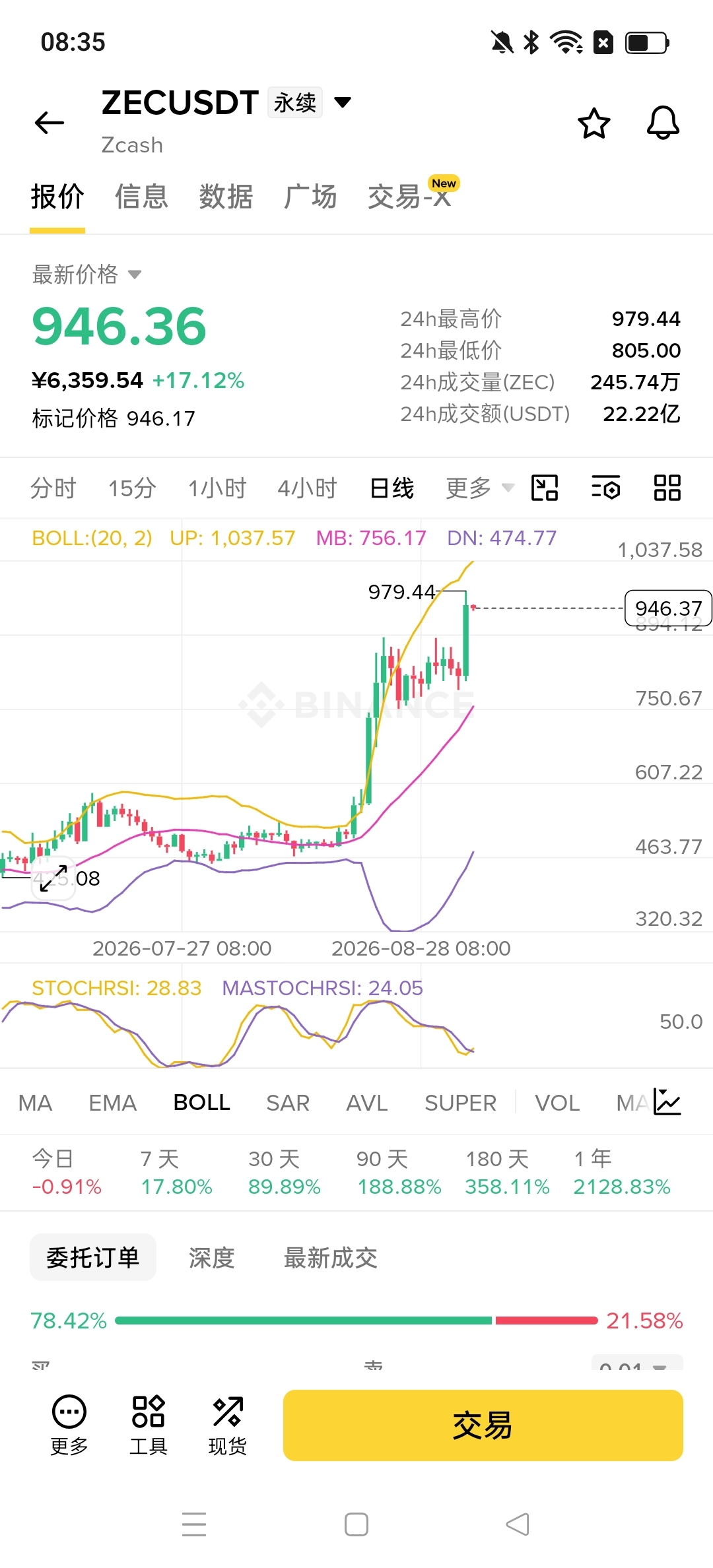
$ZEC Just broke through the box. It’s not too good to go short in the open now. If today we also get a big bullish candle, then we can set up a long-term short position. For now, it’s still a short-term short—wait for the results of today’s important meeting!
慢就是快Mike
·
--
[Ended] 🎙️ The non-farm payroll data was bearish; is the bull market over?
1.8k listens



路人1688luren
·
--
#美国初请失业金人数升至20.6万 to 206,000 just out!
Wall Street is watching this number closely tonight.
Latest data:
• Actual: 206,000
• Expected: 205,000
• Prior revised: 204,000
The 4-week moving average is also trending upward.
On the surface, this looks like a “slight weakening,” but don’t be fooled by the headline bait—it is still within the low range of the past year, and far from a real deterioration.
• Data slightly above expectations → some are starting to worry about a cooling labor market
• But the overall trend is still relatively strong → expectations for a September Fed rate cut may actually be reinforced
• The dollar comes under pressure, while risk asset sentiment is in a subtle offset
For the crypto market, this data set by itself does not constitute a directional hit; what really determines the move is whether the market interprets it as “the Fed must ease more quickly.”
Is this wave a bullish signal for Bitcoin, or a precursor to an inflection point in employment?
Drop your take in the comments—bearish or bullish.
#USInitialJoblessClaims #FedRateCut #Bitcoin #MacroData #Cryptocurrency#BTC $BTC #美国初请失业金降至21.5万
Wall Street is watching this number closely tonight.
Latest data:
• Actual: 206,000
• Expected: 205,000
• Prior revised: 204,000
The 4-week moving average is also trending upward.
On the surface, this looks like a “slight weakening,” but don’t be fooled by the headline bait—it is still within the low range of the past year, and far from a real deterioration.
• Data slightly above expectations → some are starting to worry about a cooling labor market
• But the overall trend is still relatively strong → expectations for a September Fed rate cut may actually be reinforced
• The dollar comes under pressure, while risk asset sentiment is in a subtle offset
For the crypto market, this data set by itself does not constitute a directional hit; what really determines the move is whether the market interprets it as “the Fed must ease more quickly.”
Is this wave a bullish signal for Bitcoin, or a precursor to an inflection point in employment?
Drop your take in the comments—bearish or bullish.
#USInitialJoblessClaims #FedRateCut #Bitcoin #MacroData #Cryptocurrency#BTC $BTC #美国初请失业金降至21.5万



加倉妹
·
--
🍂 Autumn is here, and a new harvest season has come!
With passion, courage, and goals, we’ll move forward with full effort!
May all our hard work bring rewards, and may our dreams come true!😊
With passion, courage, and goals, we’ll move forward with full effort!
May all our hard work bring rewards, and may our dreams come true!😊

Log in to explore more content