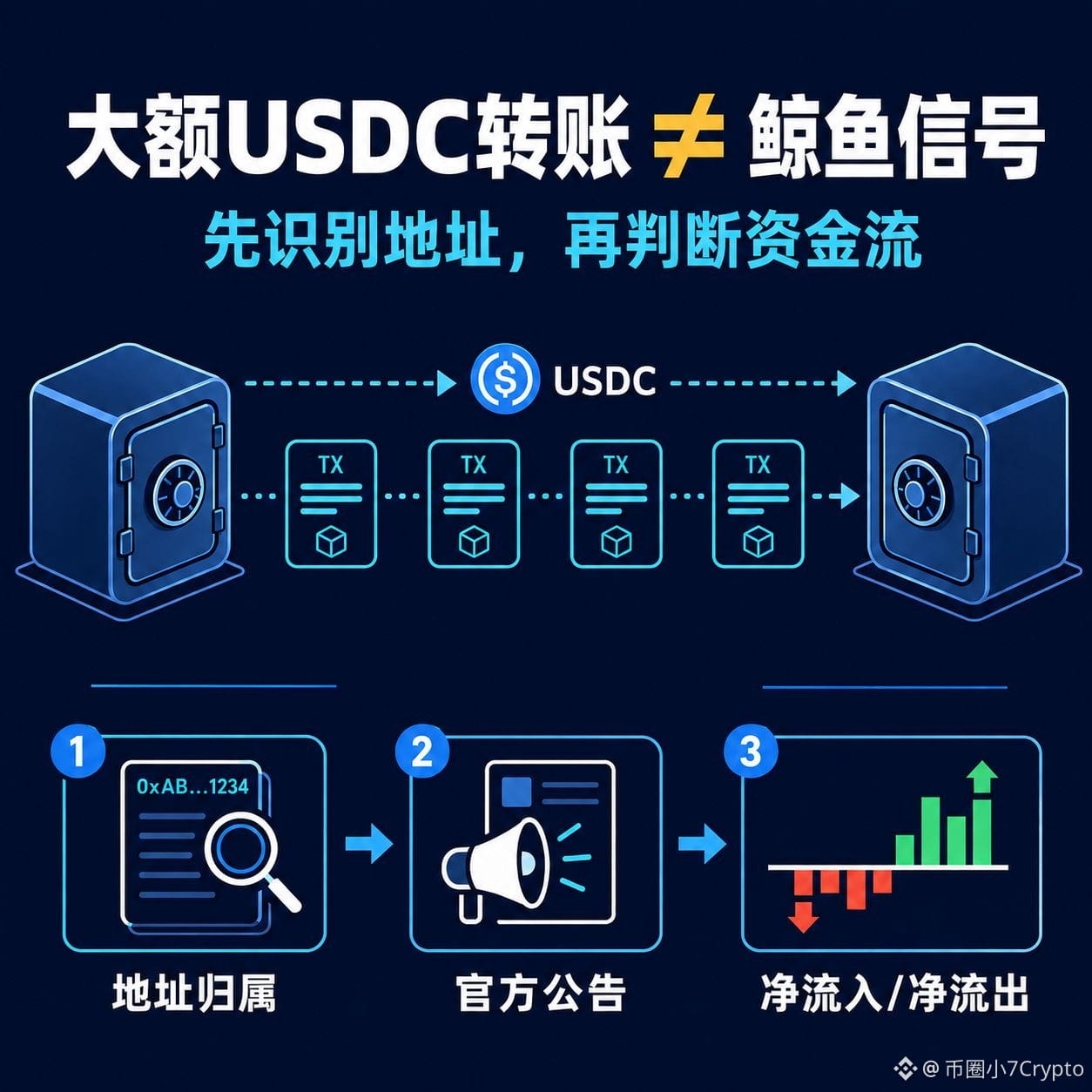
A large USDC transfer suddenly appears on-chain—does that directly indicate a whale entering, an exchange inflow, or funds fleeing?
No. Transfer records only tell us that assets were moved; they do not automatically reveal the underlying purpose.
On September 3, Bybit announced in advance that starting from September 4, the platform would upgrade its hot-wallet infrastructure, migrating larger-scale USDC from the existing hot wallet to a newly created wallet. The platform clearly stated that the related fund movements were internal operations; users do not need to take any action, and the upgrade plan would be completed around September 10.
These kinds of events are a great example of a common misconception in on-chain analysis:
Large transfers do not equal net inflows or net outflows, and they certainly don’t equal trading intent.
When I see a transfer record, I usually first check:
1. Whether the sender and receiver belong to which entities;
2. Whether the two addresses belong to the same organization;
3. Whether the total balance of the organization’s address cluster truly changes;
4. Whether there is an official notice about maintenance, wallet reorganization, or asset consolidation;
5. Whether, after the transfer, the funds continue to flow to external addresses or to the trading market.
If the assets are only moving between old and new wallets within the same platform, then even if the transfer amount per transaction is large, it still can’t be directly interpreted as market buying demand, sell pressure, or user withdrawals concentrated in one place.
Blockchain explorers record “what happened.” Only address attribution and the path of funds can help us get closer to “why it happened.”
In your view, what is the minimum evidence needed to determine an exchange’s fund movements?
$USDC $BTC
#OnChainData #FundsFlow #RiskIdentification
Data source: Bybit official announcement. For learning on-chain data and market research only; not investment advice.
No. Transfer records only tell us that assets were moved; they do not automatically reveal the underlying purpose.
On September 3, Bybit announced in advance that starting from September 4, the platform would upgrade its hot-wallet infrastructure, migrating larger-scale USDC from the existing hot wallet to a newly created wallet. The platform clearly stated that the related fund movements were internal operations; users do not need to take any action, and the upgrade plan would be completed around September 10.
These kinds of events are a great example of a common misconception in on-chain analysis:
Large transfers do not equal net inflows or net outflows, and they certainly don’t equal trading intent.
When I see a transfer record, I usually first check:
1. Whether the sender and receiver belong to which entities;
2. Whether the two addresses belong to the same organization;
3. Whether the total balance of the organization’s address cluster truly changes;
4. Whether there is an official notice about maintenance, wallet reorganization, or asset consolidation;
5. Whether, after the transfer, the funds continue to flow to external addresses or to the trading market.
If the assets are only moving between old and new wallets within the same platform, then even if the transfer amount per transaction is large, it still can’t be directly interpreted as market buying demand, sell pressure, or user withdrawals concentrated in one place.
Blockchain explorers record “what happened.” Only address attribution and the path of funds can help us get closer to “why it happened.”
In your view, what is the minimum evidence needed to determine an exchange’s fund movements?
$USDC $BTC
#OnChainData #FundsFlow #RiskIdentification
Data source: Bybit official announcement. For learning on-chain data and market research only; not investment advice.