
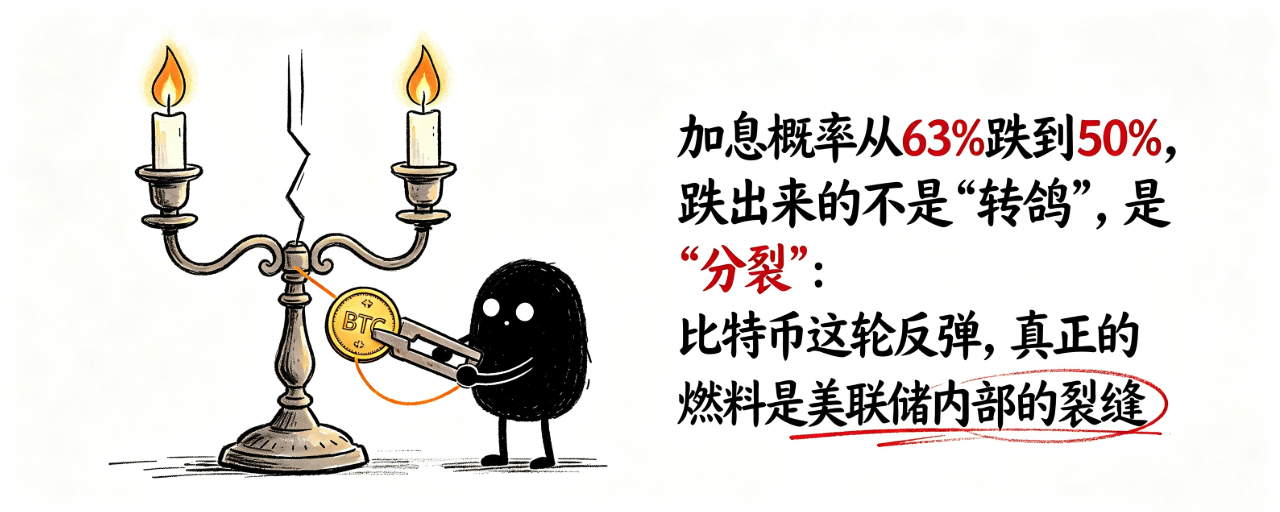

Bitcoin has reclaimed $80,000. In 24 hours, it’s up more than 5%, while Ethereum follows up with a gain of 4.8%. Short sellers have been squeezed out by $415 million, and 119,000 traders were liquidated.
The explanation the market gives is consistent: Waller turns dovish, the rate-hike probability plunges, and risk assets rebound.
But if you stare at the CME FedWatch curve for one more second, you’ll notice a strange fact that gets overlooked: the probability of a rate hike drops from 63.2% to 50.4%.
Pay attention to this number: 50.4%.
This isn’t a “dovish pivot.” It’s a rupture precise to one decimal place. Half the people believe there will be a rate hike, and half believe there won’t. The market hasn’t reached a consensus—it’s just shifted from “hesitantly hawkish” to “perfectly split.”
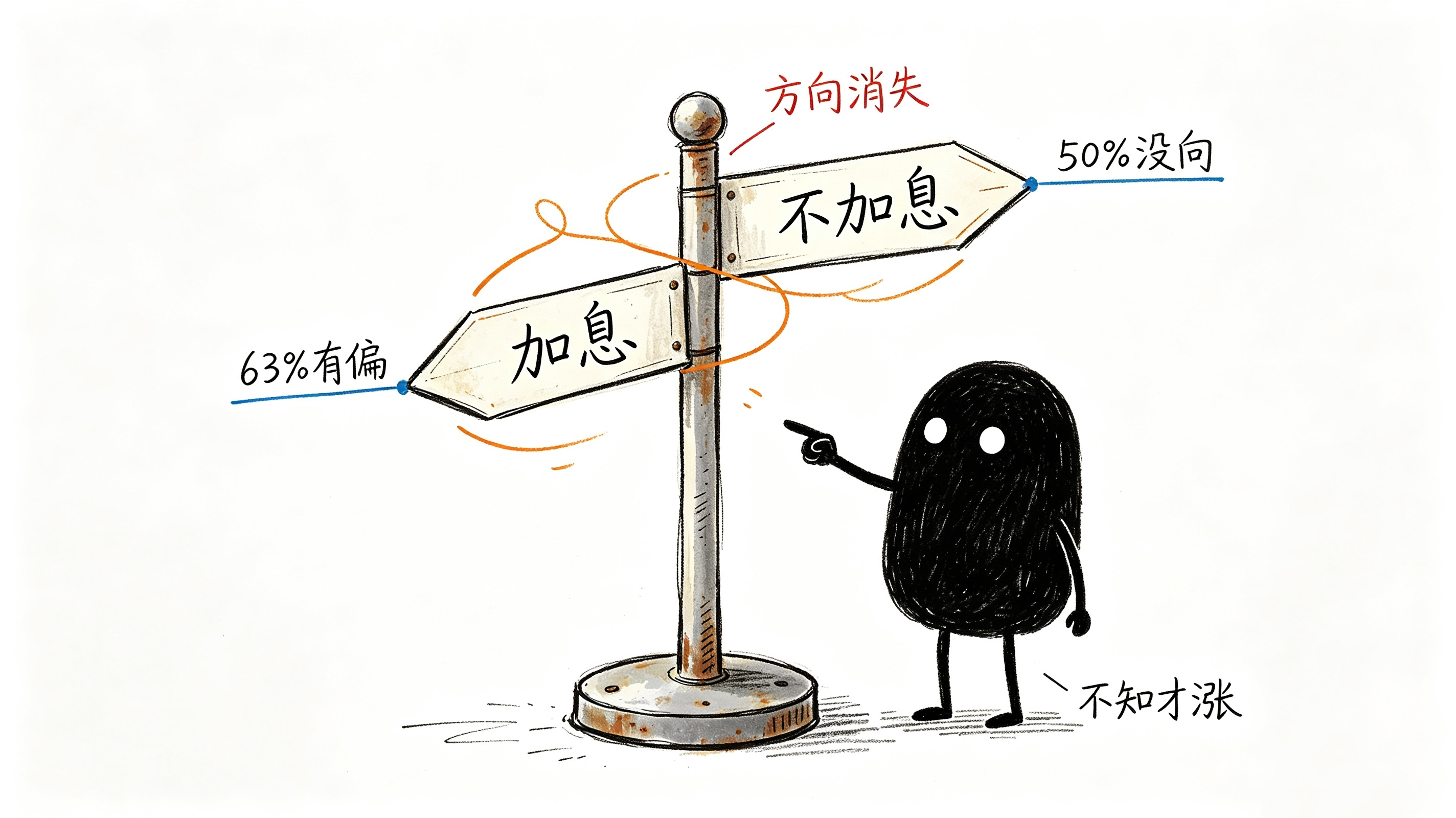
And Bitcoin, amid this fractured crack, rose 5%.
Swap the subject to “that 12.8-percentage-point crack.”
If the subject is “Waller,” the story is “a dovish signal.” If the subject is “Bitcoin,” the story is “a rebound in risk assets.” But if the subject becomes that 12.8-percentage-point crack—between the rate-hike probability of 63.2% and 50.4%—then the entire narrative changes.
This crack isn’t “narrowing.” It’s turning into an abyss.
When it was 63.2%, the market at least had one judgment: rate hikes were more likely. Traders could build positions around that judgment, and at least one side—bulls or bears—had a tilt. But when the number drops to 50.4%, the market loses direction. This isn’t “more dovish.” It’s “not knowing.”
And Bitcoin has risen precisely in a state of “not knowing.” Is that reasonable? It is—because for high-volatility assets, “the central bank’s hesitation” is more worth buying than “the central bank being dovish.” Dovishness implies a pivot; a pivot means a new trend starts; a new trend starts means old positions get liquidated and a new consensus hasn’t formed yet—this is the most chaotic and most profitable window.
But “hesitation” isn’t “turning.” Hesitation is an in-between state—it can last, or it can be shattered overnight by a single nonfarm payrolls release.
With Bitcoin above $80,000, what’s under its feet isn’t solid ground—it’s a crack that’s widening.
Only half of what Waller said was heard by the market.
Go back to the source. What exactly did Waller say?
What he said was: “If the upcoming August inflation data shows that price pressures continue to improve, I am inclined to support maintaining the interest rate unchanged.”
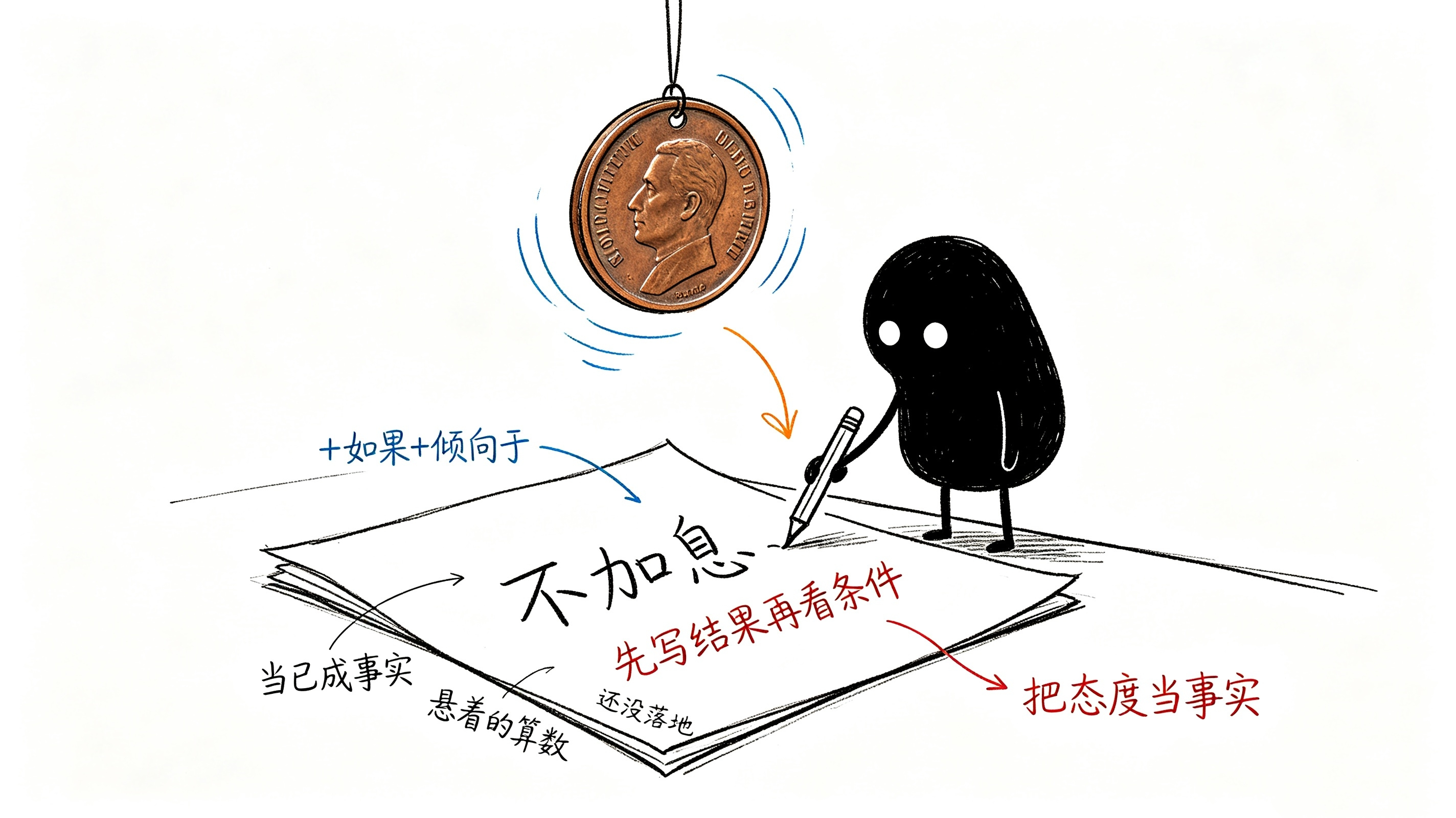
There are two keywords in this sentence: “if” and “inclined to.”
“If” is a conditional clause. The condition hasn’t happened yet. “Inclined to” is a stance word. A stance isn’t a commitment.
But the market’s reaction was: the rate-hike probability fell from 63.2% to 50.4%, Bitcoin rose 5%, and the 10-year U.S. Treasury yield retreated to 4.73%.
The market priced a conditional stance as if it were an already-real fact.
This isn’t the first time. Remember Jackson Hole in August? Powell said just one line: “Inflation is still above target,” and the rate-hike probability skyrocketed from 35% to 65%. Now Waller said one line: “If inflation improves, I’m inclined not to raise rates,” and the probability fell again by 13 percentage points.
One sentence lifts the probability by 30 points; another drops it by 13. The mouth of Fed officials has become a data source more powerful than nonfarm payrolls and CPI.
That’s what’s really unsettling: when the market is so sensitive to an official’s “stance,” it’s essentially admitting that the Fed’s policy path has no anchor—only people’s intentions. And people’s intentions can change overnight.
The 3 a.m. surge: when retail is asleep, who’s setting the price?
There’s a time detail in the material worth singling out: “In the past hour alone, more than $327 million worth of short positions were forcibly liquidated.”
This line appeared in Beijing time at dawn. That means the most aggressive leg of the rally happened during Asia’s quietest window, when European and U.S. traders had just gone to sleep.
What does a surge at 3 a.m. mean? It means that when liquidity is thinnest, the pricing power is easiest to change hands. With no big buying pressure, you can push the price through a critical level, trigger a chain of forced liquidations for shorts, and complete a “technical breakout” during a time window when almost nobody is trading.
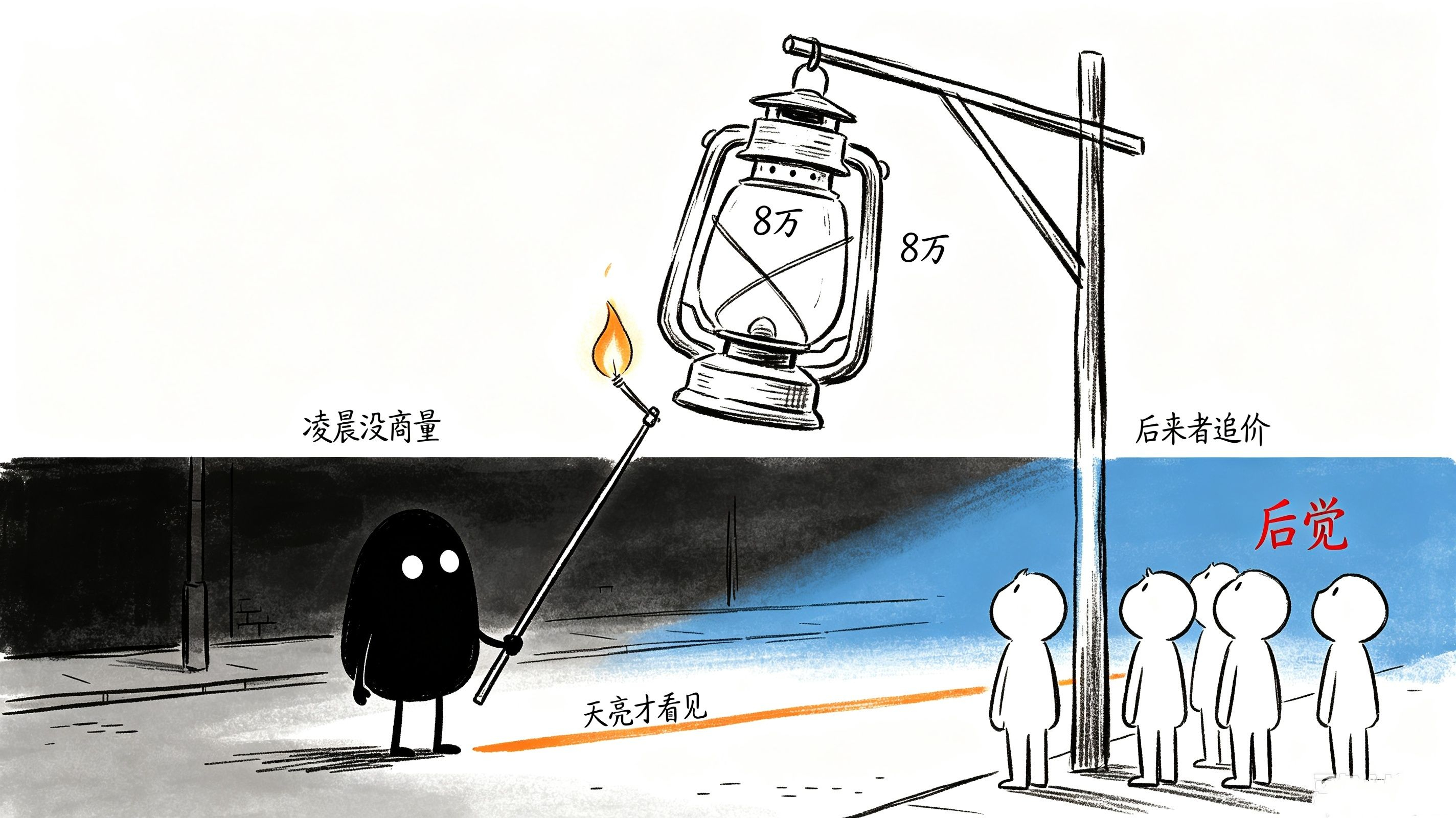
And by morning, what the market sees is a price that has already risen. Later capital is forced to reassess at this price: chase or don’t chase?
A surge at dawn is, in essence, a “sudden raid.” It doesn’t reflect the consensus of all participants—only the will of a small pool of capital during that window. And Bitcoin is precisely the kind of asset most easily rewritten by such a raid.
The aftermath of August’s squeeze is still there.
The material keeps emphasizing that this time is different from August: in August, shorts were forced into liquidation; this time, it’s driven by macro logic.
This distinction is correct, but incomplete. Because the legacy of August’s squeeze is that it accumulated a large number of shorts in the market who are wary of a “short-squeeze rally.” These shorts regrouped in early September—because someone believes that the supply wall above 80,000 is too heavy for the price to rise.
And this overnight rally—exactly turned those shorts into fuel. $415 million worth of short covering, and 119,000 liquidations—this number alone is saying that the August story is being replayed in another form. Only this time the fuse wasn’t “the shorts couldn’t hold on”—it was “Waller made them unable to hold on.”
But the essence hasn’t changed: when price rapidly cuts through a densely clustered zone of shorts, regardless of the catalyst, it produces the same thing—panic. After panic, what’s left isn’t a trend; it’s a vacuum.
That $83,000–$86,000 wall.
If a break above $80,000 was a dawn raid, then the real battle hasn’t even started.
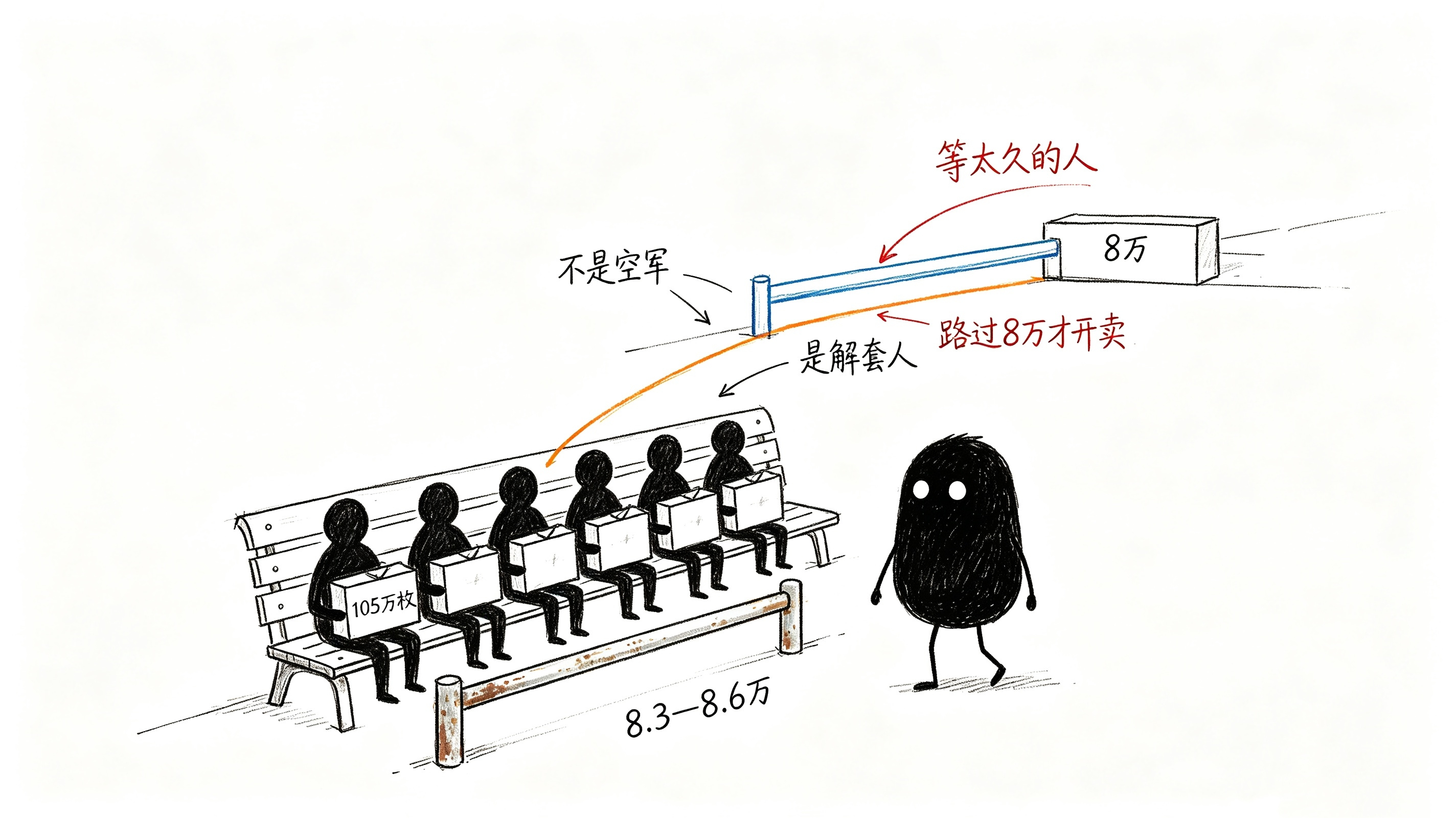
The material mentions: in the $83,000–$86,000 range, there’s supply from about 1.05 million Bitcoin long-term holders.
1.05 million coins. That’s 5% of Bitcoin’s total supply. The holders of these coins are the ones who bought at lower levels and waited a long time. When they see the price return above 80,000, their first reaction isn’t “keep holding”—it’s “I can finally break even.”
That wall isn’t the “air force.” It’s the “people who waited too long.” They’re more terrifying than shorts, because shorts retreat when liquidated under pressure, while long-term holders’ selling is voluntary, slow, and continuous. Each time price tries to break through, they hand the chips to the people coming later.
So the real showdown isn’t at $80,000—it’s from $83,000 to $86,000. $80,000 is a psychological threshold; $83,000 to $86,000 is a real, existing wall of chips. The $3,000 to $6,000 between them—that’s the place where you test the quality of this rebound.
The question that keeps people up at night.
Bitcoin rose 5% because of Waller’s one sentence. The rate-hike probability fell by 13 percentage points. The 10-year Treasury yield retreated.
But think about it: what if Waller changes his tune tomorrow?
This isn’t a hypothesis. Just a few weeks ago, the market was saying: “Another major Fed official changed his tune—from dovish to hawkish.” Now it has shifted again—from hawkish to dovish. The officials’ “stance” is swinging by the week, and Bitcoin’s price is tracking that swing by the hour.
What’s the essential difference between a market driven by stance and a market driven by data? Data can be revised, but data won’t “backtrack.” Stances will. A stance can flip within 24 hours, and the reason for the flip might be just one sentence in a closed-door meeting.
Bitcoin is above $80,000, and the market is cheering the “lower rate-hike probability.” But that 50.4% figure is quietly reminding everyone: this isn’t consensus about “no rate hikes”—it’s a split caused by “not knowing.” A divided market is the easiest to be pierced by the next “stance.”
When the 3 a.m. attackers pushed the price past 80,000 when liquidity was thinnest, what they truly bet on wasn’t that “the Fed won’t raise rates.” They bet that, before anyone else starts talking, they can exit the crack safely. And those who chased in above 80,000 didn’t take over a trend—they stepped into a crack.