

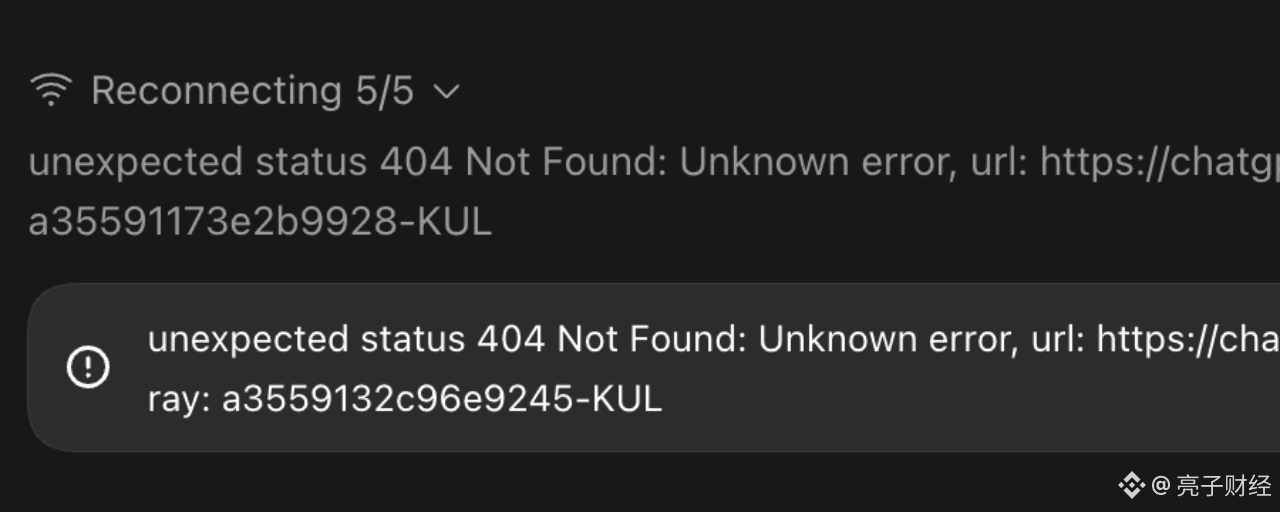

On the morning of September 3 in Eastern Time, ChatGPT/Codex, Claude, and Grok all had problems in nearly the same time window.
On Downdetector, the number of ChatGPT errors in the U.S. once broke 35,000. Claude and Grok each had over 1,000 as well. Even Cursor, the programming tool that relies on calling these models to do its job, lost connection.

The three companies’ official explanations differed:
OpenAI said it was a “routing error.” It began around 7:43 a.m. Pacific Time and a fix was put in place around 8:17 a.m.
Anthropic said it was an “infrastructure issue.” Claude.ai, Claude Code, Claude Cowork, and the API were all affected. At first, they listed Opus 4.8, Opus 5, and the Mythos/Fable series as well. Later, they narrowed it down mainly to Opus 4.8 and Opus 5. The whole incident lasted 3 hours and 6 minutes, and services were restored around noon at 12:15.
Grok only said, “The service is having problems.” The status page showed the downtime lasted longer than the time during which users’ feedback would still be usable.
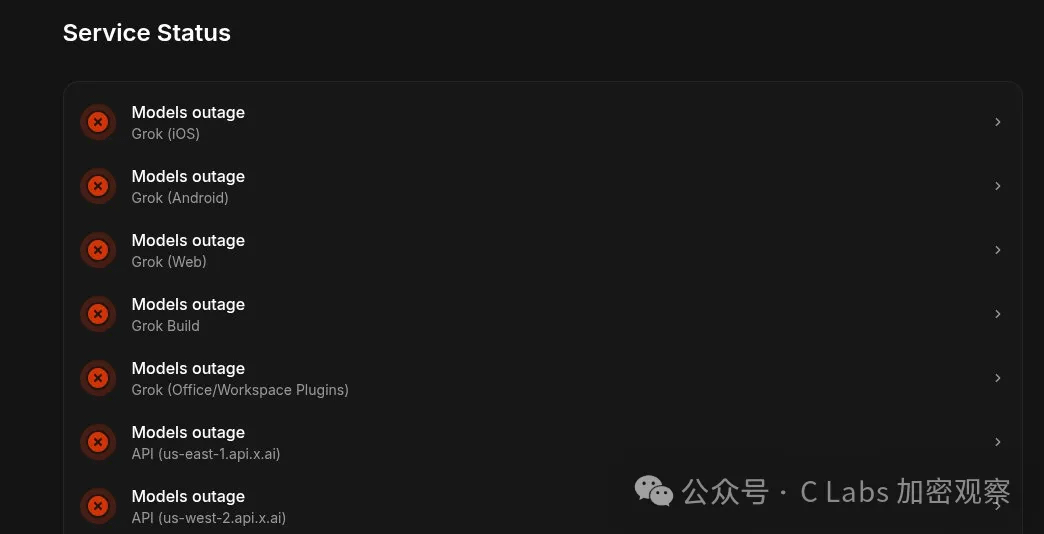
Behind these three AI companies, there’s one shared thing: Microsoft Azure.
On the day of the incident, Axios reported that Azure itself was also having issues. Based on this, some tech media speculated that it was an Azure problem dragging down the three model services.
Users submitted reports saying Azure’s East US region saw an “ingress failure” (abnormal inbound traffic) around 10:26 a.m. Eastern Time.
Google’s Gemini was basically unaffected this time. That’s because Gemini runs on Google Cloud, not on Azure.
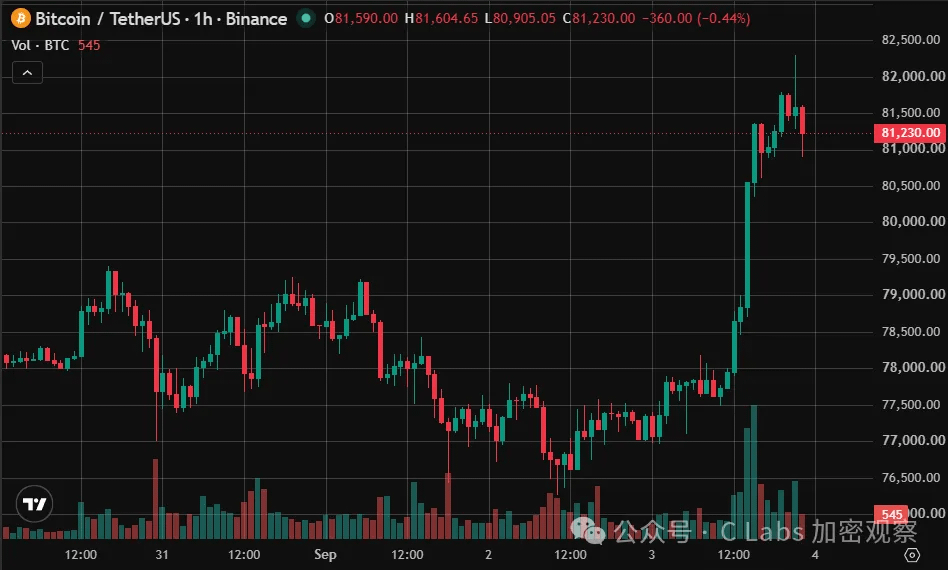
After the collective AI outage, Bitcoin rose nearly 5% in 24 hours, and it moved back above 80,000.
Although many people said the surge was driven by macro factors, Federal Reserve Board Governor Waller said that the Fed might not raise rates this month.
And the 10-year U.S. Treasury yield fell along with it; the S&P 500 and the Nasdaq were also up on the same day—this was a broad rise in risk assets across the board.

But other assets didn’t surge as hard as crypto—the average gain in U.S. stocks was only a few tenths of a percent.
Before this AI outage, crypto exchanges had also repeatedly gone down due to shared cloud infrastructure:
In November 2025, there was a global Cloudflare outage; the front ends of Coinbase, Kraken, Etherscan, and Aave all went down;
In May 2026, an AWS data center in Virginia overheated. Coinbase’s transfers and withdrawals were down for 5–6 hours—this was the second time within a year it had a mishap due to AWS.
Each time something like this happens, the Bitcoin chain always manages to remain stable and “break out” into the spotlight.
Bitcoin network has only suffered two network-wide outages in its entire history—2010 and 2013. Together, they lasted less than 15 hours. After that, in 2013, it maintained a 99.99% block-production record.

Especially when the Iran conflict first began, Iranian drones carried out precise strikes on two AWS data centers in the UAE and a facility in Bahrain, causing power outages and damaging equipment.
On March 2, major global AI services such as Claude and Grok went down one after another.
The Middle East ride-hailing platform Careem stopped working; the payment platforms Alaan and Hubpay couldn’t log in; and mobile apps of Abu Dhabi Commercial Bank were completely down.
Residents in Dubai discovered that nearly all the apps on their phones stopped working.
But the Bitcoin network has never gone down for even a single second.
Back then, global assets plunged as panic hit because of this event—only Bitcoin surged against the trend, breaking above the $70,000 mark.
During this wave of collective AI outages, Bitcoin broke past 80,000 too—it also has quite a symbolic meaning~