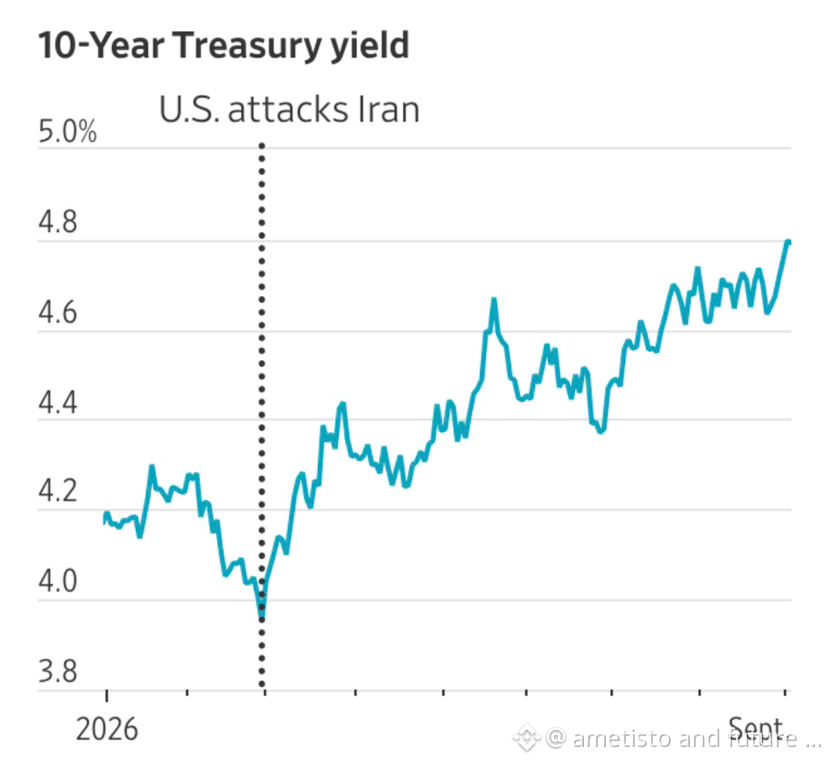
📉 Bond market under pressure: war is the main factor
The global bond market is facing a combination of forces that are pushing yields to multi-year highs. According to The Wall Street Journal, there are four main factors behind this move — but inflation, driven by the energy shock caused by the war with Iran, appears to be the main catalyst. (The Wall Street Journal)
⛽ 1. Energy and inflation
Rising fuel prices, especially diesel, increase costs across transportation, agriculture, construction, and production. Diesel in the U.S. has already surpassed US$ 5,68 per gallon, about US$ 2 higher than a year ago.
💰 2. Public deficits
U.S. gross debt has surpassed US$ 40 trillion, fueling concerns about fiscal sustainability. The United Kingdom, Japan, and other economies are also seeing pressure on their public finances.
📊 3. Term premium
The so-called term premium — the compensation investors demand for holding long-term bonds — has also risen. This indicates that the market is charging more to take on fiscal and inflation risks over extended periods.
🏦 4. Uncertainty about the Fed
Kevin Warsh’s arrival as chair of the Federal Reserve added a new source of uncertainty to interest-rate expectations. Even with signs of growing concern about inflation, the lack of clearer forward guidance could increase the premium required by investors on long-term bonds.
⚠️ The key point: when inflation, war, high deficits, and monetary uncertainty appear at the same time, investors tend to demand higher yields to buy long-term debt.
And higher yields on bonds mean lower bond prices, a higher cost of financing for governments and companies, and potential pressure on stocks and other risk assets.
The bond market is therefore sending an important signal: long-term money is getting more expensive.
The global bond market is facing a combination of forces that are pushing yields to multi-year highs. According to The Wall Street Journal, there are four main factors behind this move — but inflation, driven by the energy shock caused by the war with Iran, appears to be the main catalyst. (The Wall Street Journal)
⛽ 1. Energy and inflation
Rising fuel prices, especially diesel, increase costs across transportation, agriculture, construction, and production. Diesel in the U.S. has already surpassed US$ 5,68 per gallon, about US$ 2 higher than a year ago.
💰 2. Public deficits
U.S. gross debt has surpassed US$ 40 trillion, fueling concerns about fiscal sustainability. The United Kingdom, Japan, and other economies are also seeing pressure on their public finances.
📊 3. Term premium
The so-called term premium — the compensation investors demand for holding long-term bonds — has also risen. This indicates that the market is charging more to take on fiscal and inflation risks over extended periods.
🏦 4. Uncertainty about the Fed
Kevin Warsh’s arrival as chair of the Federal Reserve added a new source of uncertainty to interest-rate expectations. Even with signs of growing concern about inflation, the lack of clearer forward guidance could increase the premium required by investors on long-term bonds.
⚠️ The key point: when inflation, war, high deficits, and monetary uncertainty appear at the same time, investors tend to demand higher yields to buy long-term debt.
And higher yields on bonds mean lower bond prices, a higher cost of financing for governments and companies, and potential pressure on stocks and other risk assets.
The bond market is therefore sending an important signal: long-term money is getting more expensive.