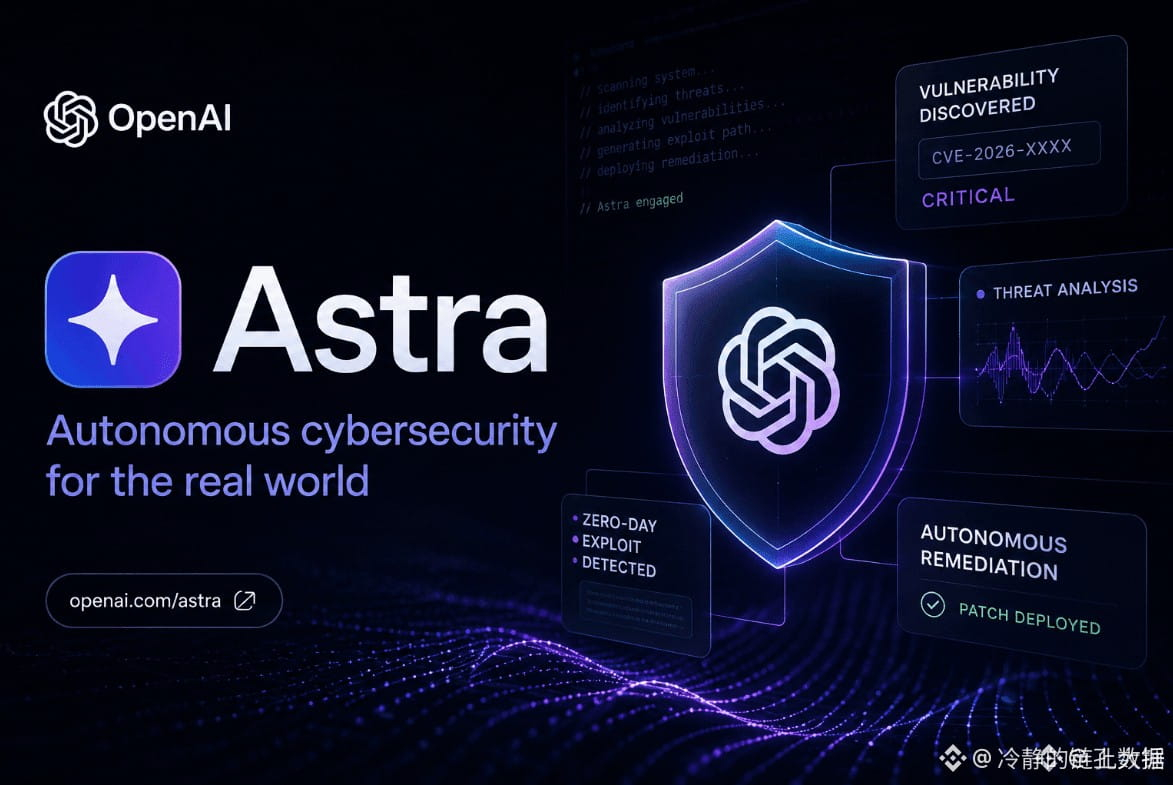
#openai称astra可自主发现漏洞
OpenAI spills it: the new model can dig up zero-day vulnerabilities on its own—this is unsettling if you think about it
🤖 AI×加密,进群跟进
OpenAI has released an assessment report that has the security community on edge. 😳
The report published on September 1 says that the next-generation model, Astra, has already reached the company’s internal highest “Critical” cybersecurity level. Give it tools and permissions, and it can autonomously discover unknown vulnerabilities—zero-days—and even write working exploit code. 🤖
OpenAI even said that some Astra releases were delayed for security reasons. 🔒
In plain terms, this means AI can already act like a hacker by itself—and like a top-tier one. 🕶️
Why is this important for the crypto world? Because the crypto industry is the hacker’s most concentrated cash machine. On-chain protocols, exchanges, cross-chain bridges—every year the money stolen by hackers adds up to astronomical figures. 🤯
Previously, attacks meant human-written code searching for vulnerabilities. If, going forward, AI is bulk-mining flaws, the speed and volume of attacks won’t be in the same league at all. The playbook for security auditing will have to change. 💻
On the flip side, defenses are evolving too. AI can both find vulnerabilities and patch them. The arms race between autonomous offense and defense is already underway—whoever deploys AI security capabilities to the chain first will pay less tuition. 🛡️
For ordinary investors, the takeaway from this news is straightforward: when choosing projects, put the security team’s AI capabilities on your checklist. The times have changed. 📉
📌 OpenAI Astra has reached a threshold level for autonomously discovering zero-day vulnerabilities. The era of AI hackers is approaching, on-chain security offense and defense will be upgraded across the board, and security capability will become a new variable in project valuation.
In the era of autonomous AI attacks, do you think on-chain assets are still safe? Let’s discuss in the comments below👇
OpenAI spills it: the new model can dig up zero-day vulnerabilities on its own—this is unsettling if you think about it
🤖 AI×加密,进群跟进
OpenAI has released an assessment report that has the security community on edge. 😳
The report published on September 1 says that the next-generation model, Astra, has already reached the company’s internal highest “Critical” cybersecurity level. Give it tools and permissions, and it can autonomously discover unknown vulnerabilities—zero-days—and even write working exploit code. 🤖
OpenAI even said that some Astra releases were delayed for security reasons. 🔒
In plain terms, this means AI can already act like a hacker by itself—and like a top-tier one. 🕶️
Why is this important for the crypto world? Because the crypto industry is the hacker’s most concentrated cash machine. On-chain protocols, exchanges, cross-chain bridges—every year the money stolen by hackers adds up to astronomical figures. 🤯
Previously, attacks meant human-written code searching for vulnerabilities. If, going forward, AI is bulk-mining flaws, the speed and volume of attacks won’t be in the same league at all. The playbook for security auditing will have to change. 💻
On the flip side, defenses are evolving too. AI can both find vulnerabilities and patch them. The arms race between autonomous offense and defense is already underway—whoever deploys AI security capabilities to the chain first will pay less tuition. 🛡️
For ordinary investors, the takeaway from this news is straightforward: when choosing projects, put the security team’s AI capabilities on your checklist. The times have changed. 📉
📌 OpenAI Astra has reached a threshold level for autonomously discovering zero-day vulnerabilities. The era of AI hackers is approaching, on-chain security offense and defense will be upgraded across the board, and security capability will become a new variable in project valuation.
In the era of autonomous AI attacks, do you think on-chain assets are still safe? Let’s discuss in the comments below👇