


Ahead of the midterm elections, the U.S. is trying to use its firepower to cover large-scale crude oil exports, easing pressure within the United States and among its allies—once again suggesting that the current military strikes are mainly about “escorting.”
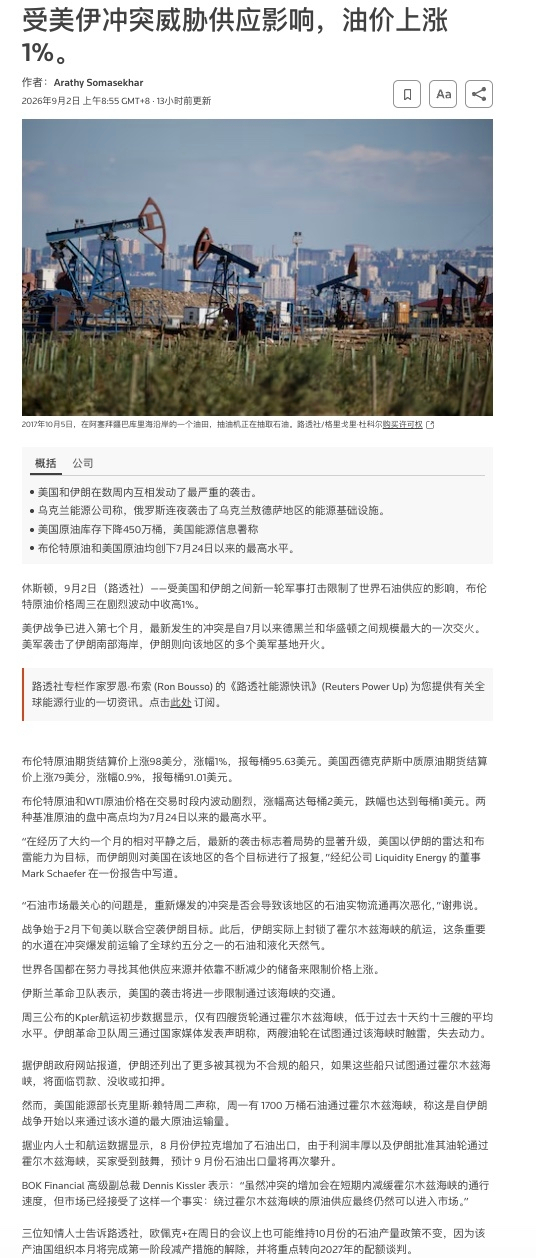
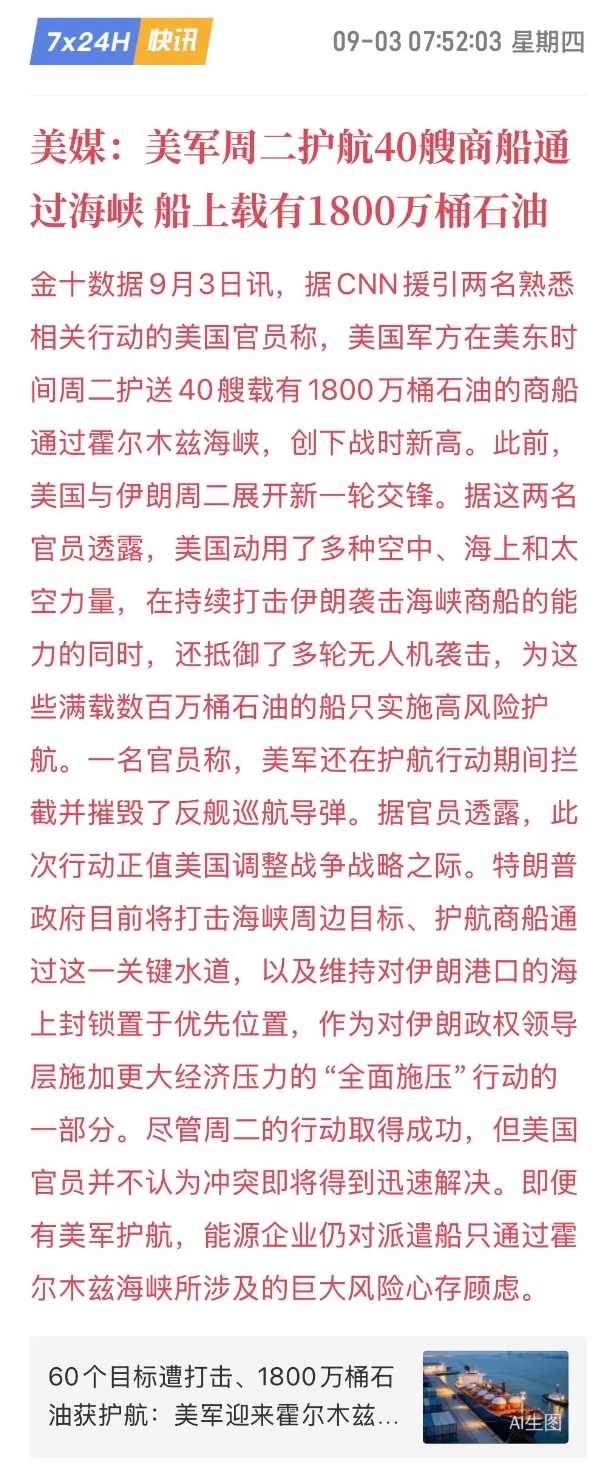
The most noteworthy development as of this afternoon is that after the U.S. Energy Secretary announced on Monday the dispatch of 17 million barrels of oil through the Strait of Hormuz, U.S. media reported on Tuesday that 40 merchant ships were escorted through the strait, bringing daily energy exports up to 18 million barrels.
At the heart of the issue is that Kpler’s data showed that on the same day, on Wednesday the number of ships passing through the strait dropped to four, meaning there is a discrepancy between the two sets of data.
I personally analyzed it: if the U.S. is only launching military strikes to make a lot of noise, then there is not much point. Instead, I believe the most reasonable explanation is to use airstrikes to provide escort. Indeed, many vessels are going through. The data detected by Kpler only covers ships with transponders turned on. If the U.S. is providing forceful escort, it is likely that it asks vessels to shut down their location systems, which would explain the discrepancy between the two sets of data.
As stated earlier, there is a reason for the U.S. military escort—its core is to create a supply buffer for the energy market before the midterm elections on November 3. Also, in the near term, it will try to export as much crude oil as possible. This is preparation for Trump to give up the strait in the short term.
As for how the U.S. would strike Iran after the midterm elections, the prerequisite is whether Trump can win the midterm elections. If he fails, Trump will be too preoccupied to focus on anything else.
Iran is clearly aware of the U.S.’s intentions. So it will do everything possible to expand the geopolitical risks, escalating the response into wars involving large numbers of U.S. military bases across the Middle East. It also expands the geopolitical risk to wars involving Israel and Lebanon—this is to make things bigger, turning what was originally forced military escort into a situation where they are compelled to take part in the conflict. That would disrupt the goal of lowering the scale of strikes before Trump’s midterm election.
Based on my current logic, this week is very likely to be a period of intense U.S. escort operations. A large amount of crude oil will be escorted out of the strait by force. Therefore, this week’s military conflict between the U.S. and Iran is likely to be sustained, which poses a price threat to international oil prices.
Of course, once the escort ends, U.S.-aligned cargo ships in the strait will clear out in the short term, and both Iran and the U.S. will return to diplomatic and economic games. This kind of tug-of-war may continue until around the final day of the November 3 midterm elections.
PS: Another piece of news is worth noting
Pakistan’s military chief, General Munir, is currently being rumored by the media to be carrying “Trump’s conditions.” This is a hidden signal. Although it has not yet been confirmed by mainstream media, once Munir begins calling senior Iranian officials or visits Iran again, I believe it is very likely that there will be another “swap of conditions” between the U.S. and Iran.