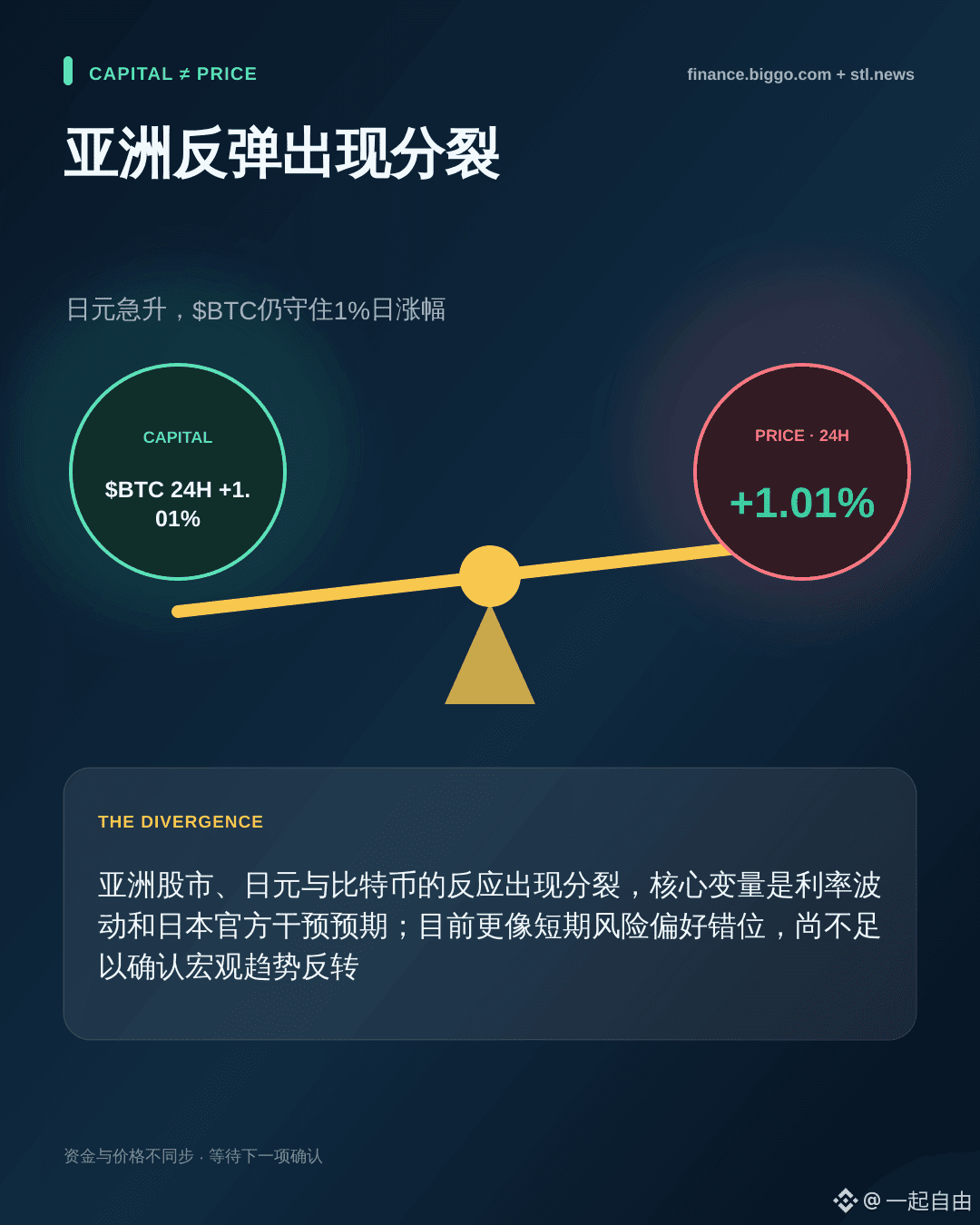
The so-called Asia “rebound” is showing signs of division: a clue released at 07:36 on September 3 claimed that bond yields had stabilized, the yen surged, and this sparked speculation about Japanese intervention. But the same day’s market snapshot showed the Nikkei fell 0.9% and Kospi fell 1.2%, with stocks failing to rebound in sync.
The market had initially been trading as if pressure on interest rates were easing; however, it was actually the yen and intervention expectations that stood out more. This suggests risk-averse sentiment is still present, and risk assets have not found a clear, consistent direction.
When long-end Japanese bond yields fell back and the yen surged, the first things to change were interest-rate volatility and official intervention expectations. Capital then began to reassess its exposure to Asian risk.
It weighed on Asian equities by lowering expectations for Japanese exporters’ earnings conversion and by pushing up cross-market safe-haven demand, yet it did not, for the moment, suppress $BTC ’s buying. If U.S. Treasury yields continue to fall, it could support $BTC . But if the yen’s uptrend spreads and triggers deleveraging, it would overturn this interpretation.
As of 17:05, $BTC was at 77,811.2 USDT, up 1.0% over the past 24 hours. The price is still steadier than Asian equities.
I think this looks more like a short-term mismatch in sentiment. The expectations for risk assets have not truly changed yet. The observation period is set for the next one to two trading days.
If $BTC gives up its short-term gains, the yen continues to rise sharply, or Japan’s authorities clearly step in, then the current “relatively stable” assessment will no longer hold.
$BTC $SPY #Market volatility
The market had initially been trading as if pressure on interest rates were easing; however, it was actually the yen and intervention expectations that stood out more. This suggests risk-averse sentiment is still present, and risk assets have not found a clear, consistent direction.
When long-end Japanese bond yields fell back and the yen surged, the first things to change were interest-rate volatility and official intervention expectations. Capital then began to reassess its exposure to Asian risk.
It weighed on Asian equities by lowering expectations for Japanese exporters’ earnings conversion and by pushing up cross-market safe-haven demand, yet it did not, for the moment, suppress $BTC ’s buying. If U.S. Treasury yields continue to fall, it could support $BTC . But if the yen’s uptrend spreads and triggers deleveraging, it would overturn this interpretation.
As of 17:05, $BTC was at 77,811.2 USDT, up 1.0% over the past 24 hours. The price is still steadier than Asian equities.
I think this looks more like a short-term mismatch in sentiment. The expectations for risk assets have not truly changed yet. The observation period is set for the next one to two trading days.
If $BTC gives up its short-term gains, the yen continues to rise sharply, or Japan’s authorities clearly step in, then the current “relatively stable” assessment will no longer hold.
$BTC $SPY #Market volatility