
Muzamil Abbas⁷⁵ 穆扎米尔_阿巴斯
10k Posts

Muzamil Abbas⁷⁵ 穆扎米尔_阿巴斯
X ACC @Muzamil39825275 // BINANCE SQUARE CREATOR // CRYPTO TRADER // BITCOIN ENTHUSIAST // CALM MIND BIG DREAMS // BUILDING A FUTURE NOT CHASING ATTENTION✨
855 Following
17.1K+ Followers
24.3K+ Liked
Posts
All
Quotes
Videos
Live
PINNED
6000 $ANIME COIN GIVEAWAY 🎁
Want to win ANIME?
✅ Follow me
❤️ Like this post
🔁 Repost this post
💬 Comment “1” to claim
Good luck everyone 🔥
#FOLLOW_ME_FOR_NEXT_GIFT 🎁
$TAC $LAB #USAugADPJobsSmallestGainSinceJan
Want to win ANIME?
✅ Follow me
❤️ Like this post
🔁 Repost this post
💬 Comment “1” to claim
Good luck everyone 🔥
#FOLLOW_ME_FOR_NEXT_GIFT 🎁
$TAC $LAB #USAugADPJobsSmallestGainSinceJan

PINNED
112 $TUT COIN GIVEAWAY 🎁
Want to win TUT? 🏆
✅ Follow me
❤️ Like this post
🔁 Repost this post
💬 Comment “1” to claim
#GOOD_LUCK_EVERYONE 🤞
#ExplosionsAtUSBasesInKuwait #IRGCSaysItStruckUSMarineCampInJordan
Want to win TUT? 🏆
✅ Follow me
❤️ Like this post
🔁 Repost this post
💬 Comment “1” to claim
#GOOD_LUCK_EVERYONE 🤞
#ExplosionsAtUSBasesInKuwait #IRGCSaysItStruckUSMarineCampInJordan

go

幸运雨Rain
·
--
☕In the afternoon, calmly observe the board; amid the noise, keep a clear mind🍂。
In the afternoon, the game between bulls and bears intensifies; ups and downs are just market norms📊。
Don’t let brief intraday spikes throw your thoughts off course. Don’t fear missing out, and don’t rush to trade in anticipation of the standoff.
Trading wisdom lies in choosing to stand by when you can’t make sense of it, and acting decisively when opportunities arrive🕊️。
Filter out the noisy distractions from the outside world, and stick to your own trading boundaries and position limits✨。
Less restless obsession, more rational accumulation—wait for your moment to bloom💎。
#Solana跌逾3%
#交易心理
#1688家族family
In the afternoon, the game between bulls and bears intensifies; ups and downs are just market norms📊。
Don’t let brief intraday spikes throw your thoughts off course. Don’t fear missing out, and don’t rush to trade in anticipation of the standoff.
Trading wisdom lies in choosing to stand by when you can’t make sense of it, and acting decisively when opportunities arrive🕊️。
Filter out the noisy distractions from the outside world, and stick to your own trading boundaries and position limits✨。
Less restless obsession, more rational accumulation—wait for your moment to bloom💎。
#Solana跌逾3%
#交易心理
#1688家族family

go


J U N I A
·
--
go 🎁 go 🎁 go 🎁

go

Bilawal Ashiq
·
--
Bullish🧧🧧Clam And Shere please 🎉
$USD1
$USD1
go

Arthur Mint
·
--
BullishI'm Arthur Mint, Community sending you big surprise gift 🎁🎁🎁.

666

NAJAF_加密 143
·
--
‼️$ETH 🐕 Reward is here ‼️
I’m sharing $ETH rewards with the community as a Bigger thank-you.
✨ Just claim your reward and enjoy! ✨
Claim it. Get rewarded
@Ethereum $ETH #Ethereum
I’m sharing $ETH rewards with the community as a Bigger thank-you.
✨ Just claim your reward and enjoy! ✨
Claim it. Get rewarded
@Ethereum $ETH #Ethereum

go

Z O N E P R I M E
·
--
Bullish🎁 ZONE PRIME BTC SURPRISE DROP! 🎁
✨ The Red Packet is full and ready to open! ✨
👇 Simple Steps to Participate 👇
❤️ Follow ZONE PRIME
🔁 Like & Share
💬 Comment “BTC”
🚀 Stay active for the next reward round!
#BTC #crypto #ZONEPRIME #RedPacket #Binance
✨ The Red Packet is full and ready to open! ✨
👇 Simple Steps to Participate 👇
❤️ Follow ZONE PRIME
🔁 Like & Share
💬 Comment “BTC”
🚀 Stay active for the next reward round!
#BTC #crypto #ZONEPRIME #RedPacket #Binance

go

Flora Firdos
·
--
🎉 WHO WANTS FREE $USDT ? 💸👀
Here’s your chance to join the giveaway!
📌 Entry steps:
💬 Comment 999
❤️ Like this post
🔄 Repost & share
➕ Follow the account
The sooner you enter, the sooner you’re in the game. 🚀
Good luck everyone! 🎁🔥
#USDT。 #CryptoGiveaway #Airdrop #USDTfree
Here’s your chance to join the giveaway!
📌 Entry steps:
💬 Comment 999
❤️ Like this post
🔄 Repost & share
➕ Follow the account
The sooner you enter, the sooner you’re in the game. 🚀
Good luck everyone! 🎁🔥
#USDT。 #CryptoGiveaway #Airdrop #USDTfree

🎁 60 $SUI COIN GIVEAWAY 🎁
Want to win SUI? 🏆
✅ Follow me
❤️ Like this post
🔁 Repost this post
💬 Comment “1” to claim
Good luck everyone 🔥
#SUI🔥 #SUIPricePrediction #ARBRises30%OnRobinhoodChainRevenue
Want to win SUI? 🏆
✅ Follow me
❤️ Like this post
🔁 Repost this post
💬 Comment “1” to claim
Good luck everyone 🔥
#SUI🔥 #SUIPricePrediction #ARBRises30%OnRobinhoodChainRevenue

🎁 50 $TRUMP COIN GIVEAWAY 🎁
Want to win TRUMP?
✅ Follow me
❤️ Like this post
🔁 Repost this post
💬 Comment “1” to claim
Good luck everyone 🔥
50 $TRUMP — Let’s go 🎁
#FOLLOW_ME_FOR_NEXT_GIFT #TrumpCryptoSupport
Want to win TRUMP?
✅ Follow me
❤️ Like this post
🔁 Repost this post
💬 Comment “1” to claim
Good luck everyone 🔥
50 $TRUMP — Let’s go 🎁
#FOLLOW_ME_FOR_NEXT_GIFT #TrumpCryptoSupport

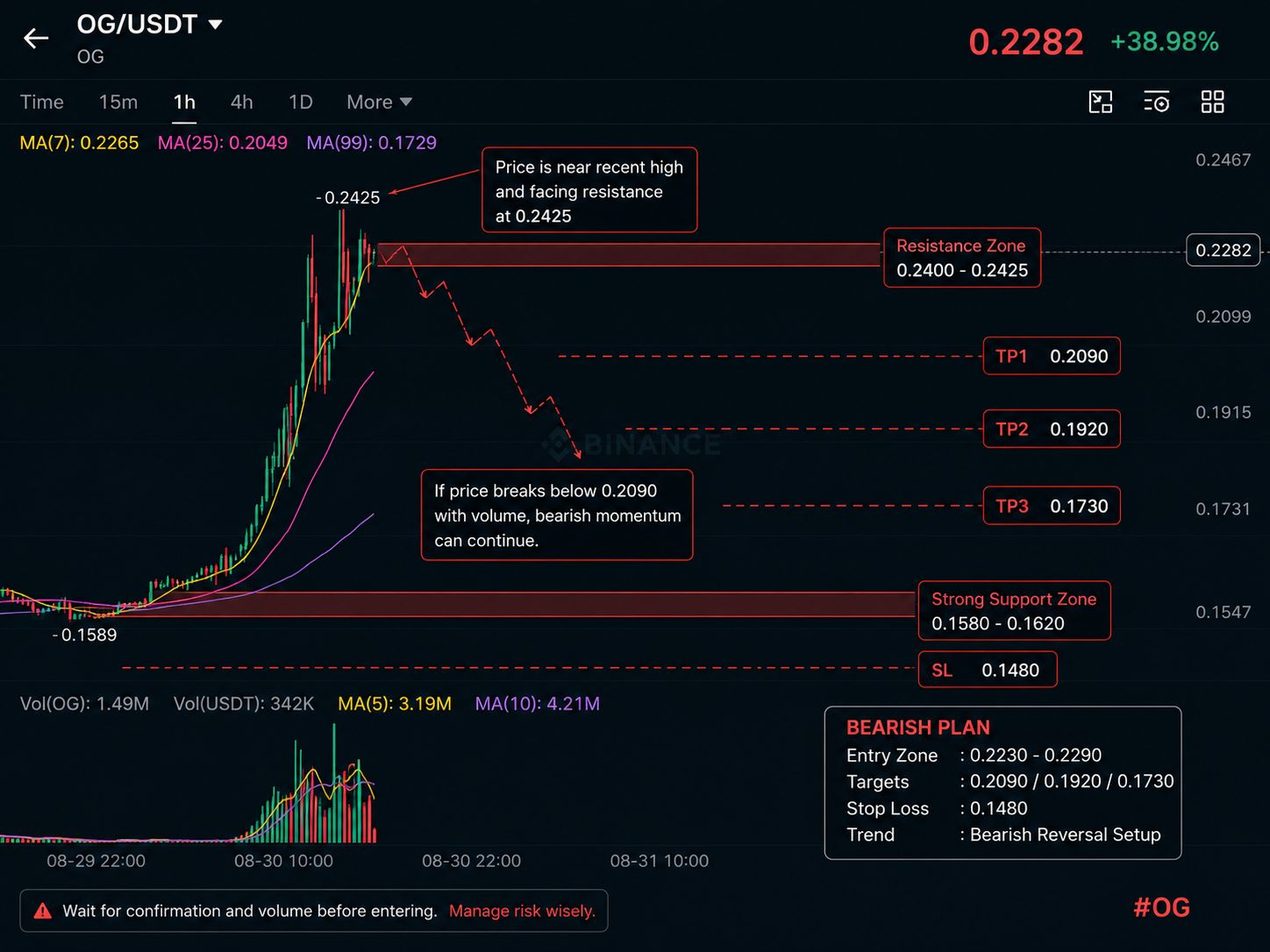
🔻 $0G Bearish Signal
Entry: $0.223–$0.229
🎯 TP1: $0.209
🎯 TP2: $0.192
🎯 TP3: $0.173
🛑 SL: $0.2425
$SKYAI $LAB #beraish
Entry: $0.223–$0.229
🎯 TP1: $0.209
🎯 TP2: $0.192
🎯 TP3: $0.173
🛑 SL: $0.2425
$SKYAI $LAB #beraish
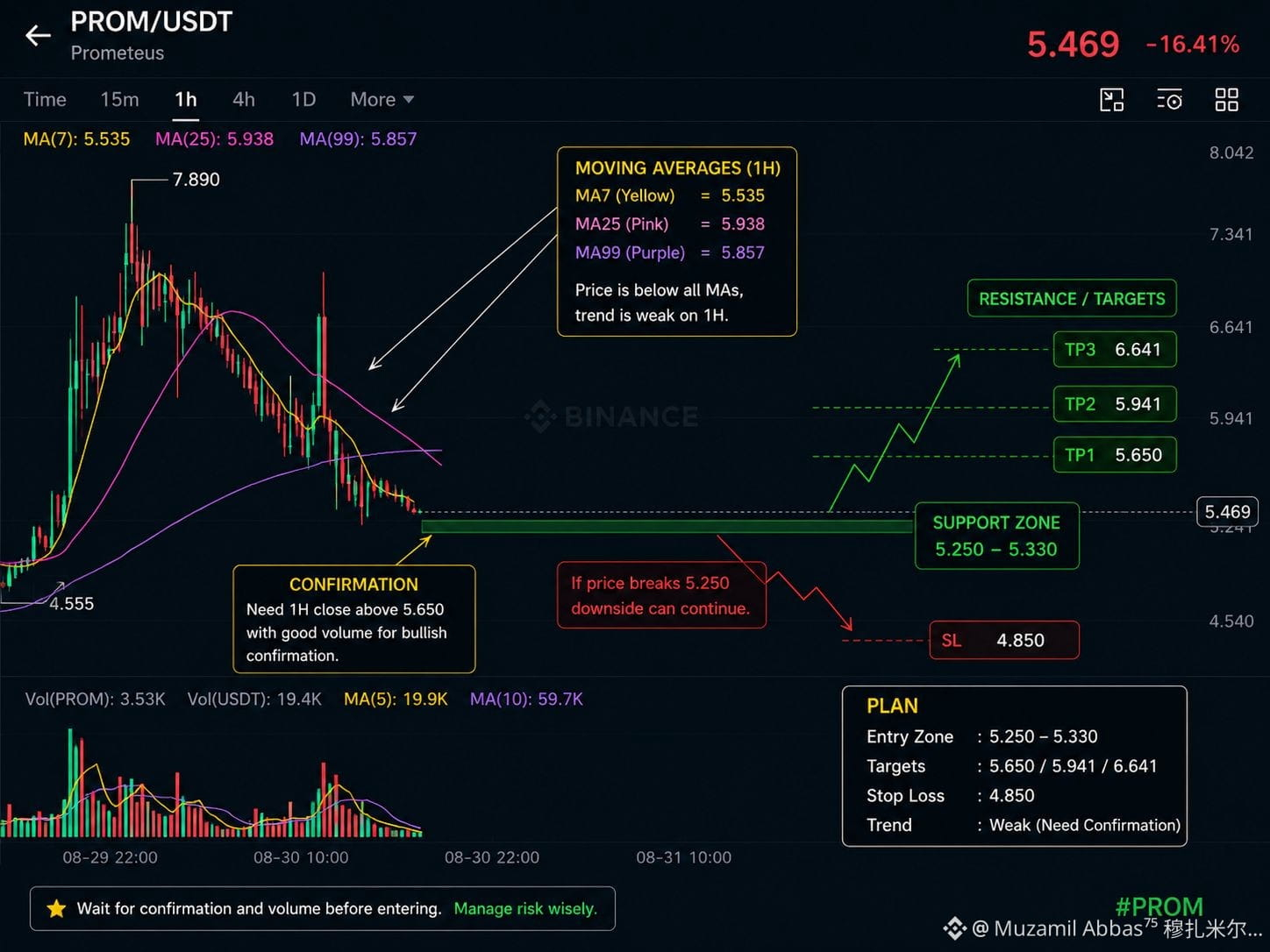
$PROM Bullish Signal
Entry: $5.25–$5.33
🎯 TP1: $5.65
🎯 TP2: $5.94
🎯 TP3: $6.64
🛑 SL: $4.85
Wait for confirmation + volume before entry. DYOR 📈
$GWEI $SKR
Entry: $5.25–$5.33
🎯 TP1: $5.65
🎯 TP2: $5.94
🎯 TP3: $6.64
🛑 SL: $4.85
Wait for confirmation + volume before entry. DYOR 📈
$GWEI $SKR
🎉 15K Followers Celebration Giveaway! 🎉
Alhamdulillah, we have reached 15K followers on Binance Square Thank you all for your support and trust. To celebrate this milestone, I'm giving away SOL Coin to lucky winners. 🔥
✅ Like this post
✅ Repost this post
✅ Comment 1
✅ Claim 🎁
The more support you show, the bigger the future giveaways can become.
Good luck everyone
#BinanceSquare #SOL #Giveaway #15KMilestone #ThankYou
Alhamdulillah, we have reached 15K followers on Binance Square Thank you all for your support and trust. To celebrate this milestone, I'm giving away SOL Coin to lucky winners. 🔥
✅ Like this post
✅ Repost this post
✅ Comment 1
✅ Claim 🎁
The more support you show, the bigger the future giveaways can become.
Good luck everyone
#BinanceSquare #SOL #Giveaway #15KMilestone #ThankYou

🎁 $SHIB GIVEAWAY WORTH $100 🎁
I’m giving away SHIB Gift Boxes to 3,000 lucky people! 🐕🔥
To participate:
❤️ Like this post ✅
🔁 Repost this post ✅
💬 Comment “1” below ✅
🎁 Claim your Gift Box ✅
Good luck everyone🚀✨
#SHIB #Giveaway #Binance #CryptoGiveaway
I’m giving away SHIB Gift Boxes to 3,000 lucky people! 🐕🔥
To participate:
❤️ Like this post ✅
🔁 Repost this post ✅
💬 Comment “1” below ✅
🎁 Claim your Gift Box ✅
Good luck everyone🚀✨
#SHIB #Giveaway #Binance #CryptoGiveaway

30D trade $DUSK 3.3K USDT
#dusk $DUSK @Dusk
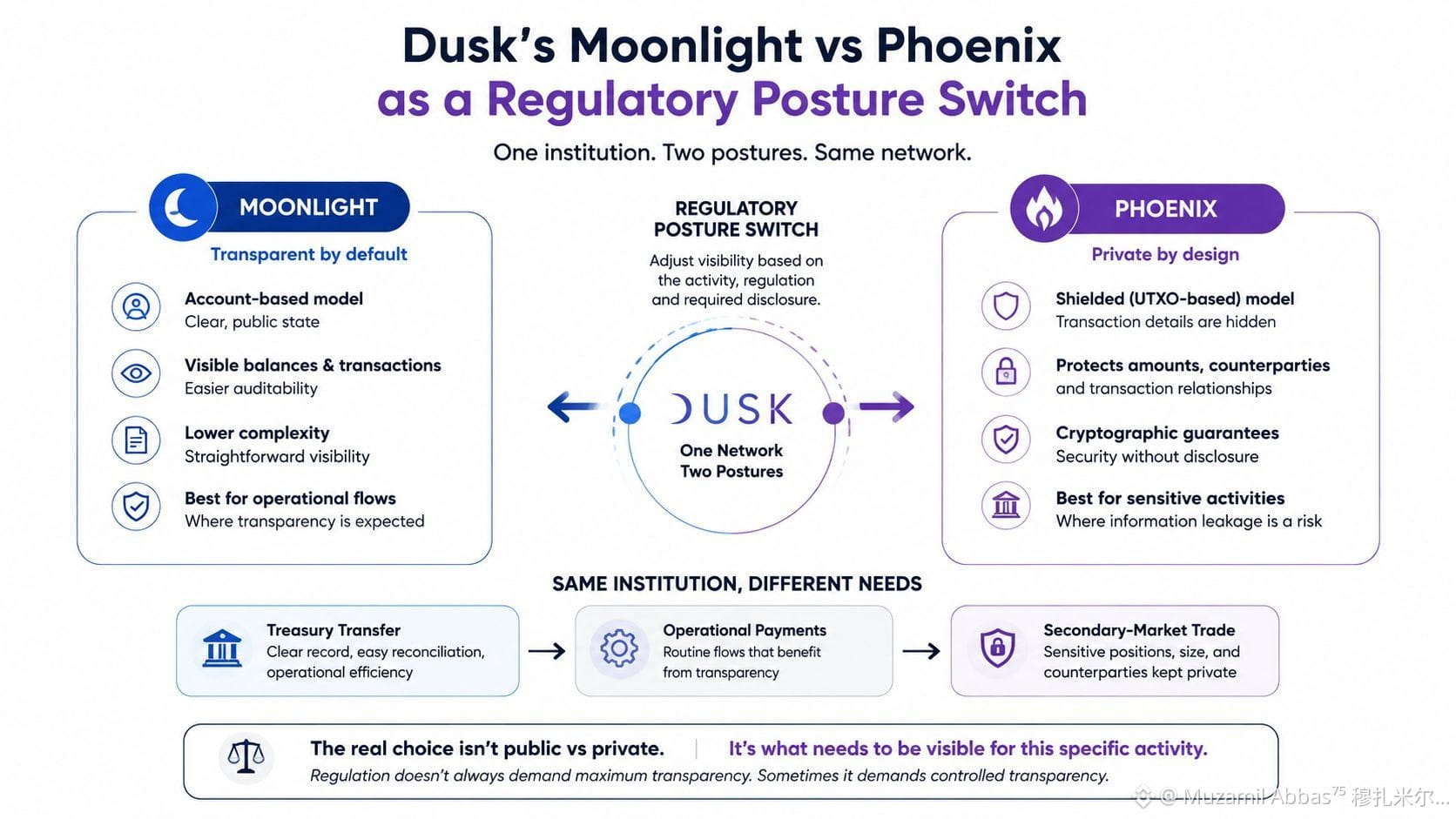
One thing I find interesting about @DuskNetwork is that Moonlight and Phoenix don’t have to be viewed as competing privacy models.
For the same institution, they could represent different regulatory postures.
A treasury transfer or operational payment might benefit from Moonlight’s account-based, transparent structure. There’s a clear record and less complexity around visibility.
But imagine that institution entering a sensitive secondary-market trade. Broadcasting the amount, counterparties or transaction relationships could reveal information that doesn’t need to be public.
That’s where Phoenix becomes more interesting.
Its shielded model can keep transaction details private while still supporting the cryptographic guarantees needed by the network.
So the real choice isn’t simply public vs private.
It’s more like:
What needs to be visible for this specific activity?
I think that’s a much more realistic institutional use of privacy.
Regulation doesn’t always demand maximum transparency.
Sometimes it demands controlled transparency.
And Dusk’s architecture seems designed around that distinction.
One thing I find interesting about @DuskNetwork is that Moonlight and Phoenix don’t have to be viewed as competing privacy models.
For the same institution, they could represent different regulatory postures.
A treasury transfer or operational payment might benefit from Moonlight’s account-based, transparent structure. There’s a clear record and less complexity around visibility.
But imagine that institution entering a sensitive secondary-market trade. Broadcasting the amount, counterparties or transaction relationships could reveal information that doesn’t need to be public.
That’s where Phoenix becomes more interesting.
Its shielded model can keep transaction details private while still supporting the cryptographic guarantees needed by the network.
So the real choice isn’t simply public vs private.
It’s more like:
What needs to be visible for this specific activity?
I think that’s a much more realistic institutional use of privacy.
Regulation doesn’t always demand maximum transparency.
Sometimes it demands controlled transparency.
And Dusk’s architecture seems designed around that distinction.
30D trade $DUSK 3.3K USDT
#dusk $DUSK @Dusk
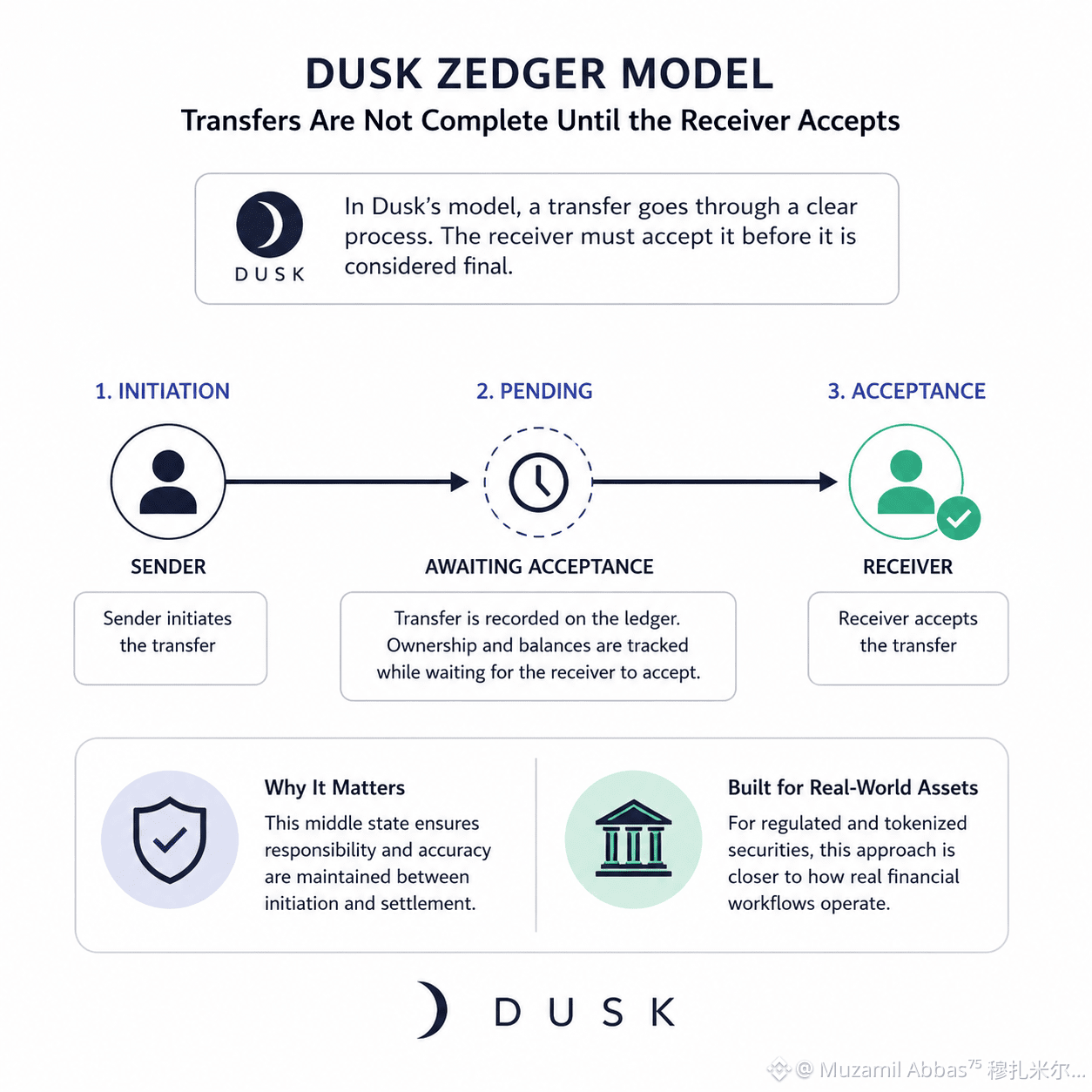
I was reading through Dusk’s approach to security tokenization and one detail kept pulling my attention. Most blockchain transfers feel instant from the outside. Assets move, balances change, and the transaction is considered finished. But regulated assets do not always work that way.
In Dusk’s Zedger model, a transfer is not automatically complete the moment it is sent. The receiver must explicitly accept it first. Until that happens, the transferred amount still needs to be accounted for correctly. That sounds like a small design choice, but it solves a surprisingly difficult problem.
I started thinking about situations where one side of a transaction is ready before the other. Maybe the sender has already initiated the transfer, but the receiver has not approved it yet. Traditional crypto systems usually focus on moving value as fast as possible. Dusk seems more focused on tracking responsibility during the period between initiation and settlement.
What I find interesting is that this middle state is treated as part of the process rather than an exception. The system keeps track of ownership and balances while waiting for the final approval step.
For tokenized securities and regulated assets, that feels much closer to how real financial workflows actually operate. The question is whether more blockchain systems will eventually need similar settlement logic as tokenization grows.
I was reading through Dusk’s approach to security tokenization and one detail kept pulling my attention. Most blockchain transfers feel instant from the outside. Assets move, balances change, and the transaction is considered finished. But regulated assets do not always work that way.
In Dusk’s Zedger model, a transfer is not automatically complete the moment it is sent. The receiver must explicitly accept it first. Until that happens, the transferred amount still needs to be accounted for correctly. That sounds like a small design choice, but it solves a surprisingly difficult problem.
I started thinking about situations where one side of a transaction is ready before the other. Maybe the sender has already initiated the transfer, but the receiver has not approved it yet. Traditional crypto systems usually focus on moving value as fast as possible. Dusk seems more focused on tracking responsibility during the period between initiation and settlement.
What I find interesting is that this middle state is treated as part of the process rather than an exception. The system keeps track of ownership and balances while waiting for the final approval step.
For tokenized securities and regulated assets, that feels much closer to how real financial workflows actually operate. The question is whether more blockchain systems will eventually need similar settlement logic as tokenization grows.
#dusk $DUSK @Dusk
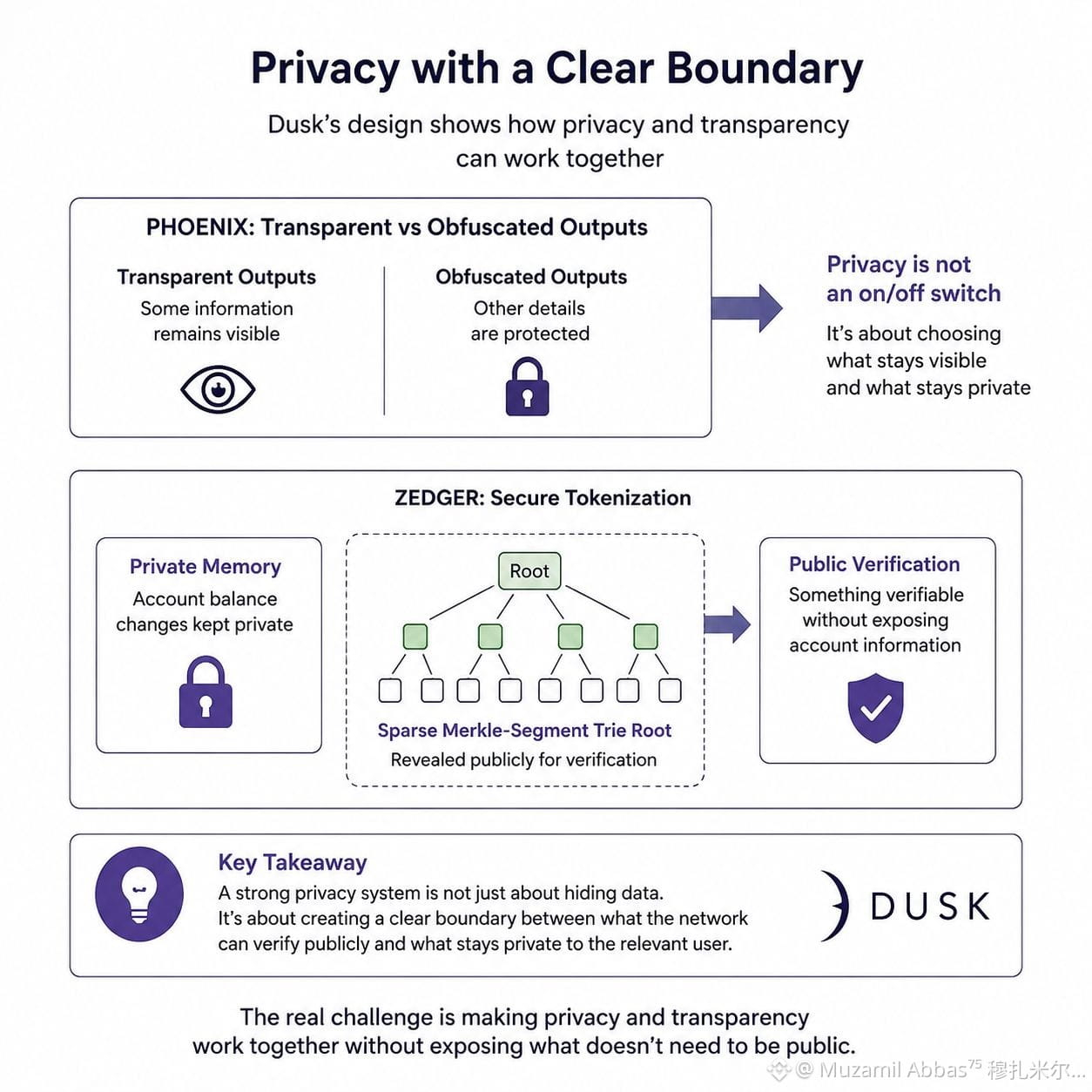
i think privacy becomes much more useful when you can clearly understand what is actually being hidden.
That is one reason Dusk’s design stands out to me. In Phoenix the whitepaper separates outputs into transparent and obfuscated types. So privacy is not treated as a simple switch where everything disappears. Some information can remain visible, while other details are protected.
Zedger takes this idea further for security tokenization. Account balance changes can be kept in private memory, while a Sparse Merkle Segment Trie root is revealed publicly. That gives the system something verifiable without exposing the underlying account information itself.
To me, that distinction is important. A privacy system is not only about hiding data. It also needs a clear boundary between what the network can verify publicly and what stays private to the relevant user.
That is where Dusk’s approach gets interesting. Privacy and transparency are not necessarily opposites. The real question is whether the protocol can make both work together without exposing information that does not need to be public.
i think privacy becomes much more useful when you can clearly understand what is actually being hidden.
That is one reason Dusk’s design stands out to me. In Phoenix the whitepaper separates outputs into transparent and obfuscated types. So privacy is not treated as a simple switch where everything disappears. Some information can remain visible, while other details are protected.
Zedger takes this idea further for security tokenization. Account balance changes can be kept in private memory, while a Sparse Merkle Segment Trie root is revealed publicly. That gives the system something verifiable without exposing the underlying account information itself.
To me, that distinction is important. A privacy system is not only about hiding data. It also needs a clear boundary between what the network can verify publicly and what stays private to the relevant user.
That is where Dusk’s approach gets interesting. Privacy and transparency are not necessarily opposites. The real question is whether the protocol can make both work together without exposing information that does not need to be public.
Log in to explore more content