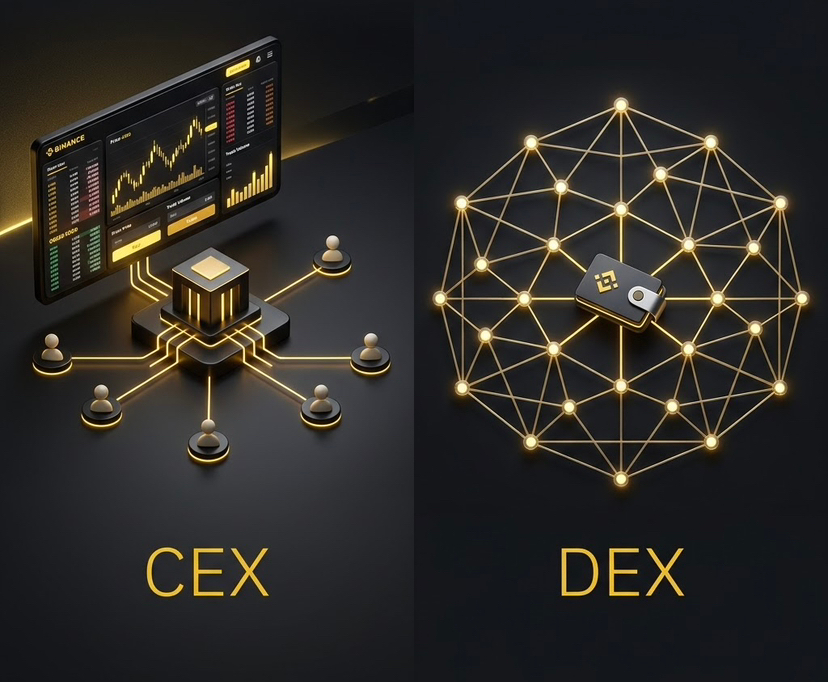

If you’re new to crypto, you’ve probably come across these two terms:
CEX and DEX.
They both allow users to trade crypto, but they work in very different ways.
CEX — Centralized Exchange
A CEX is operated by a centralized company that manages the platform and its trading infrastructure.
Typically, you:
→ Create an account
→ Deposit assets
→ Place trades through the platform
Assets deposited on a CEX are generally held in the exchange’s custody.
DEX — Decentralized Exchange
A DEX uses blockchain-based smart contracts to facilitate trading.
Instead of depositing your assets with a centralized exchange, you generally connect your own crypto wallet and interact directly with the protocol.
This means you maintain control of your wallet and its assets.
The biggest difference?
Custody.
With a CEX, the platform generally holds custody of assets deposited there.
With a DEX, you generally maintain custody through your own wallet.
Self-custody gives you more direct control, but it also means you’re responsible for securing your wallet and understanding the transactions you approve.
Simple way to remember it:
CEX → centralized platform + custodial model
DEX → decentralized protocol + self-custody
Neither should be viewed as simply “better.”
They have different designs, user experiences, risks, and trade-offs.
If you’re learning crypto, understanding this distinction is a great starting point before moving on to wallets, private keys, and smart contracts.
Which should we break down next: Wallets or Private Keys? 👇
Learn more through Binance Academy and always DYOR.
#Binance #BinanceAcademy #learnwithbinance
Educational content only, not financial advice.
Availability, eligibility, and regulations may vary by region.