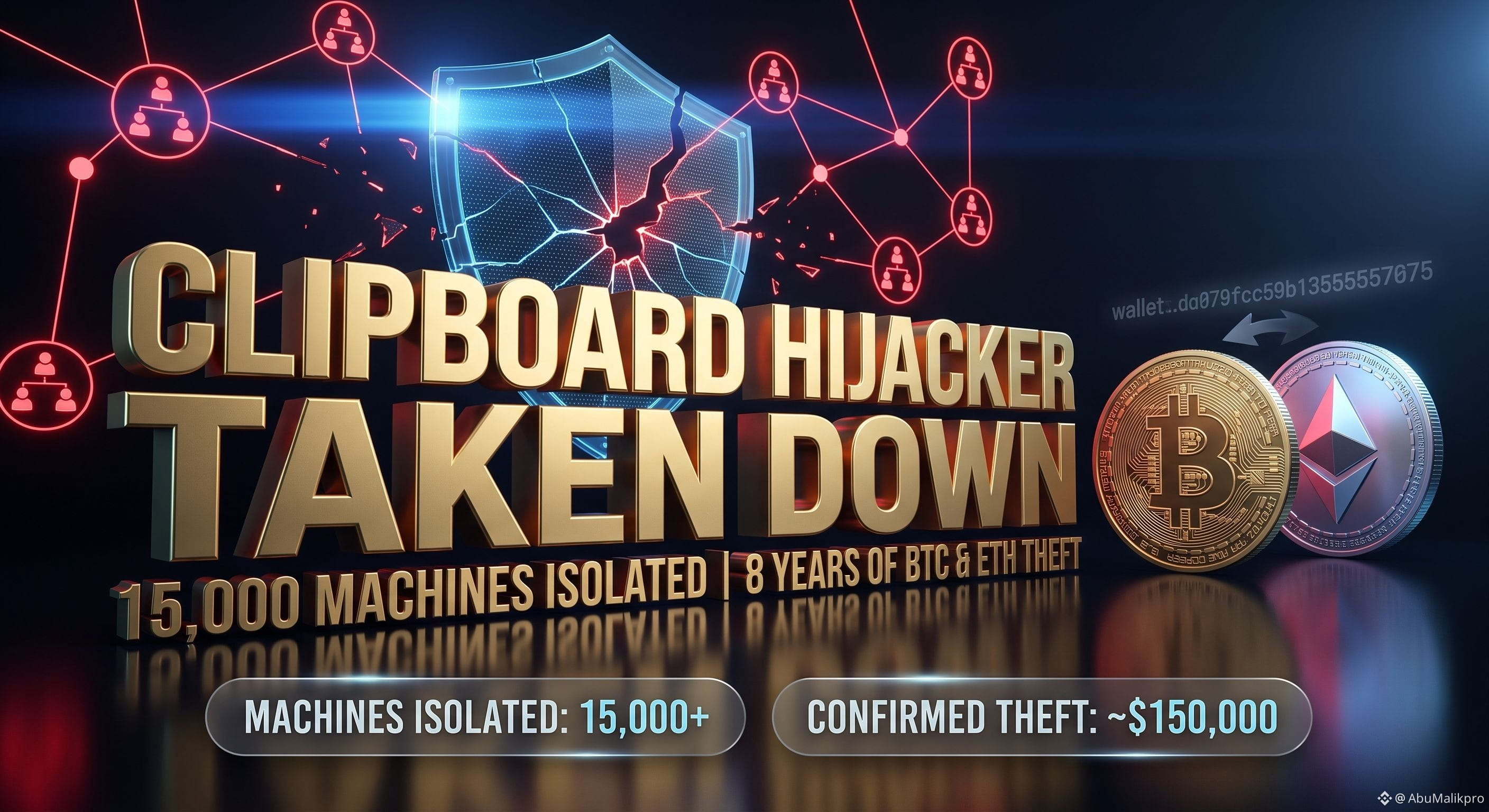
🚨 A 23-YEAR-OLD BOTNET WAS SWAPPING YOUR WALLET ADDRESS MID-PASTE 🖥️🔒
CrowdStrike, the DOJ, FBI and European police just dismantled Sality — malware that spent 8 years quietly rewriting Bitcoin and Ethereum addresses on infected computers.
📌 HOW IT ACTUALLY WORKED
- The payload was called EggJagger — a "clipjacking" tool.
- It sat on infected machines watching the clipboard.
- The moment it detected something that looked like a BTC or ETH address, it silently replaced the copied text with the attacker's address.
- You paste. You hit send. The money goes to a stranger. No warning. Nothing to undo.
Nobody types a wallet address by hand. Everyone copies and pastes. That is the entire attack surface.
📊 THE NUMBERS (separated properly, because outlets are mixing them)
- 15,000+ machines isolated — devices STILL under the operator's control this week.
- ~$150,000 confirmed stolen via EggJagger over 8 years (12.1M rubles).
- ~$1.35M nominal — peak value of the never-spent wallet holdings in Jan 2025.
- 11M+ unique IPs and up to 1M machines at peak — Europol's LIFETIME footprint. Not the same as the 15,000 live count.
🧠 WHY IT SURVIVED SINCE 2003
No central server to seize. Every infected machine talked directly to other infected machines, checking peers every 40 minutes, spreading through network shares and USB drives.
The fatal flaw: bots accepted ANY machine that answered the handshake correctly — zero identity checks. CrowdStrike walked in through that door and replaced the real peers with its own sinkholes.
Operator tracked as SALTY SPIDER, assessed to be in Russia. Domains seized in the U.S.; Bulgaria, Hungary and Romania took down more.
✅ THE ONE HABIT THIS SHOULD CHANGE
After you paste any wallet address — verify the FIRST and LAST characters against the source before you confirm. Every single time. Small transaction first on large transfers.
That five-second check is the entire defense against this attack class.
#DYOR #Bitcoin #Ethereum #Crypto #BinanceSquare
CrowdStrike, the DOJ, FBI and European police just dismantled Sality — malware that spent 8 years quietly rewriting Bitcoin and Ethereum addresses on infected computers.
📌 HOW IT ACTUALLY WORKED
- The payload was called EggJagger — a "clipjacking" tool.
- It sat on infected machines watching the clipboard.
- The moment it detected something that looked like a BTC or ETH address, it silently replaced the copied text with the attacker's address.
- You paste. You hit send. The money goes to a stranger. No warning. Nothing to undo.
Nobody types a wallet address by hand. Everyone copies and pastes. That is the entire attack surface.
📊 THE NUMBERS (separated properly, because outlets are mixing them)
- 15,000+ machines isolated — devices STILL under the operator's control this week.
- ~$150,000 confirmed stolen via EggJagger over 8 years (12.1M rubles).
- ~$1.35M nominal — peak value of the never-spent wallet holdings in Jan 2025.
- 11M+ unique IPs and up to 1M machines at peak — Europol's LIFETIME footprint. Not the same as the 15,000 live count.
🧠 WHY IT SURVIVED SINCE 2003
No central server to seize. Every infected machine talked directly to other infected machines, checking peers every 40 minutes, spreading through network shares and USB drives.
The fatal flaw: bots accepted ANY machine that answered the handshake correctly — zero identity checks. CrowdStrike walked in through that door and replaced the real peers with its own sinkholes.
Operator tracked as SALTY SPIDER, assessed to be in Russia. Domains seized in the U.S.; Bulgaria, Hungary and Romania took down more.
✅ THE ONE HABIT THIS SHOULD CHANGE
After you paste any wallet address — verify the FIRST and LAST characters against the source before you confirm. Every single time. Small transaction first on large transfers.
That five-second check is the entire defense against this attack class.
#DYOR #Bitcoin #Ethereum #Crypto #BinanceSquare