The macro picture today isn’t particularly encouraging:
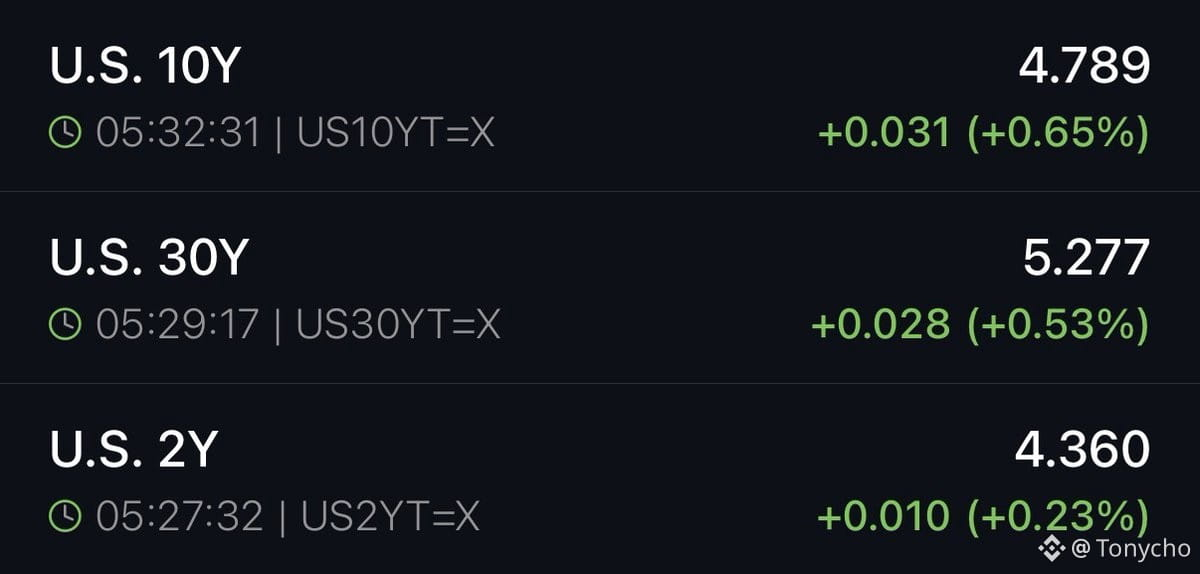
Iran escalates its retaliation against U.S. forces, Brent crude is nearing $95, the yield on the 10-year U.S. Treasury breaks above 4.78% (Figure 1), the S&P falls to a one-month low, and global broad money supply hit a new high of $150 trillion in June—marking the 9th consecutive quarter with year-over-year growth above 7%. With September rate-hike expectations heating up, this should be a combination that would drive a collective retreat from risk assets.
#美联储加息概率升至68%
#美军打击两艘伊朗油轮
But ETF flows don’t follow that script.
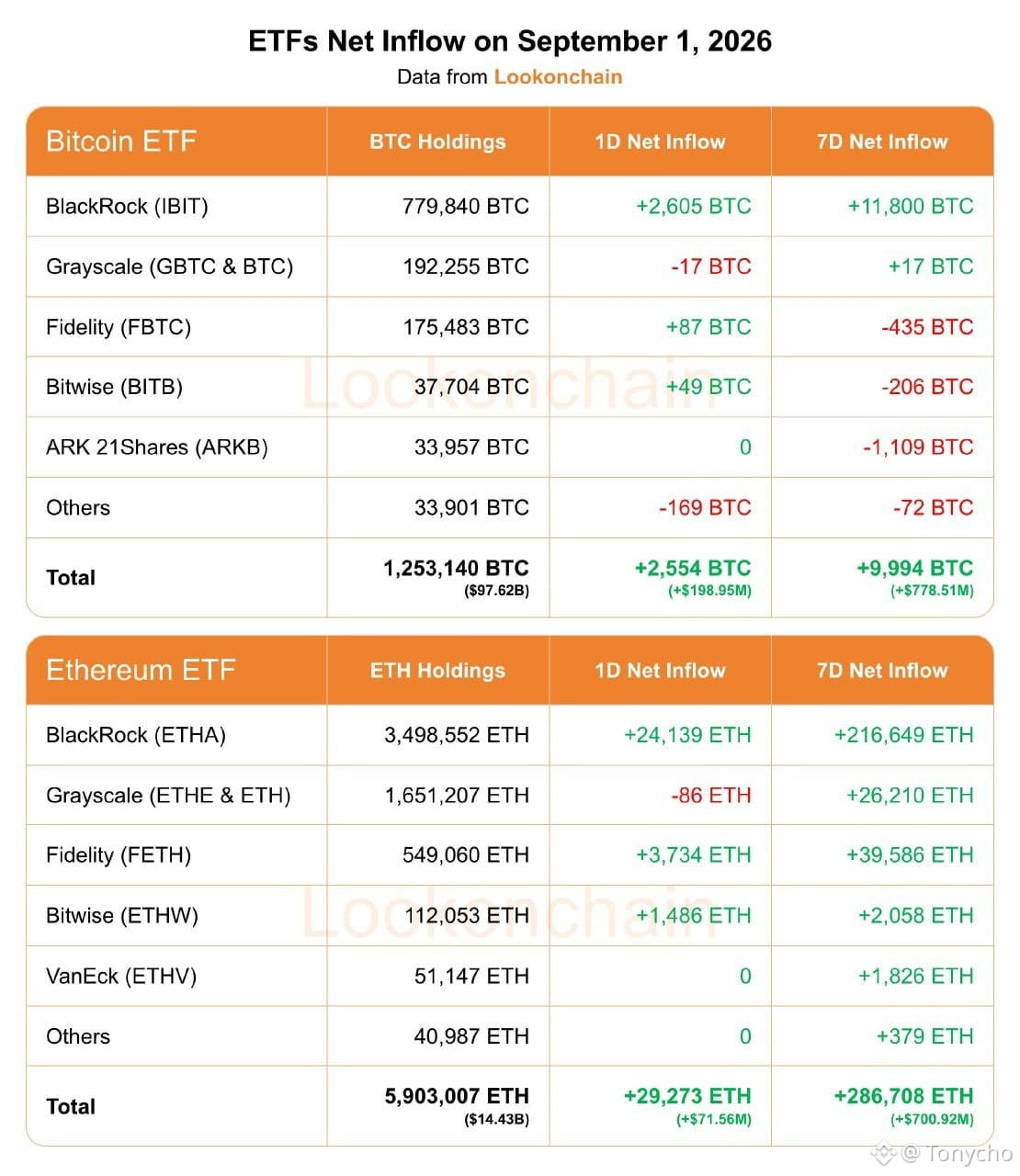
Today, spot BTC ETFs saw net inflows of nearly $200 million, with 7-day cumulative inflows of $778 million; ETH is even stronger, with 7-day net inflows exceeding $700 million. BlackRock’s ETHA alone already holds nearly 3.5 million ETH. (Figure 2)
#比特币ETF买家回归
However, there is one point that needs attention:
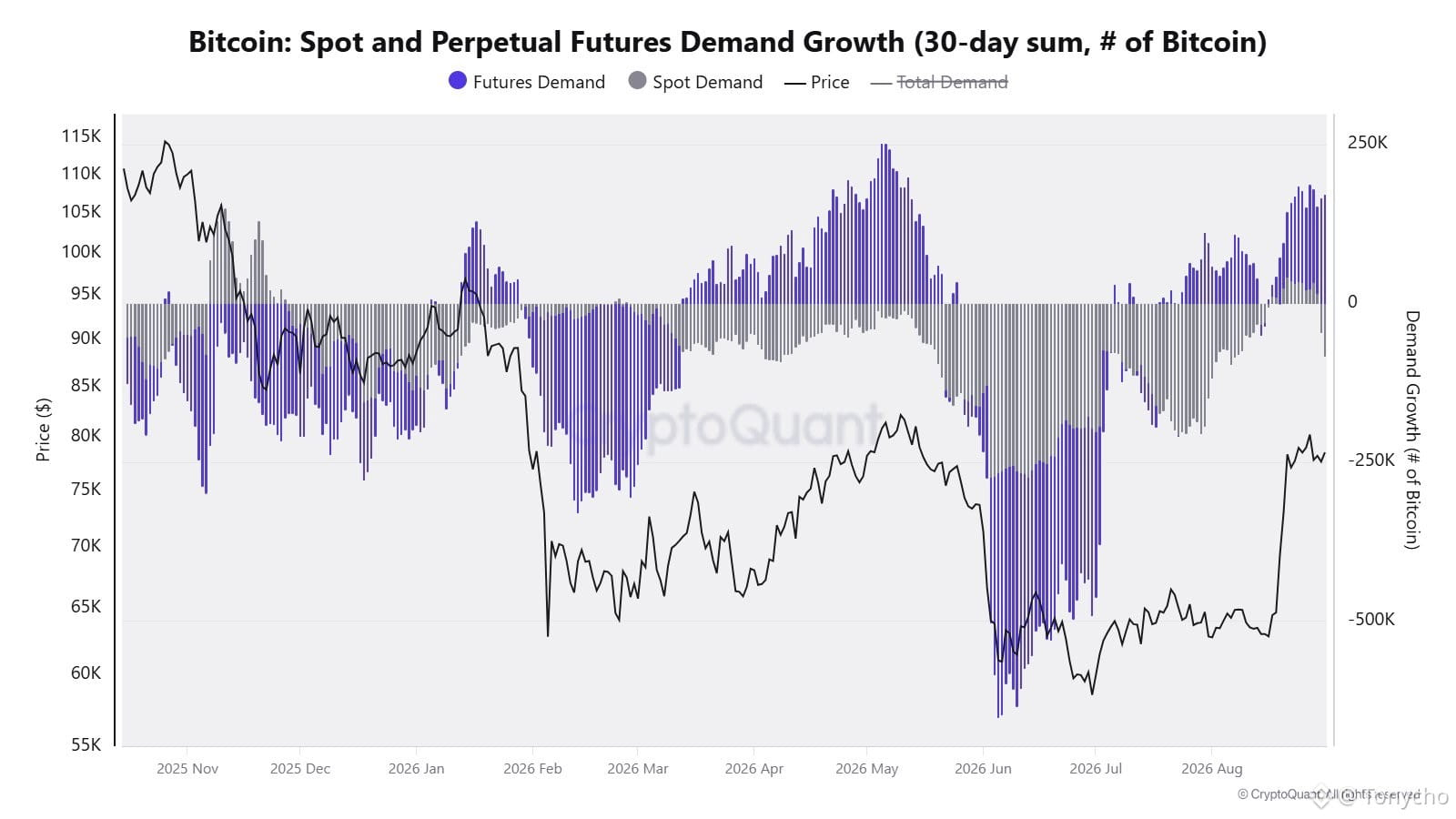
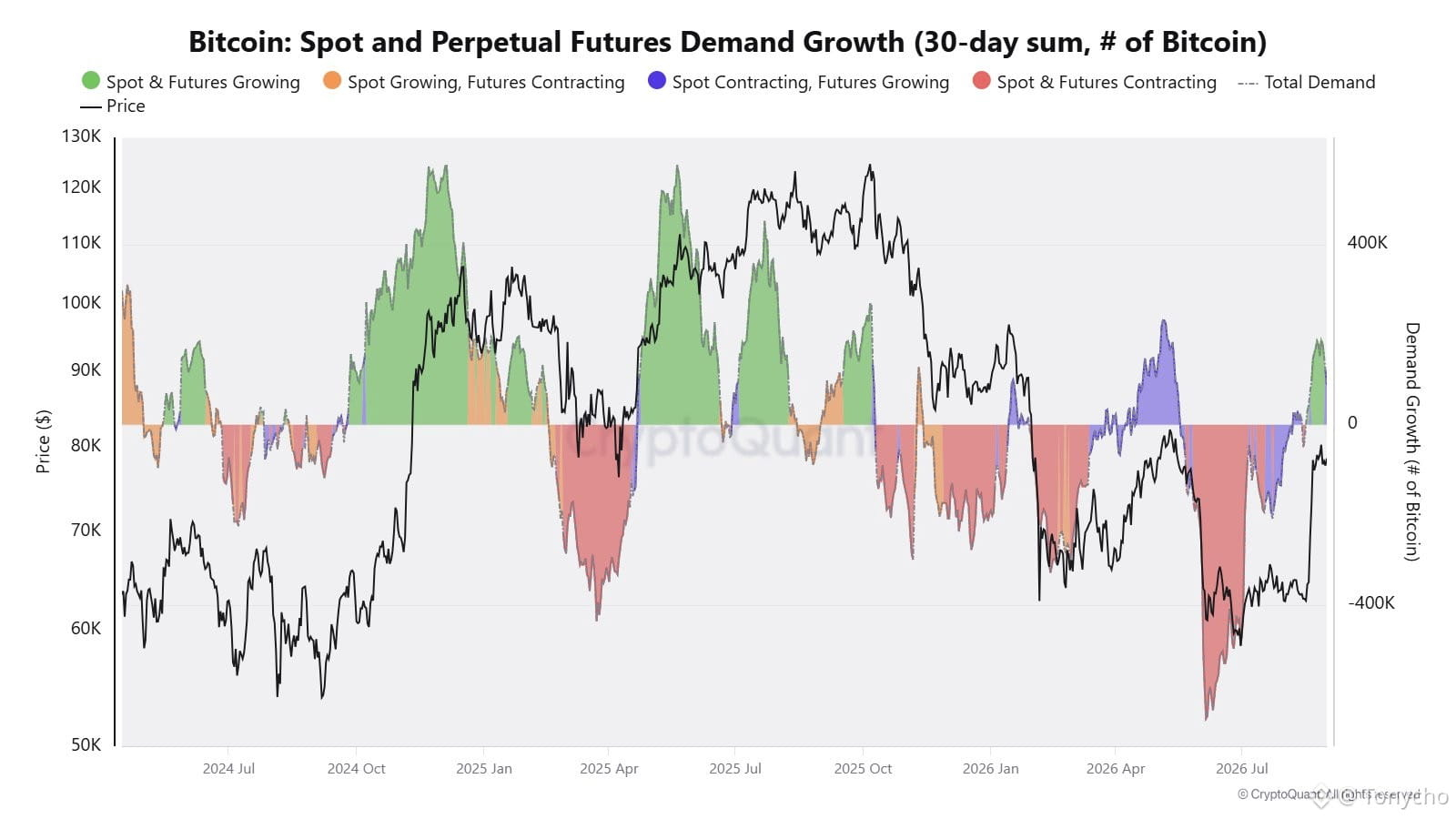
CryptoQuant data shows that $BTC native spot demand turned negative for two consecutive days—an indication of short-term pressure that should be taken seriously. But futures demand remains stable at a high level, suggesting the market has not shifted into genuine pessimism. (Figure 3, Figure 4)
I tend to view this geopolitical conflict and the rise in yields as short-term disruptions rather than a trend inflection point. The fact that $ETH whales re-enter the accumulation range is the signal I’m most willing to overweight at this stage. For the rest of Q3, I’m betting that ETH will deliver a cleaner rebound than BTC.
Iran escalates its retaliation against U.S. forces, Brent crude is nearing $95, the yield on the 10-year U.S. Treasury breaks above 4.78% (Figure 1), the S&P falls to a one-month low, and global broad money supply hit a new high of $150 trillion in June—marking the 9th consecutive quarter with year-over-year growth above 7%. With September rate-hike expectations heating up, this should be a combination that would drive a collective retreat from risk assets.
#美联储加息概率升至68%
#美军打击两艘伊朗油轮
But ETF flows don’t follow that script.
Today, spot BTC ETFs saw net inflows of nearly $200 million, with 7-day cumulative inflows of $778 million; ETH is even stronger, with 7-day net inflows exceeding $700 million. BlackRock’s ETHA alone already holds nearly 3.5 million ETH. (Figure 2)
#比特币ETF买家回归
However, there is one point that needs attention:
CryptoQuant data shows that $BTC native spot demand turned negative for two consecutive days—an indication of short-term pressure that should be taken seriously. But futures demand remains stable at a high level, suggesting the market has not shifted into genuine pessimism. (Figure 3, Figure 4)
I tend to view this geopolitical conflict and the rise in yields as short-term disruptions rather than a trend inflection point. The fact that $ETH whales re-enter the accumulation range is the signal I’m most willing to overweight at this stage. For the rest of Q3, I’m betting that ETH will deliver a cleaner rebound than BTC.