
Rania 拉尼娅
916 Posts

Rania 拉尼娅
194 Following
2.6K+ Followers
1.6K+ Liked
Posts
All
Quotes
PINNED
go

Javed Official 07
·
--
🎁 CLAIM RED POCKET — SOL
🔥 Tap to Claim Your SOL Reward Now!
🎁 🧧 Claim 🧧 🎁
👇👇👇
🔥 Tap to Claim Your SOL Reward Now!
🎁 🧧 Claim 🧧 🎁
👇👇👇

go
Rania 拉尼娅
·
--
🎁 Claim your Red Packet now!
🔥 Limited rewards grab yours before it’s gone! 🧧
🔥 Limited rewards grab yours before it’s gone! 🧧

go

Aria Daisy 阿莉娅_黛西
·
--
Bullish🎁 $XRP COIN GIVEAWAY 🎁
I’m giving away 1,000 XRP to 3000 lucky winners!
How to participate: ✅ Follow me ✅
💬 Comment 2
That’s it! Simple and easy.
Thank you for all the love and support ❤️
Good luck everyone 🔥
#Xrp🔥🔥 #ARBRises30%OnRobinhoodChainRevenue #Japan10YYieldHits3%FirstSince1996
I’m giving away 1,000 XRP to 3000 lucky winners!
How to participate: ✅ Follow me ✅
💬 Comment 2
That’s it! Simple and easy.
Thank you for all the love and support ❤️
Good luck everyone 🔥
#Xrp🔥🔥 #ARBRises30%OnRobinhoodChainRevenue #Japan10YYieldHits3%FirstSince1996

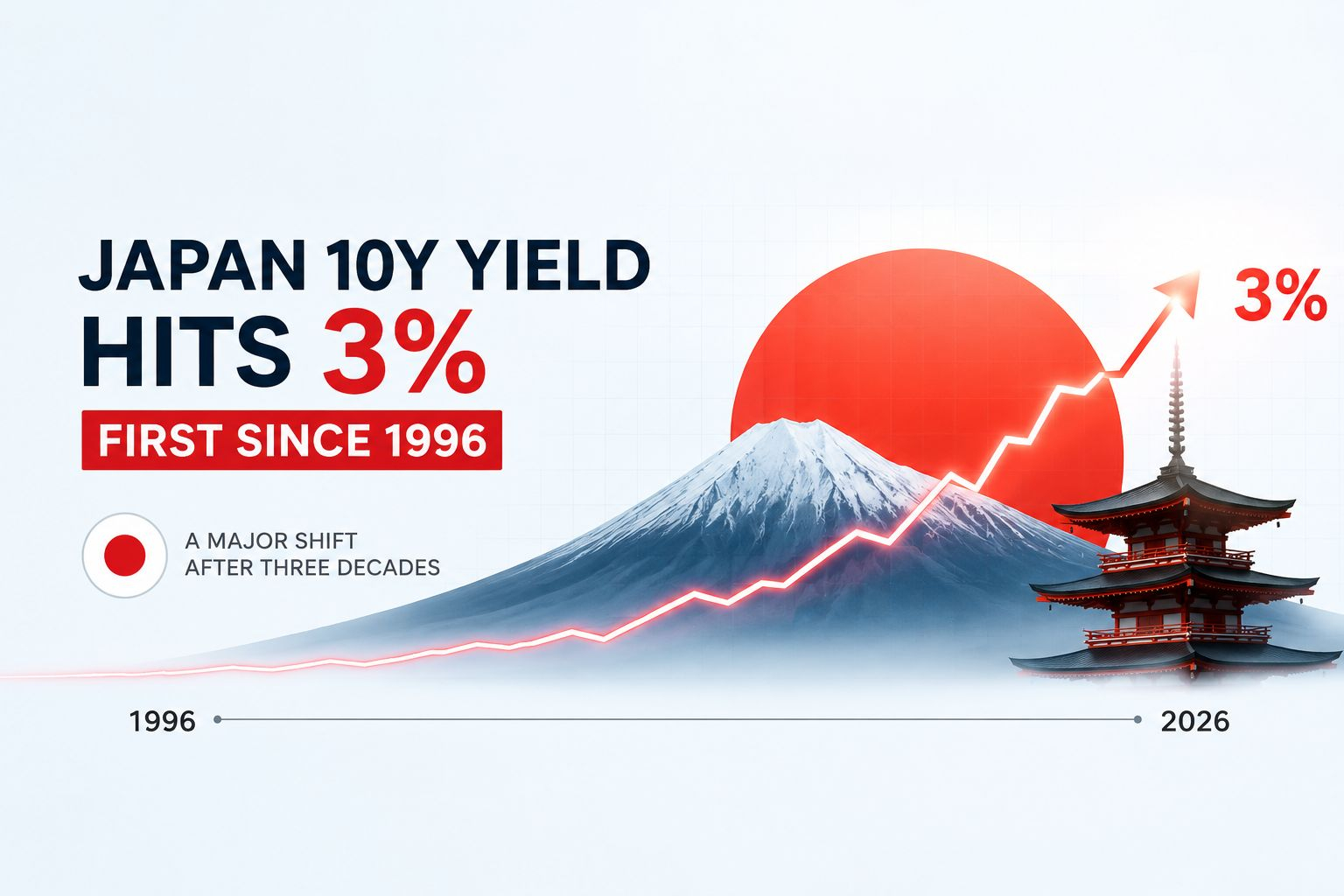
Japan’s 10Y yield just touched 3% for the first time since 1996.
That’s a big shift for a market that spent years with ultra low rates. Higher Japanese yields could also put pressure on the yen carry trade and global liquidity.
$BTC is worth keeping an eye on here.
$BTC
#Japan #BTC
#Japan10YYieldHits3%FirstSince1996
That’s a big shift for a market that spent years with ultra low rates. Higher Japanese yields could also put pressure on the yen carry trade and global liquidity.
$BTC is worth keeping an eye on here.
$BTC
#Japan #BTC
#Japan10YYieldHits3%FirstSince1996
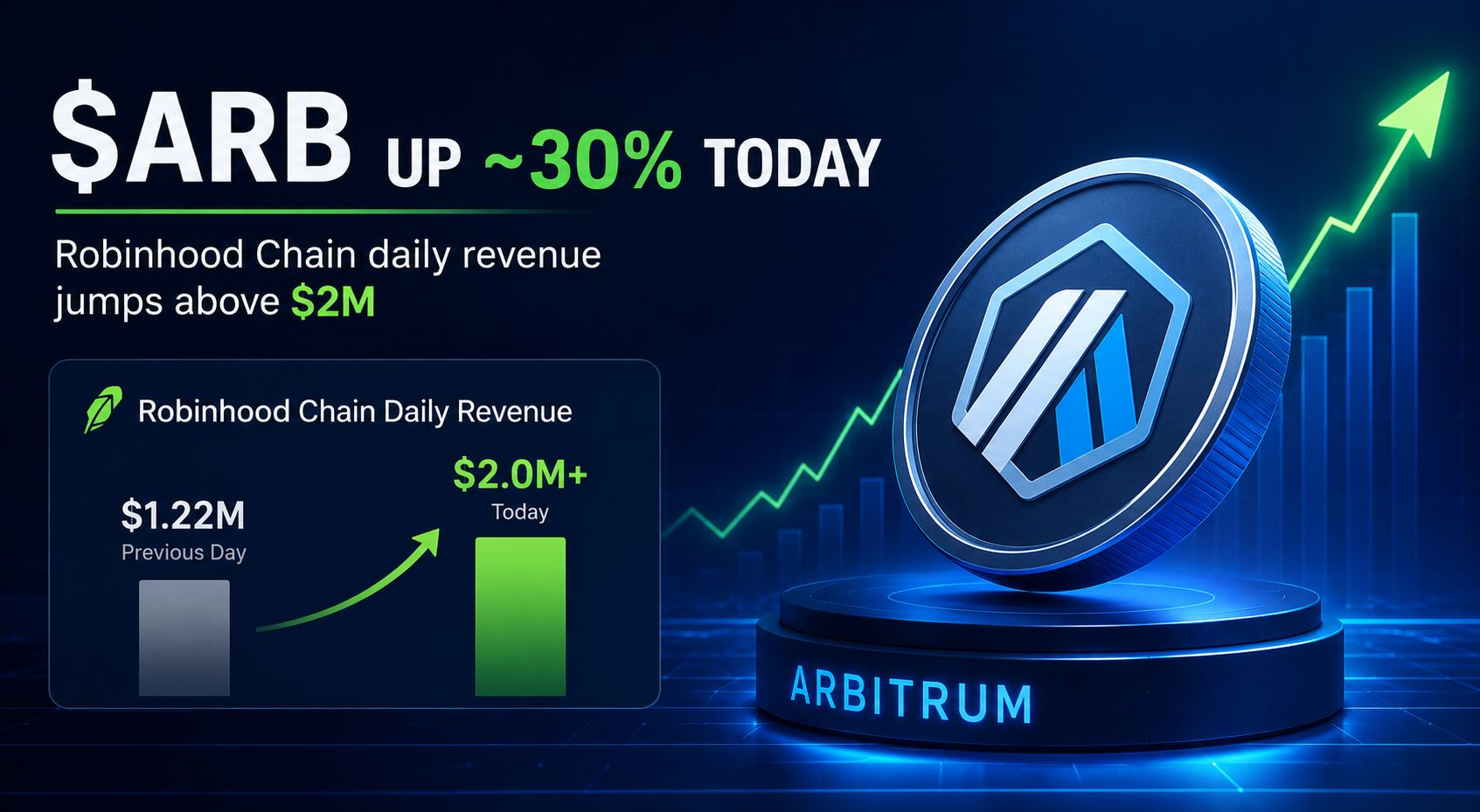
$ARB up ~30% today.
What caught my eye is the Robinhood Chain numbers. Daily revenue moved above $2M, from around $1.22M the day before.
Robinhood Chain runs on Arbitrum, so this isn’t just about another chain getting attention. More activity there means more economic activity around the Arbitrum ecosystem.
The price move is nice. The revenue growth is the part worth watching.
$ARB
#ARBİTRUM #Arbitrum #Crypto
#ARBRises30%OnRobinhoodChainRevenue
What caught my eye is the Robinhood Chain numbers. Daily revenue moved above $2M, from around $1.22M the day before.
Robinhood Chain runs on Arbitrum, so this isn’t just about another chain getting attention. More activity there means more economic activity around the Arbitrum ecosystem.
The price move is nice. The revenue growth is the part worth watching.
$ARB
#ARBİTRUM #Arbitrum #Crypto
#ARBRises30%OnRobinhoodChainRevenue
#HangSengFalls1%
Hang Seng started September on the back foot, falling around 1%. A big part of the pressure is coming from outside Hong Kong Brent crude moved above $91 a barrel and the US 10 years yield reached 4.78%, bringing inflation and higher rate concerns back into focus.
Shein’s first day on the Hong Kong exchange didn’t help either. The stock was priced at HK$48.56 but dropped as much as 10% shortly after trading began. The IPO raised about HK$13.6 billion, but the weak debut shows investors are still selective even with fresh listings.
For me, the interesting part is the connection between stocks and crypto here. When oil rises and bond yields move higher at the same time, traders usually become more careful with risk. That makes BTC worth watching alongside Asian equities.
Not saying the market is heading for a major breakdown just that the macro backdrop has clearly become less friendly for risk assets.
#USStocksCloseLowerAmazonSuedByFTC
#HangSeng #BTC $BTC
Hang Seng started September on the back foot, falling around 1%. A big part of the pressure is coming from outside Hong Kong Brent crude moved above $91 a barrel and the US 10 years yield reached 4.78%, bringing inflation and higher rate concerns back into focus.
Shein’s first day on the Hong Kong exchange didn’t help either. The stock was priced at HK$48.56 but dropped as much as 10% shortly after trading began. The IPO raised about HK$13.6 billion, but the weak debut shows investors are still selective even with fresh listings.
For me, the interesting part is the connection between stocks and crypto here. When oil rises and bond yields move higher at the same time, traders usually become more careful with risk. That makes BTC worth watching alongside Asian equities.
Not saying the market is heading for a major breakdown just that the macro backdrop has clearly become less friendly for risk assets.
#USStocksCloseLowerAmazonSuedByFTC
#HangSeng #BTC $BTC
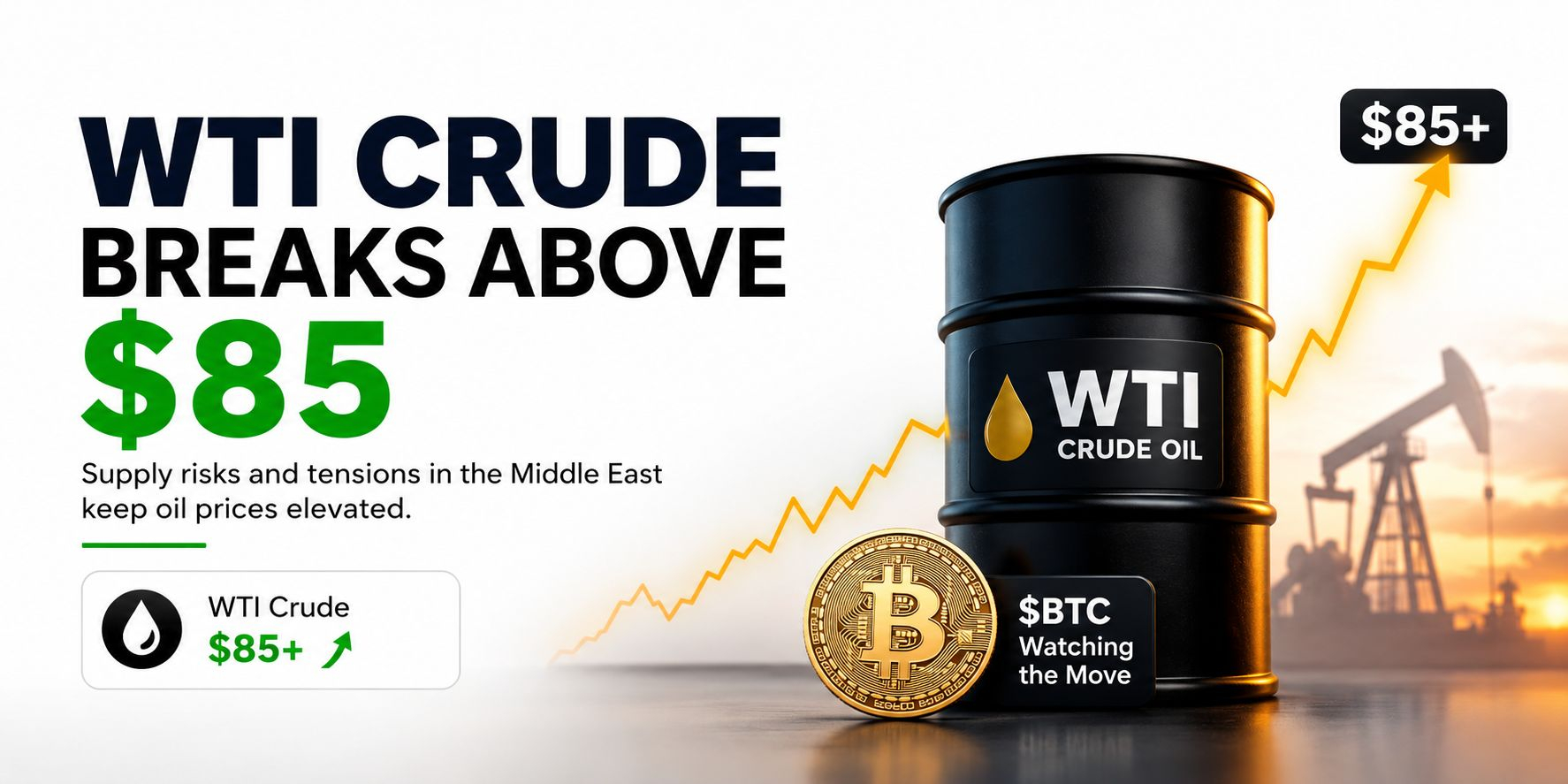
WTI crude is back above $85 and oil traders are paying attention again.
The main concern is still supply. Any disruption around the Strait of Hormuz can quickly change the outlook for global oil flows.
If crude stays above $85, higher energy costs could add to inflation pressure and make things harder for central banks. That’s also something risk assets like $BTC may have to deal with.
For now, the key question is simple: can WTI hold above $85?
#WTI #Bitcoin
#WTICrudeBreaksAbove
#WTICrudeBreaksAbove$85
The main concern is still supply. Any disruption around the Strait of Hormuz can quickly change the outlook for global oil flows.
If crude stays above $85, higher energy costs could add to inflation pressure and make things harder for central banks. That’s also something risk assets like $BTC may have to deal with.
For now, the key question is simple: can WTI hold above $85?
#WTI #Bitcoin
#WTICrudeBreaksAbove
#WTICrudeBreaksAbove$85
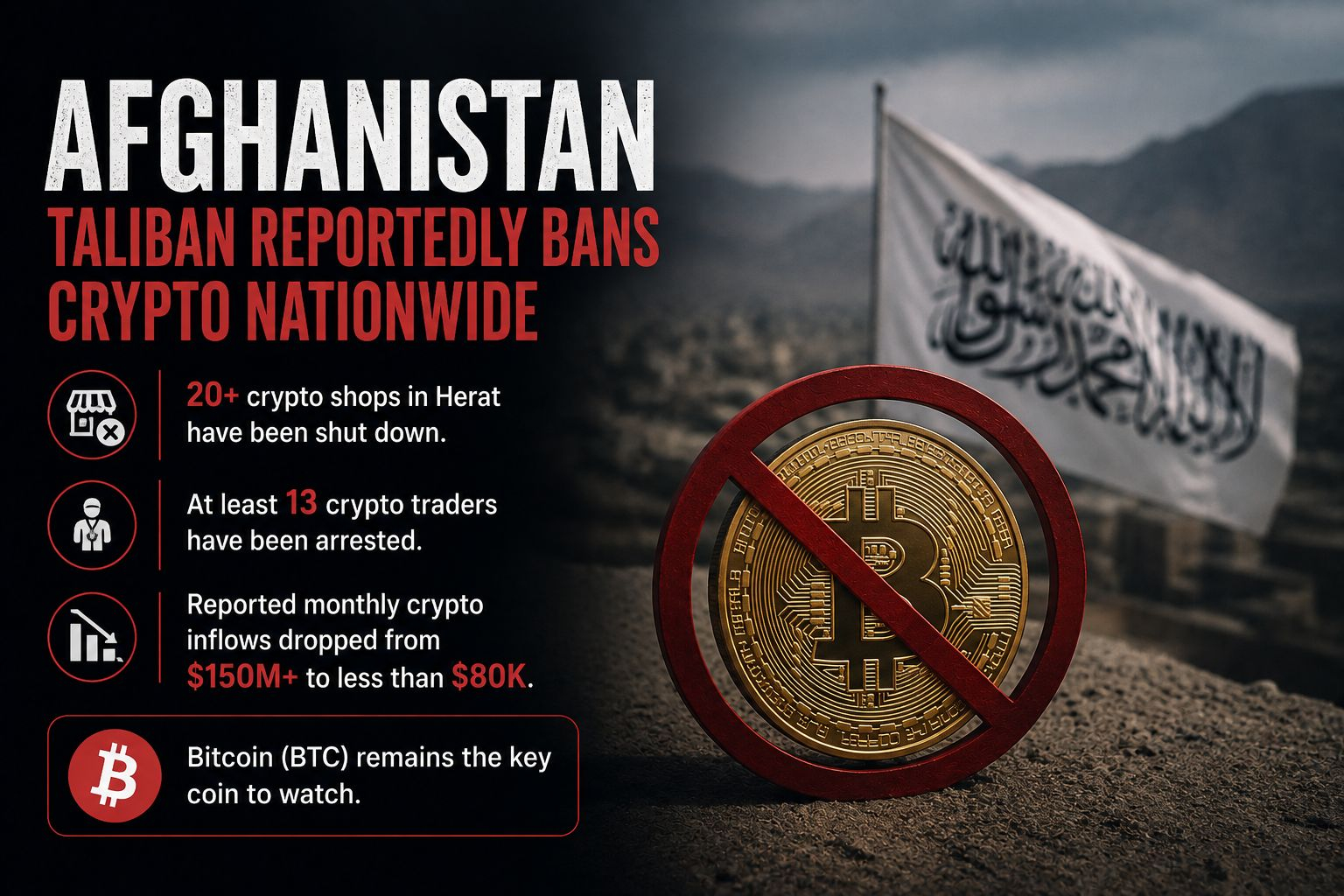
🇦🇫 Afghanistan is cracking down hard on crypto.
More than 20 crypto shops in Herat have reportedly been closed, while at least 13 traders were arrested.
The bigger number is the reported drop in monthly crypto inflows from over $150M to less than $80K.
For people who relied on crypto for transfers and access to money outside the banking system, that’s a major hit.
And despite the crackdown, Bitcoin (BTC) itself isn’t going anywhere. The restrictions are on the local activity around it.
$BTC
#Bitcoin #Afghanistan
#AfghanistanTalibanReportedlyBansCryptoNationwide
More than 20 crypto shops in Herat have reportedly been closed, while at least 13 traders were arrested.
The bigger number is the reported drop in monthly crypto inflows from over $150M to less than $80K.
For people who relied on crypto for transfers and access to money outside the banking system, that’s a major hit.
And despite the crackdown, Bitcoin (BTC) itself isn’t going anywhere. The restrictions are on the local activity around it.
$BTC
#Bitcoin #Afghanistan
#AfghanistanTalibanReportedlyBansCryptoNationwide
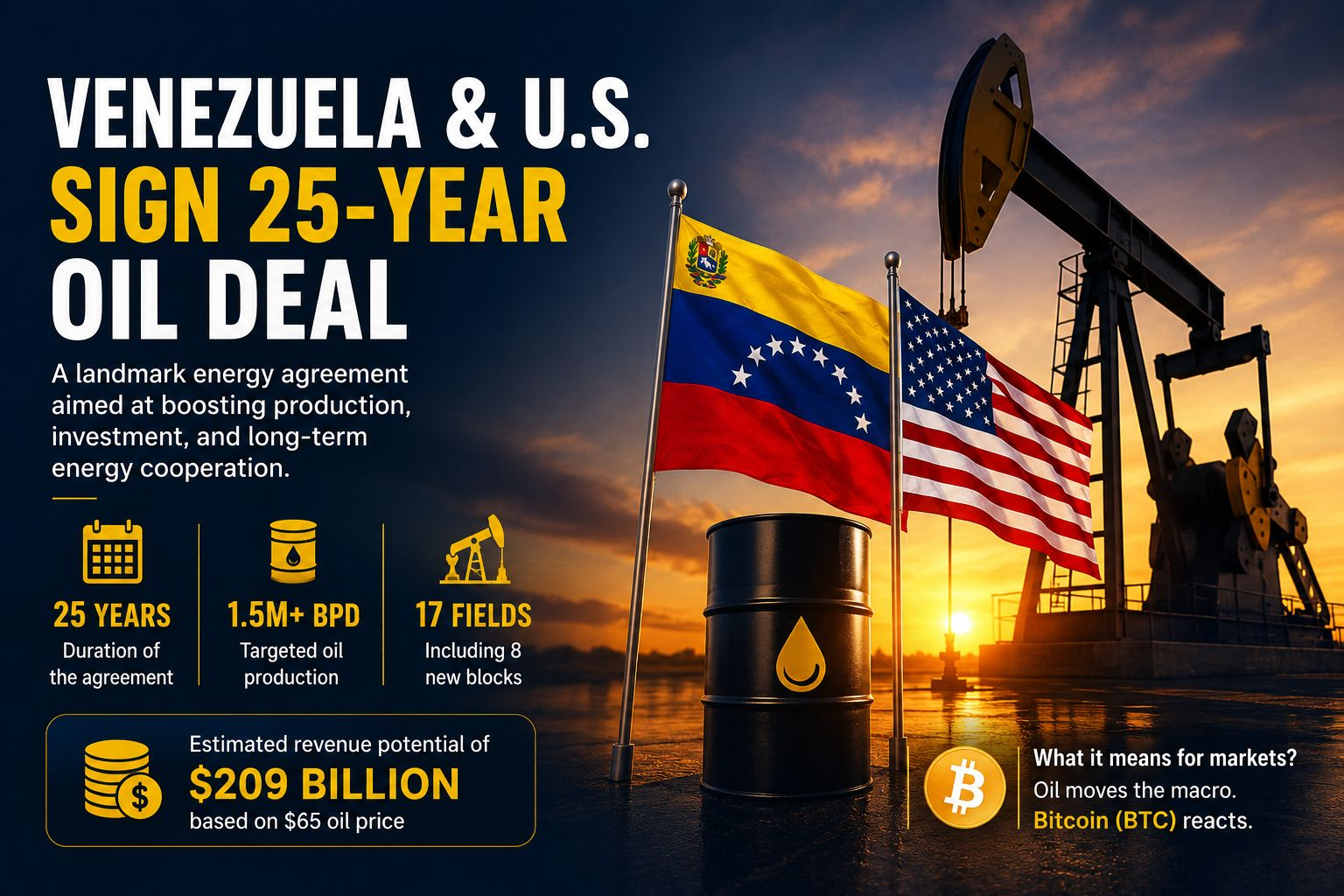
🇻🇪 Venezuela’s new oil deal with the U.S. is a big one, but the numbers matter more than the headlines.
The agreement is set for 25 years and covers 17 oilfields, with a target of more than 1.5 million barrels a day. Venezuela currently produces around 1.25 million bpd.
The government says the deal could generate about $209 billion in revenue over its life, based on a $65 oil price.
The interesting part is whether Venezuela can actually bring those fields back up to scale. Years of underinvestment and damaged infrastructure won’t be fixed overnight.
For crypto markets, Bitcoin (BTC) is one of the assets worth watching as this plays into the wider oil, inflation and macro picture.
$BTC
#bitcoin #Oil
#VenezuelaUSSign25YearOilDeal
The agreement is set for 25 years and covers 17 oilfields, with a target of more than 1.5 million barrels a day. Venezuela currently produces around 1.25 million bpd.
The government says the deal could generate about $209 billion in revenue over its life, based on a $65 oil price.
The interesting part is whether Venezuela can actually bring those fields back up to scale. Years of underinvestment and damaged infrastructure won’t be fixed overnight.
For crypto markets, Bitcoin (BTC) is one of the assets worth watching as this plays into the wider oil, inflation and macro picture.
$BTC
#bitcoin #Oil
#VenezuelaUSSign25YearOilDeal
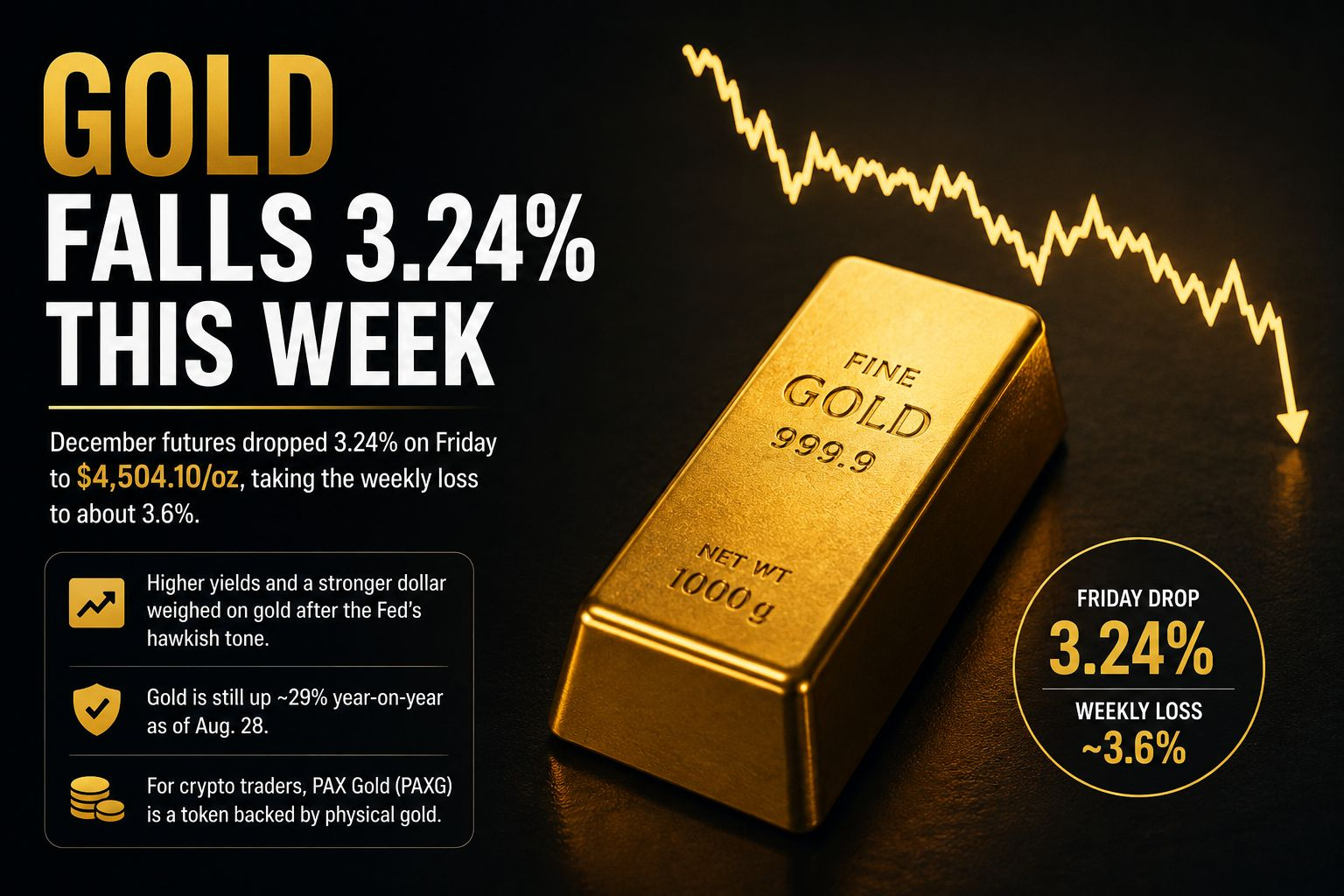
Gold took a hit this week.
December futures fell 3.24% on Friday, closing at $4,504.10 an ounce, and ended the week down roughly 3.6%.
Higher Treasury yields and a stronger dollar put some pressure on the metal after the Fed struck a more hawkish tone.
Still, gold was around 29% higher than a year ago as of Aug. 28.
So for now, this looks more like a sharp pullback than a broken trend.
And for crypto markets, PAX Gold (PAXG) is one to keep an eye on since it tracks physical gold.
$PAXG
#GOLD #PAXG
#GoldFalls3.24%ThisWeek
December futures fell 3.24% on Friday, closing at $4,504.10 an ounce, and ended the week down roughly 3.6%.
Higher Treasury yields and a stronger dollar put some pressure on the metal after the Fed struck a more hawkish tone.
Still, gold was around 29% higher than a year ago as of Aug. 28.
So for now, this looks more like a sharp pullback than a broken trend.
And for crypto markets, PAX Gold (PAXG) is one to keep an eye on since it tracks physical gold.
$PAXG
#GOLD #PAXG
#GoldFalls3.24%ThisWeek
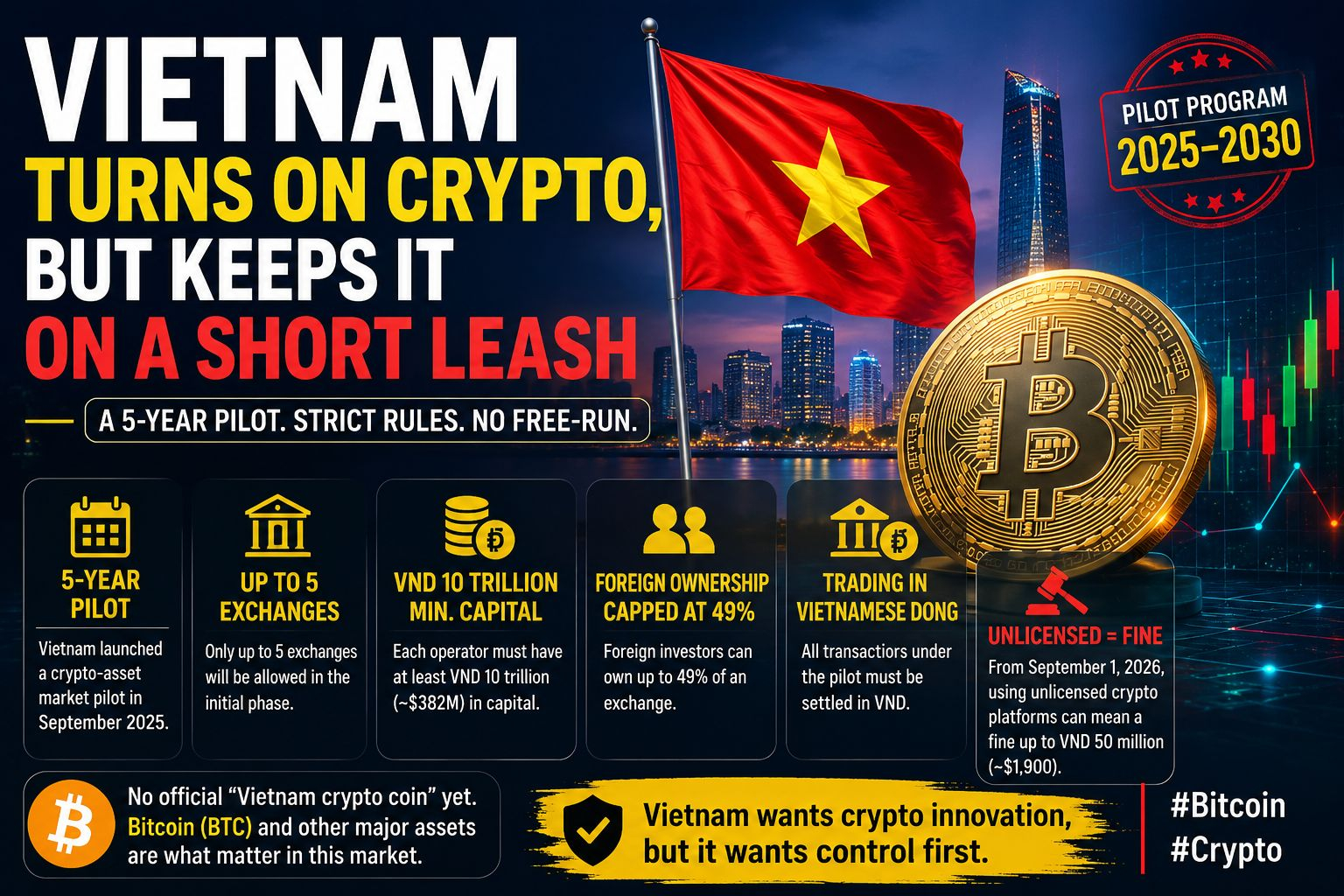
Vietnam’s crypto move is interesting, mainly because it’s being done pretty carefully.
The country’s five year crypto market pilot started in September 2025. The plan allows up to 5 exchanges, and each operator needs at least VND 10 trillion in capital (around $382M).
Foreign investors can own up to 49% of an exchange, while transactions under the pilot have to use Vietnamese dong.
There’s also a deadline coming up: from September 1, 2026, using an unlicensed crypto platform could mean a fine of up to VND 50 million, roughly $1,900.
For now, there’s no official “Vietnam crypto coin” tied to the pilot. Bitcoin (BTC) and other major assets are the relevant part of the market.
Vietnam clearly wants to build a crypto market.
It just doesn’t want to build an uncontrolled one.
$BTC
#bitcoin #Crypto
#VietnamPilotsCryptoAssetMarket
The country’s five year crypto market pilot started in September 2025. The plan allows up to 5 exchanges, and each operator needs at least VND 10 trillion in capital (around $382M).
Foreign investors can own up to 49% of an exchange, while transactions under the pilot have to use Vietnamese dong.
There’s also a deadline coming up: from September 1, 2026, using an unlicensed crypto platform could mean a fine of up to VND 50 million, roughly $1,900.
For now, there’s no official “Vietnam crypto coin” tied to the pilot. Bitcoin (BTC) and other major assets are the relevant part of the market.
Vietnam clearly wants to build a crypto market.
It just doesn’t want to build an uncontrolled one.
$BTC
#bitcoin #Crypto
#VietnamPilotsCryptoAssetMarket
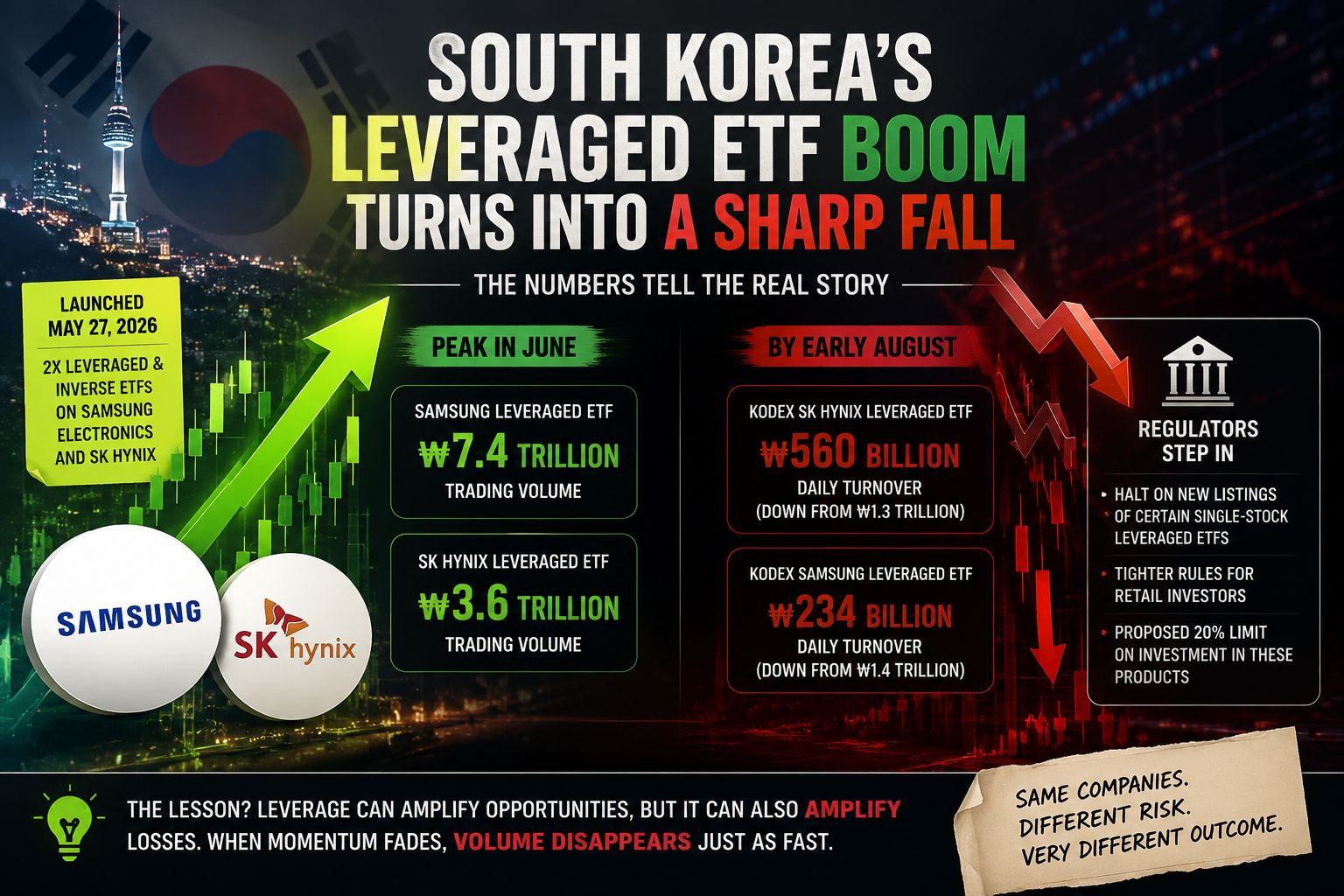
South Korea’s single stock leveraged ETF trade has cooled off pretty quickly.
The Samsung and SK Hynix 2x ETFs launched on May 27. By June, trading had already reached about ₩7.4T for Samsung’s main leveraged ETF and ₩3.6T for SK Hynix.
Then the momentum started to fade.
By early August, daily turnover in the KODEX SK Hynix leveraged ETF was down to around ₩560B, from ₩1.3T. Samsung’s dropped to about ₩234B, from ₩1.4T.
Regulators are tightening the rules as well, including a proposed 20% limit on these products as a share of an investor’s total assets.
The numbers are pretty clear once the chipstock rally lost some steam, the appetite for leveraged bets fell with it.
$SKHYNIX
#KoreaSingleStockLeveragedETFTradingFalls
The Samsung and SK Hynix 2x ETFs launched on May 27. By June, trading had already reached about ₩7.4T for Samsung’s main leveraged ETF and ₩3.6T for SK Hynix.
Then the momentum started to fade.
By early August, daily turnover in the KODEX SK Hynix leveraged ETF was down to around ₩560B, from ₩1.3T. Samsung’s dropped to about ₩234B, from ₩1.4T.
Regulators are tightening the rules as well, including a proposed 20% limit on these products as a share of an investor’s total assets.
The numbers are pretty clear once the chipstock rally lost some steam, the appetite for leveraged bets fell with it.
$SKHYNIX
#KoreaSingleStockLeveragedETFTradingFalls
🥇 Gold is having a crazy August
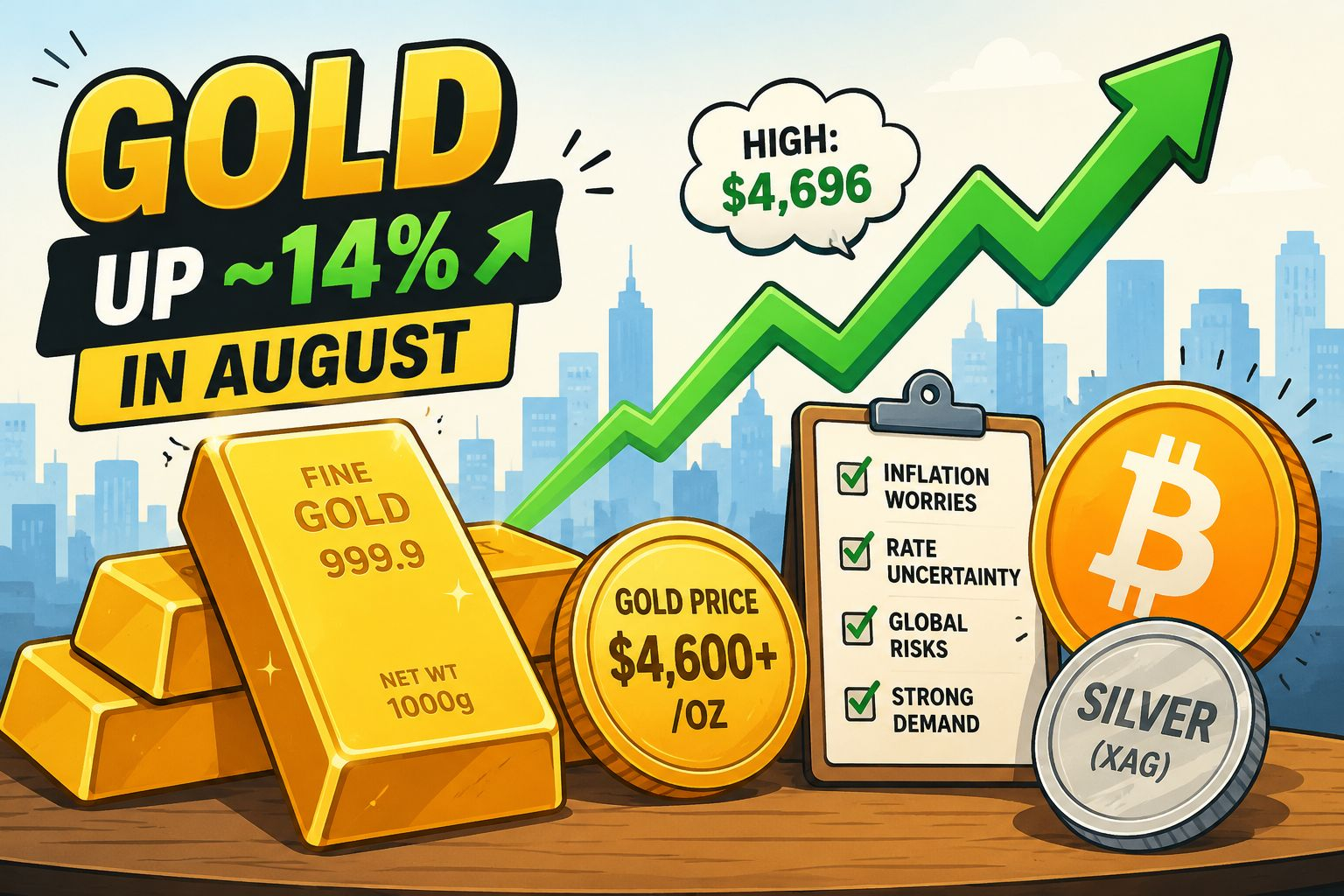
Gold is up about 14% this month and is now around $4,600/oz. It also came close to $4,700 this week.
People are still buying gold because of inflation, rate uncertainty and global risks.
BTC and silver are moving higher too.
Gold to $5K next, or will we see a pullback first?
$XAUT
$PAXG
$BTC
#GOLD #BTC
#GoldRisesAbout14%InAugust
Gold is up about 14% this month and is now around $4,600/oz. It also came close to $4,700 this week.
People are still buying gold because of inflation, rate uncertainty and global risks.
BTC and silver are moving higher too.
Gold to $5K next, or will we see a pullback first?
$XAUT
$PAXG
$BTC
#GOLD #BTC
#GoldRisesAbout14%InAugust
$HEMI
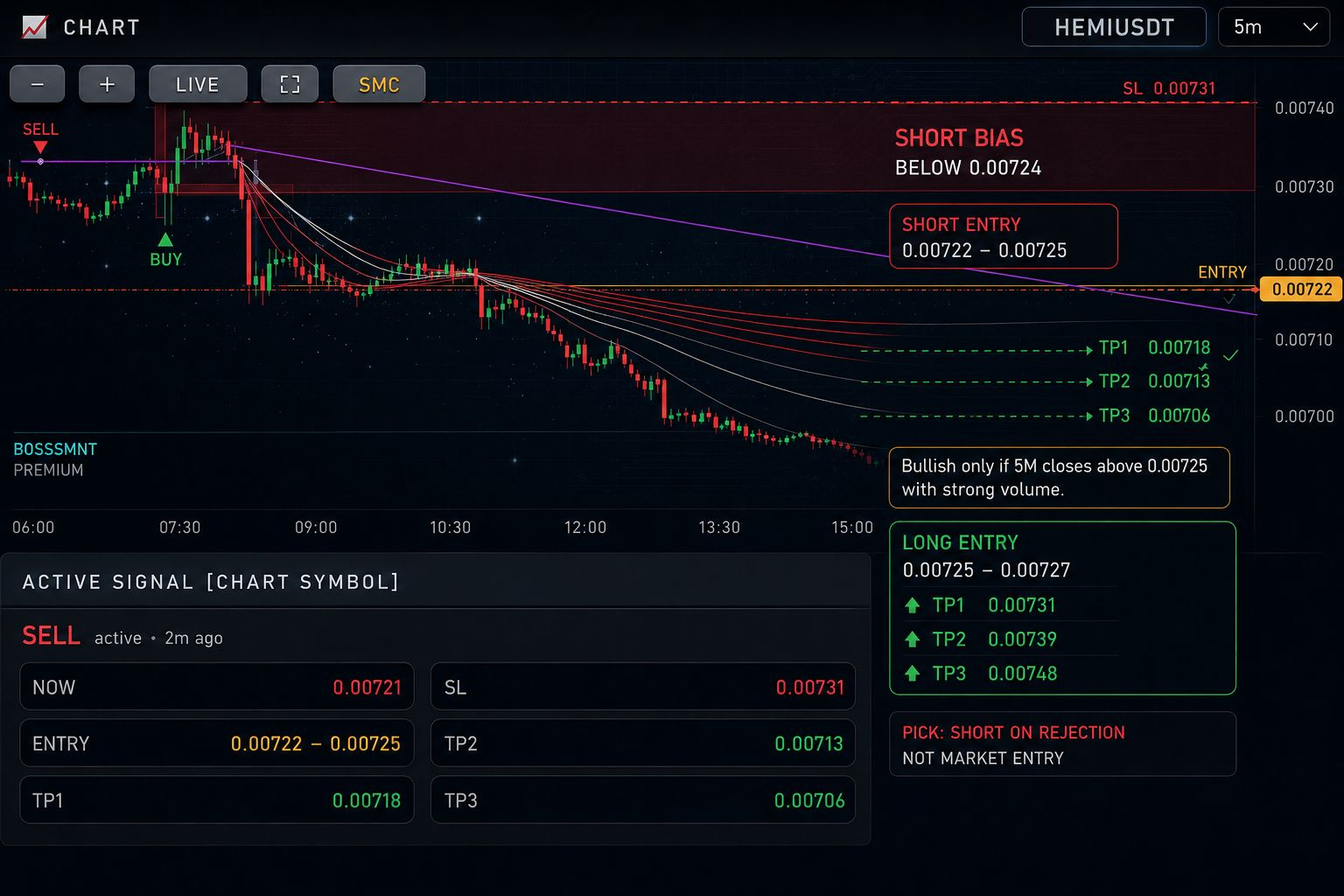
$HEMI — 5M
Price: 0.00721
SHORT BIAS BELOW 0.00724
SHORT
ENTRY: 0.00722–0.00725
SL: 0.00731
TP1: 0.00718
TP2: 0.00713
TP3: 0.00706
Bullish only if 5M closes above 0.00725 with strong volume.
LONG
ENTRY: 0.00725–0.00727
TP1: 0.00731
TP2: 0.00739
TP3: 0.00748
I
PICK: SHORT ON REJECTION NOT MARKET ENTRY
#HEMI #CryptoNewss
$HEMI — 5M
Price: 0.00721
SHORT BIAS BELOW 0.00724
SHORT
ENTRY: 0.00722–0.00725
SL: 0.00731
TP1: 0.00718
TP2: 0.00713
TP3: 0.00706
Bullish only if 5M closes above 0.00725 with strong volume.
LONG
ENTRY: 0.00725–0.00727
TP1: 0.00731
TP2: 0.00739
TP3: 0.00748
I
PICK: SHORT ON REJECTION NOT MARKET ENTRY
#HEMI #CryptoNewss
🌏 ASIA MIDDAY: CHIP STOCKS TAKE THE LEAD
Asia’s markets are gaining momentum as investors look ahead to Nvidia’s upcoming earnings, keeping AI and semiconductor stocks in focus.
🇰🇷 South Korea: The KOSPI is trading near a 2% gain, with major chipmakers Samsung Electronics and SK Hynix leading the move.
🇹🇼 Taiwan: Stocks are jumping as optimism around AI-chip demand continues to support tech shares.
🇭🇰 Hong Kong: Tech stocks are also moving higher, adding to the region’s positive market mood.
🎯 Why it matters: Nvidia’s results and outlook could have an impact on global semiconductor demand, AI spending and overall risk sentiment.
Crypto traders are watching the same AI trend, with $TAO
and $RENDER
among the related tokens on the radar.
🔥 Will Nvidia’s results give the AI rally another boost?
#AsiaMarketsAndAI
Asia’s markets are gaining momentum as investors look ahead to Nvidia’s upcoming earnings, keeping AI and semiconductor stocks in focus.
🇰🇷 South Korea: The KOSPI is trading near a 2% gain, with major chipmakers Samsung Electronics and SK Hynix leading the move.
🇹🇼 Taiwan: Stocks are jumping as optimism around AI-chip demand continues to support tech shares.
🇭🇰 Hong Kong: Tech stocks are also moving higher, adding to the region’s positive market mood.
🎯 Why it matters: Nvidia’s results and outlook could have an impact on global semiconductor demand, AI spending and overall risk sentiment.
Crypto traders are watching the same AI trend, with $TAO
and $RENDER
among the related tokens on the radar.
🔥 Will Nvidia’s results give the AI rally another boost?
#AsiaMarketsAndAI
Verified
🇰🇷 South Korea’s AI chip trade is showing signs of cooling.
Leveraged ETFs tied to Samsung Electronics and SK Hynix have seen nearly $1 billion in outflows in August so far.
Around $381M left Samsung linked products, while $601M flowed out of
SK Hynix linked funds.
This would be the first monthly outflow since these products launched in late May.
It looks like investors are becoming more cautious after the huge AI driven rally.
The big question now is this just a cooldown or the start of a bigger shift in sentiment?
$SKHYNIX
#Samsung #SKHYNIX
#SamsungSKHynixLeveragedETFsPostFirstMonthlyOutflow
Leveraged ETFs tied to Samsung Electronics and SK Hynix have seen nearly $1 billion in outflows in August so far.
Around $381M left Samsung linked products, while $601M flowed out of
SK Hynix linked funds.
This would be the first monthly outflow since these products launched in late May.
It looks like investors are becoming more cautious after the huge AI driven rally.
The big question now is this just a cooldown or the start of a bigger shift in sentiment?
$SKHYNIX
#Samsung #SKHYNIX
#SamsungSKHynixLeveragedETFsPostFirstMonthlyOutflow
Healthy cooldown
100%
Bigger sentiment shift
0%
Temporary profit-taking
0%
AI rally still intact
0%
2 votes • Voting closed
Log in to explore more content