After-the-fact recap: let’s talk about a few reasons for today’s $XAU plunge, with their importance decreasing in order (my own ranking).
First, the bond market crashed: U.S. 10Y yields rose to around 4.8%, the highest since the beginning of 2025; meanwhile Japan’s 10Y reached 3%, the UK’s 10Y went above 5.25%, and Germany’s 10Y hit 3.36%. This is a round of global bond selloff.
Second, the hawkish remarks from the newly appointed Fed Chair Waller: this directly increases the probability of the Fed raising rates. As of today, the odds of a September rate hike have climbed to 66%. And the pressure of high interest rates on gold prices is beyond doubt— the market is already pricing it in early.
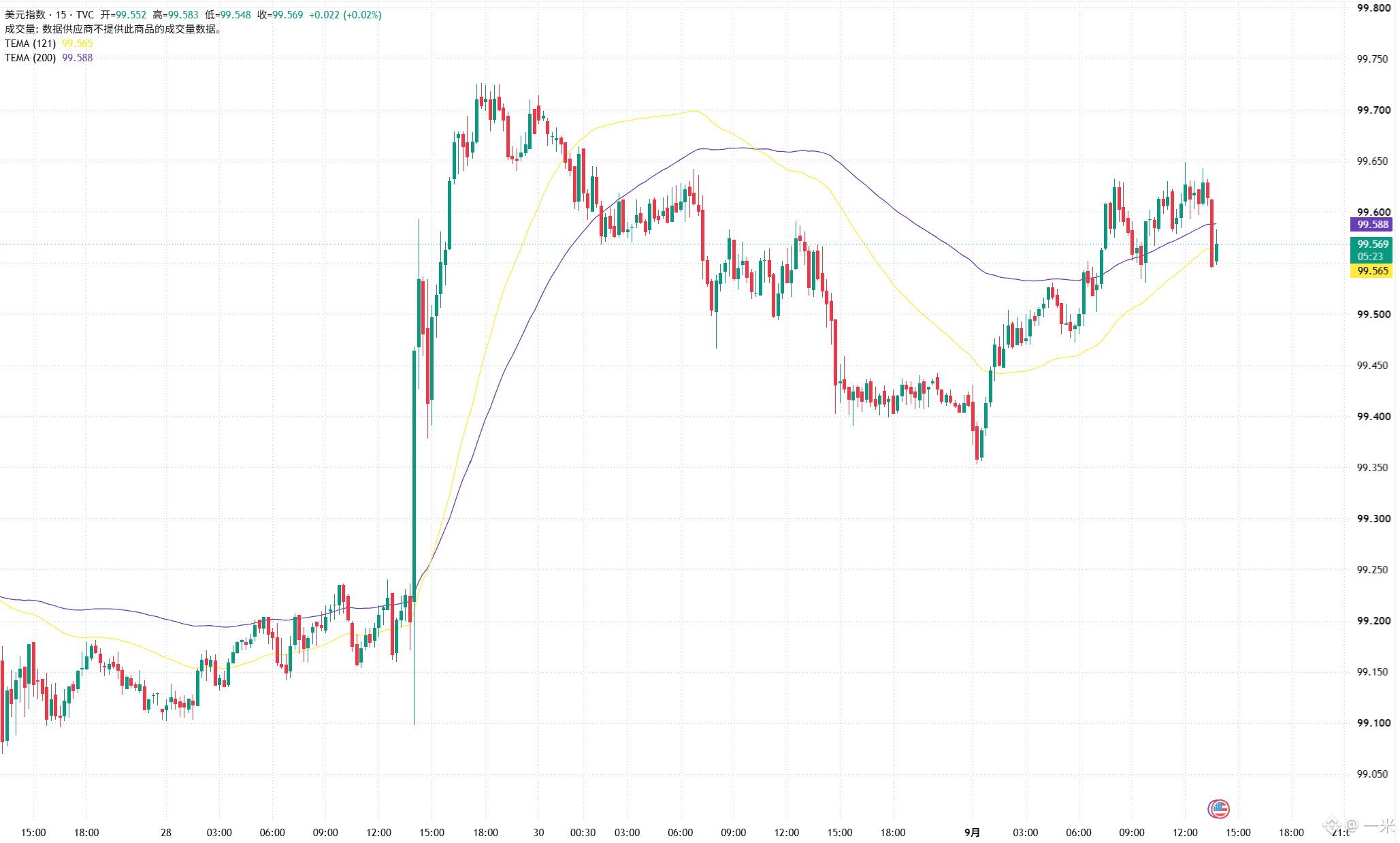
Third, the U.S. dollar strengthened: driven by rate-hike expectations, the dollar strengthened versus currencies like the yen and the pound, and the U.S. Dollar Index rose. Correspondingly, gold prices faced downward pressure—people are more willing to hold dollars than non-yielding gold.
Finally, gold had already risen significantly earlier, so there’s indeed a need for a pullback; and the factors above further amplify the magnitude of the pullback.
In fact, careful readers should notice that I intentionally omitted one important event: the escalation of the conflict between Iran and the U.S. I didn’t cover it. The impact of this event on gold is fairly complex, so I’ll open a separate post to discuss it.
P.S. Attached is the U.S. Dollar Index trend
First, the bond market crashed: U.S. 10Y yields rose to around 4.8%, the highest since the beginning of 2025; meanwhile Japan’s 10Y reached 3%, the UK’s 10Y went above 5.25%, and Germany’s 10Y hit 3.36%. This is a round of global bond selloff.
Second, the hawkish remarks from the newly appointed Fed Chair Waller: this directly increases the probability of the Fed raising rates. As of today, the odds of a September rate hike have climbed to 66%. And the pressure of high interest rates on gold prices is beyond doubt— the market is already pricing it in early.
Third, the U.S. dollar strengthened: driven by rate-hike expectations, the dollar strengthened versus currencies like the yen and the pound, and the U.S. Dollar Index rose. Correspondingly, gold prices faced downward pressure—people are more willing to hold dollars than non-yielding gold.
Finally, gold had already risen significantly earlier, so there’s indeed a need for a pullback; and the factors above further amplify the magnitude of the pullback.
In fact, careful readers should notice that I intentionally omitted one important event: the escalation of the conflict between Iran and the U.S. I didn’t cover it. The impact of this event on gold is fairly complex, so I’ll open a separate post to discuss it.
P.S. Attached is the U.S. Dollar Index trend